
The Indesit washing machine washes non-stop.
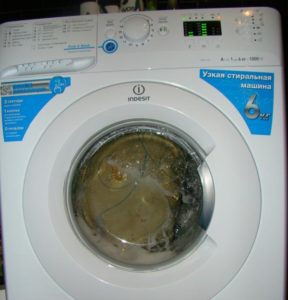 A typical washing machine cycle involves several stages, primarily the main wash, rinse, and spin cycle. Sometimes, the washing machine fails to complete the user-selected program and doesn't start the rinse cycle even after 2-3 hours. What should you do if your Indesit washing machine won't stop washing? Let's look at the possible causes of this "freezing."
The reason for the machine getting stuck
Modern washing machines have preset programs that allow you to select the optimal washing parameters depending on the type of laundry. Each program has a different duration.
If you start the machine, but it does not stop working after the set time, you should be wary.
Once the washing machine has finished its cycle, test it. Run the shortest cycle and observe the machine while it runs. You might notice one of the following symptoms:
- The washing machine takes a very long time to fill with water. This could be due to weak water pressure in the water lines, a clogged inlet filter, or a kinked or defective inlet hose. The inlet valve may be clogged, but in this case, the machine will not fill with water and will continue to hum.
- The machine fills the tank with water and immediately drains the system. This can cause the wash cycle to continue indefinitely. In this case, the unit is likely connected incorrectly. A faulty pressure switch may also be the problem;
- The drain takes a very long time. This could be caused by a clogged waste filter, pump, drain hose, drain pipe, branch pipe, etc.;
- The cycle is extended due to prolonged heating. A layer of scale on the heating element is preventing heat transfer. The thermostat may also be damaged;
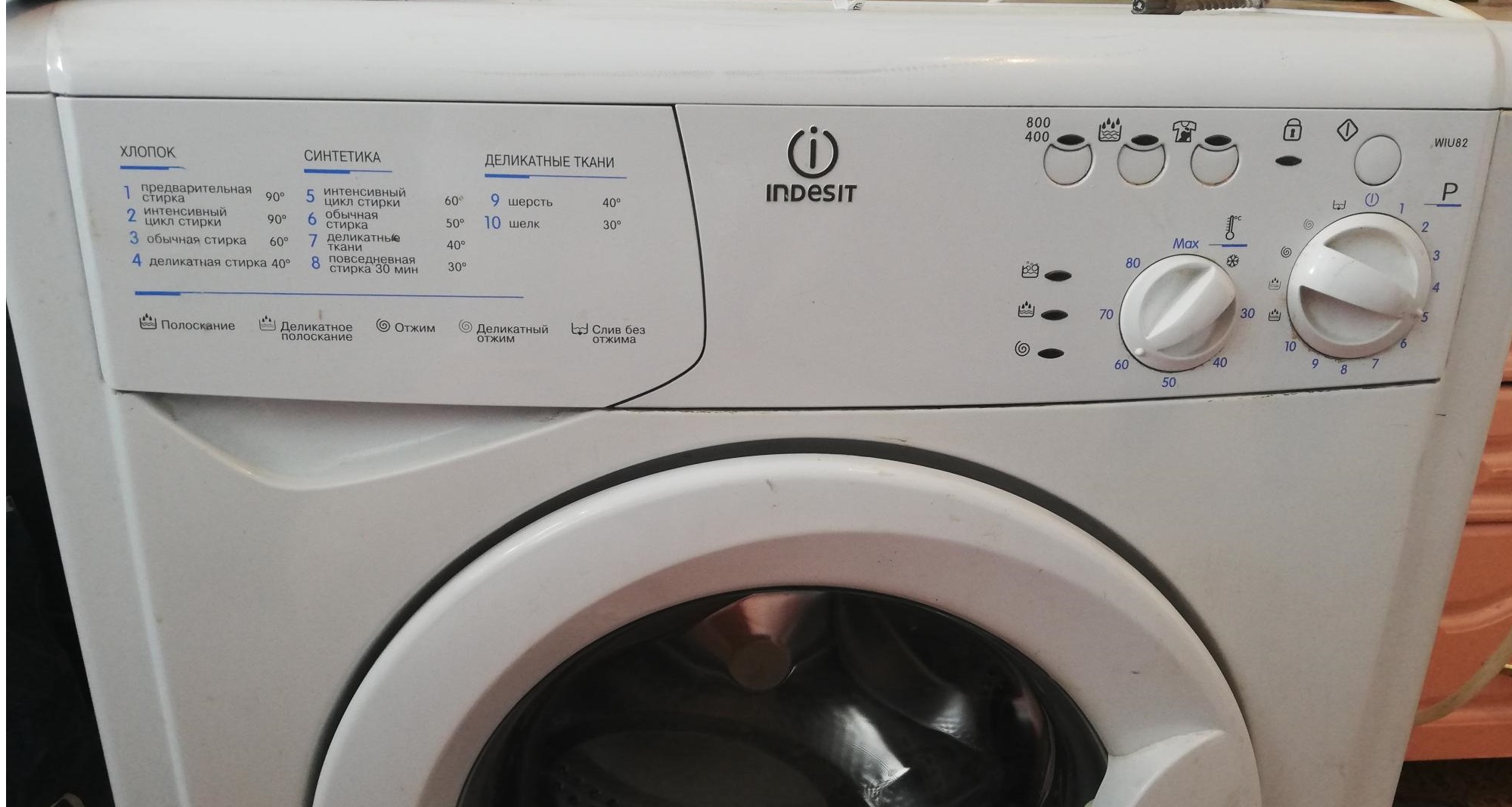
- The appliance freezes during the heating stage. This means the heating element is faulty and won't start heating the water.
- The machine "loops" several times during the cycle. Most likely, the main control unit is not working correctly;
- The drum cannot reach the set speed, or it accelerates too slowly. Most likely, the maximum permissible load weight of the equipment has been exceeded or an imbalance has occurred.
By carefully observing your machine, it won't be difficult to identify the main symptom of a malfunction. Let's figure out what to do once the cause of the prolonged wash cycle has been identified.
There was a mistake with the drain connection.
The first thing to do is check the water pressure at the faucet. If it's very weak, then it's understandable why the cycle is taking so long. In this case, you should wait until the water supply is restored.
If the drain hose is not connected correctly to the sewer line, liquid will fill and then immediately drain from the system. The pressure switch will send a signal to the control module indicating insufficient water, and the "brain" will command the drum to refill.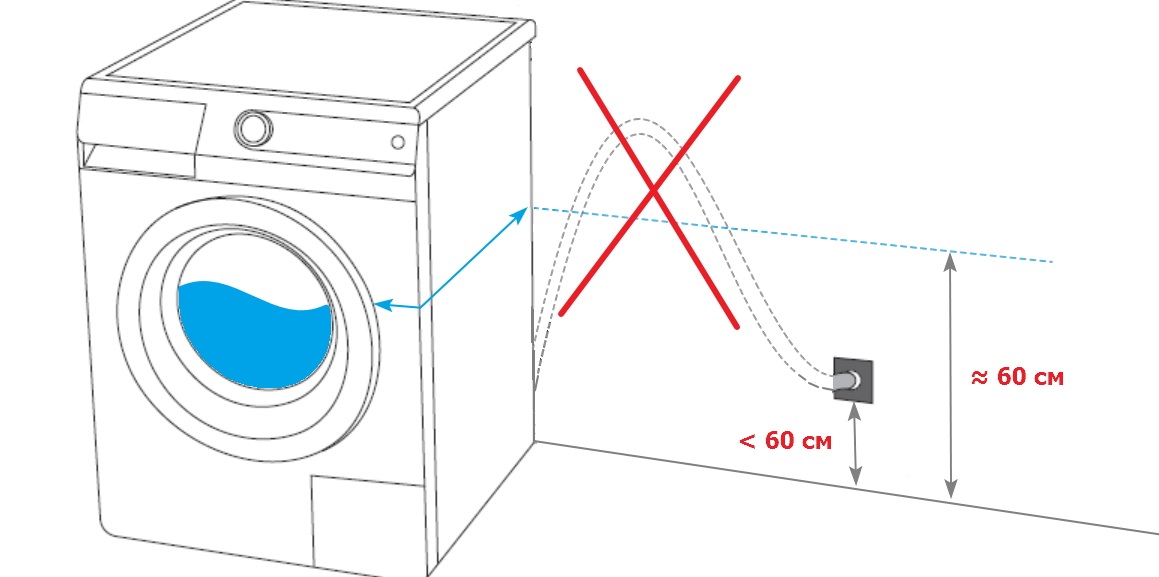
The drain hose connection needs to be checked. It should be positioned 50-60 cm above the floor. If it's located less than that, the liquid will drain out of the system by gravity. It is recommended to connect the drain hose through a siphon, rather than directly to the sewer, to avoid the problem of water spontaneously draining from the tank.
The filling line is clogged
Taking too long to draw water can also delay the cycle. Therefore, it's important to thoroughly inspect the inlet system. Check the inlet hose for kinks or pinched objects. Then, do the following:
- de-energize the washing equipment;
- disconnect the inlet hose from the washing machine;
- rinse its cavity under running water;
- Remove the filter mesh and clean off any dirt. If the element is rusty, soak it in a citric acid solution;
- Install the filter and hose back in place.
The drainage system is inspected as follows:
- disconnect the machine from the power supply, turn off the water supply;
- Unscrew the dust filter; it's located in the lower right corner of the unit behind a special panel. Before removing it, it's best to cover the floor with rags, as liquid will leak out of the hole.
- clean the filter element, remove debris from the hole;
- put the trash filter back in place;
- Disconnect the drain hose and rinse it under running water.
If cleaning the drain filter and hose doesn't help, you'll have to dig deeper. Lay the washing machine on its side and inspect the pump hose. Locate the hose, loosen the clamp, and remove the hose from the pump. Clean the hose and reattach it.
The level sensor is malfunctioning
Another reason why a cycle won't stop is a faulty pressure switch. In this situation, the level sensor sends incorrect signals to the "brain" or fails to function at all. The control module doesn't recognize that the machine has filled with the required amount of liquid and doesn't signal the start of the wash cycle.
Before starting any repairs to your washing machine, you should turn off the power and turn off the water supply valve.
To replace the pressure switch yourself: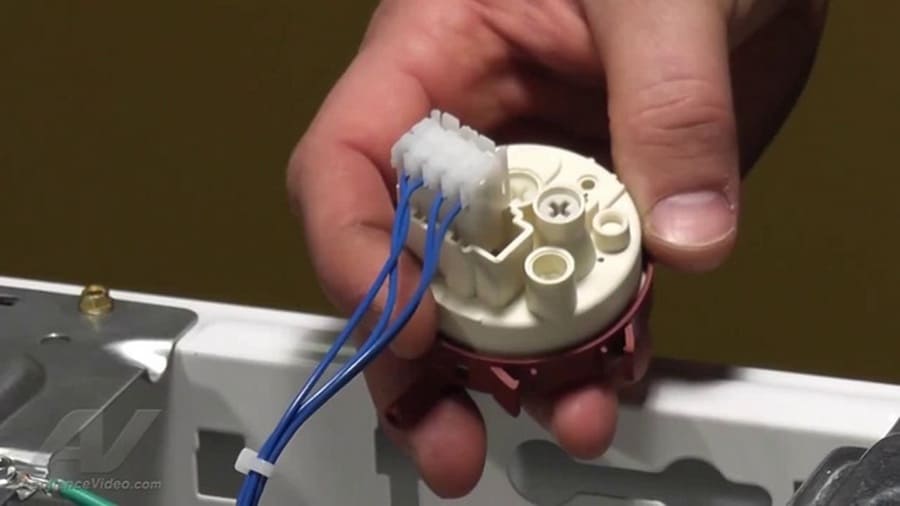
- remove the top cover of the case by unscrewing the two bolts holding it;
- find the pressure switch;
- disconnect the level sensor contacts, disconnect the pressure hose, remove the mounting screw;
- install a new part, connect in reverse order.
How can you check if the pressure switch needs replacing? You can find the sensor under the cover, disconnect the tube from it, attach another tube of the same size to the fitting, and gently blow into it. If you hear a click, the element's mechanics are fine. Complete silence indicates a faulty pressure switch.
Fill valve
A faulty solenoid valve can also be the cause of a prolonged wash cycle. Sometimes its membrane gets stuck, allowing water to flow unimpeded into the drum. Repairing the inlet valve is pointless; it needs to be completely replaced. The procedure is as follows:
- remove the top cover;
- find the valve, it is located near the back wall;
- disconnect the contacts and all hoses from it;
- unscrew the fixing bolts;
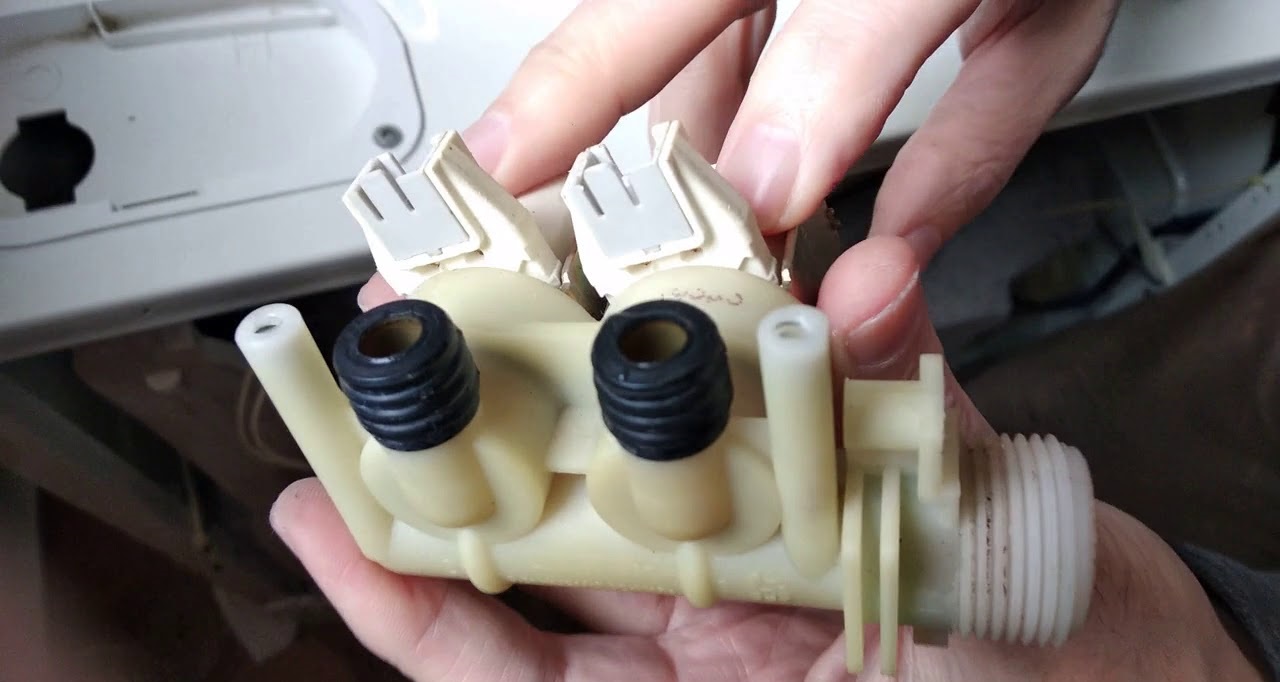
- remove the old valve;
- Install and secure the new part, connect the hoses and wiring.
This concludes the quick diagnostic. If the problem still hasn't been resolved, we'll have to dig deeper.
Thermistor or heating element
Hard water causes scale to form on the washing machine's heating element. This disrupts heat transfer from the element. Heating the water to the set temperature occurs very slowly, prolonging the wash cycle.
You can try to remove the deposits from the heating element. To do this: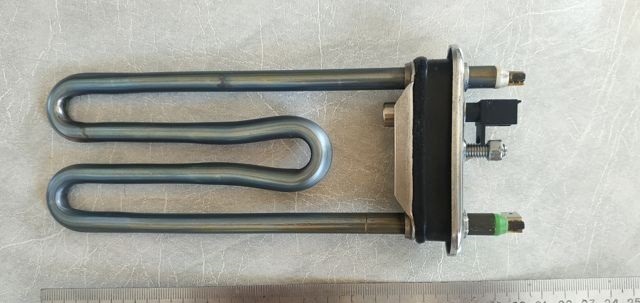
- remove the top cover, dismantle the back wall of the case;
- disconnect the heating element contacts;
- loosen the central nut, push the screw;
- remove the heating element.
What to do next? There are various descaling agents available. You can also try cleaning the surface with common household cleaning products. For example, soaking the part in a citric acid solution for 24 hours should remove the deposits easily.
Be sure to test the heating element with a multimeter; if a faulty element is detected, the part will have to be replaced.
A faulty temperature sensor may be the cause of a cycle that won't stop. When the water reaches the desired temperature, the thermistor transmits a signal to the control module, which then switches off the heating element. The thermostat is located in the heating element housing; if it's not working properly, the sensor needs to be replaced.
Control board
Non-stop operation of the washing machine sometimes indicates damage to the main module. The control board may not function correctly due to a burnt-out triac, corrupted firmware, or defective soldering of the tracks. In any case, it's not a good idea to mess with the washing machine's internals without sufficient knowledge. It's best to entrust such repairs to an experienced technician.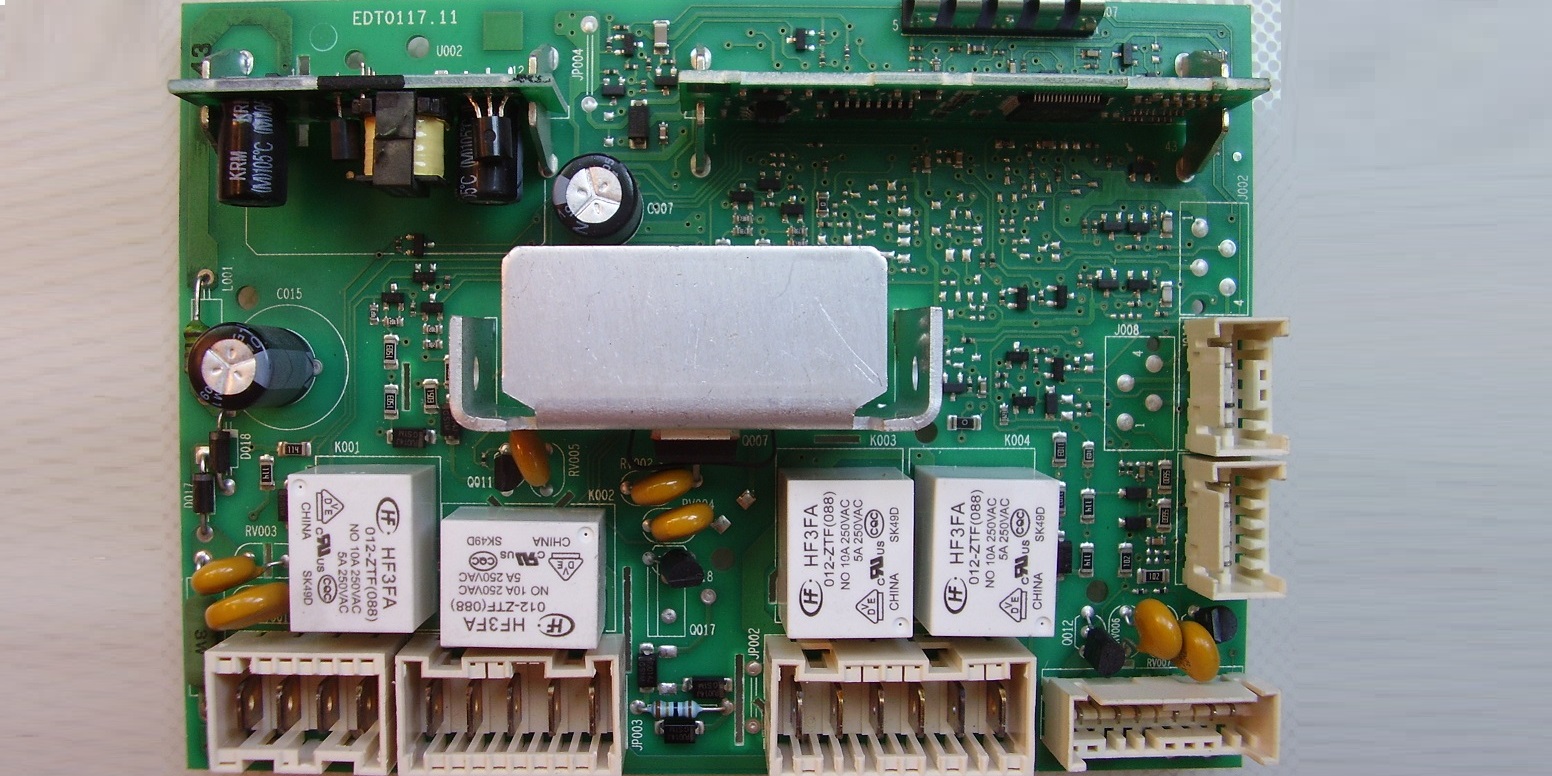
You can remove the control module yourself and take out the board to visually inspect it for damage. Often, burnt components or tracks are visible to the naked eye. In this case, you can try replacing the faulty part.
Interesting:

4 reader comments
Add a comment
Headings
Washing machine repair




For buyers




For users


Dishwasher




Why does my Indesit washing machine start with stripes?
Washes non-stop, wash indicator flashes.
If the drain hose is not connected to the sewer correctly, liquid will collect and immediately drain from the system.
The indicator light with the check mark is on after the wash cycle is complete. The instructions say it will turn off after three minutes. But that doesn't happen.