
Why does my LG washing machine take so long to spin?
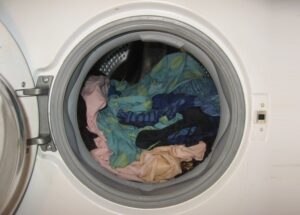 If your LG washing machine takes a long time to spin, it's immediately noticeable. After the rinse cycle, the machine fails to reach the set speed, freezes, and rotates the drum slowly. As a result, instead of the designated 3-5 minutes, the machine washes endlessly or freezes completely. Waiting for the prolonged spin cycle to finish is futile—the machine will no longer be able to complete the program. You need to forcefully stop the cycle and then find and fix the cause of the slowdown.
Drum overload, imbalance or dampers
A washing machine may not spin properly in two situations: an imbalance or a motor problem. The first situation is more common and can be resolved more quickly by eliminating the cause of the drum imbalance. Typically, there are three possible causes:
- exceeding the maximum drum load;
- not enough items in the bin;
- "clumping" of laundry.
Normally, an LG washing machine spins in 3-6 minutes!
As a rule, the problem lies in non-compliance with loading standards. If you put too much laundry in the drum, the weight will increase when it gets wet, and a special sensor will detect the overload. For protection, the system prevents the motor from accelerating into the spin cycle to prevent damage to the spider, spindle, and other components of the washer. The solution is simple: open the door, remove some items, and restart the machine.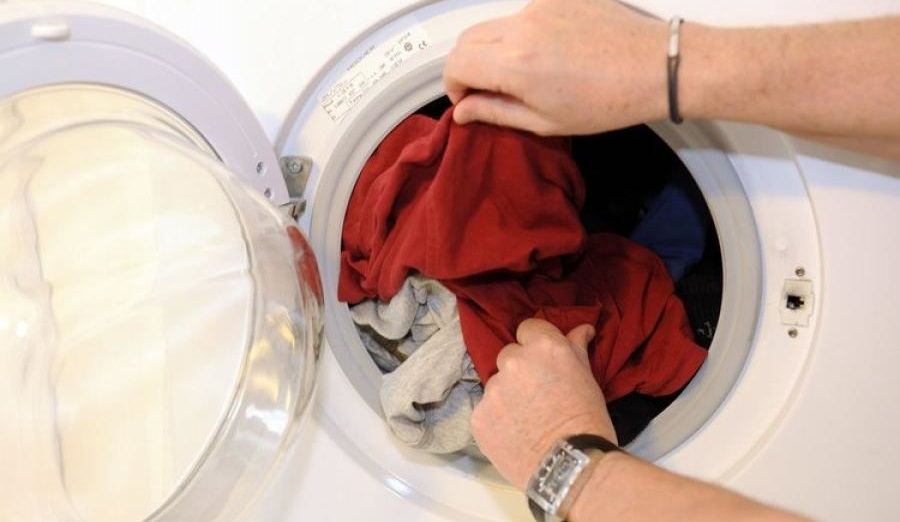
A similar situation will occur if the load is underloaded. A drum that is too light will shift during the spin cycle, causing imbalance. Therefore, each LG washing machine has two parameters: a maximum and a minimum load weight.
The washing machine also spins endlessly if the laundry in the drum is tangled. Uneven distribution of the laundry causes an imbalance—one side is overweight, causing the drum to wobble. To correct this, stop the wash, separate the items, and restart.
My LG washing machine takes a long time to spin due to problems with the drum balance!
Another cause is shock absorption issues. When one of the dampers loses its elasticity, the vibration emanating from the rotating drum is not adequately dampened. The washing machine begins to bounce, the drum begins to wobble, and the automatic imbalance control system sounds the alarm. The board reads the signal and, for safety reasons, prevents the motor from accelerating, slowing the spin cycle.
Let's pay attention to the Hall sensor or motor
If there are no signs of imbalance or problematic shock absorption, then the only other option is the engine. Most often, the cause is a faulty tachogenerator—the Hall sensor that monitors RPM. Without this monitoring, the engine begins to rev erratically, changing speed abruptly, slowing down, or stalling. To diagnose the problem, the tachogenerator needs to be checked.
To check the Hall sensor, you need to remove it. Follow these instructions:
- disconnect the machine from the power supply and water supply;
- detach the back wall from the body;
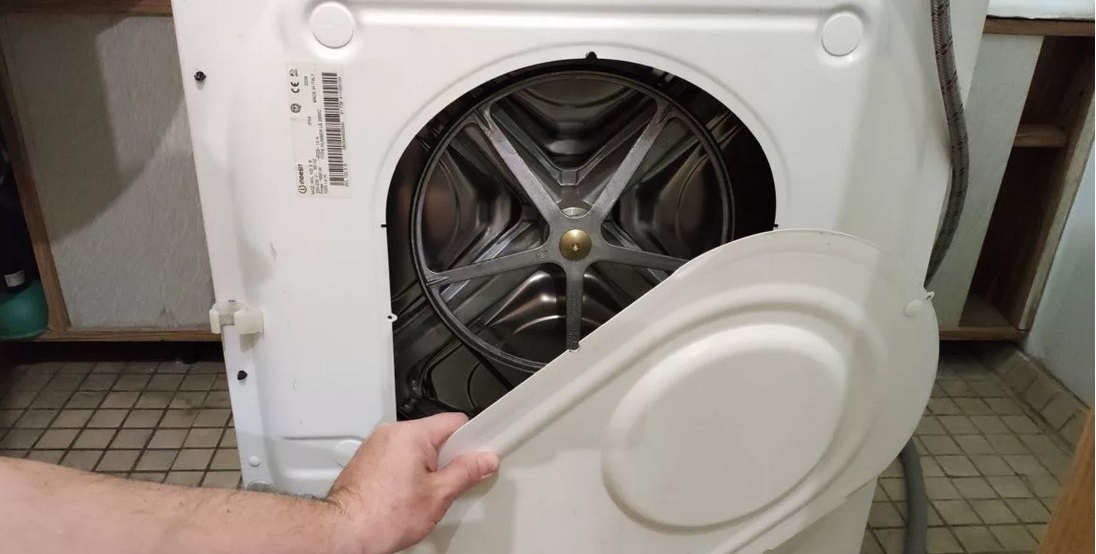
- tighten the drive belt;
- find the electric motor under the washing tank;
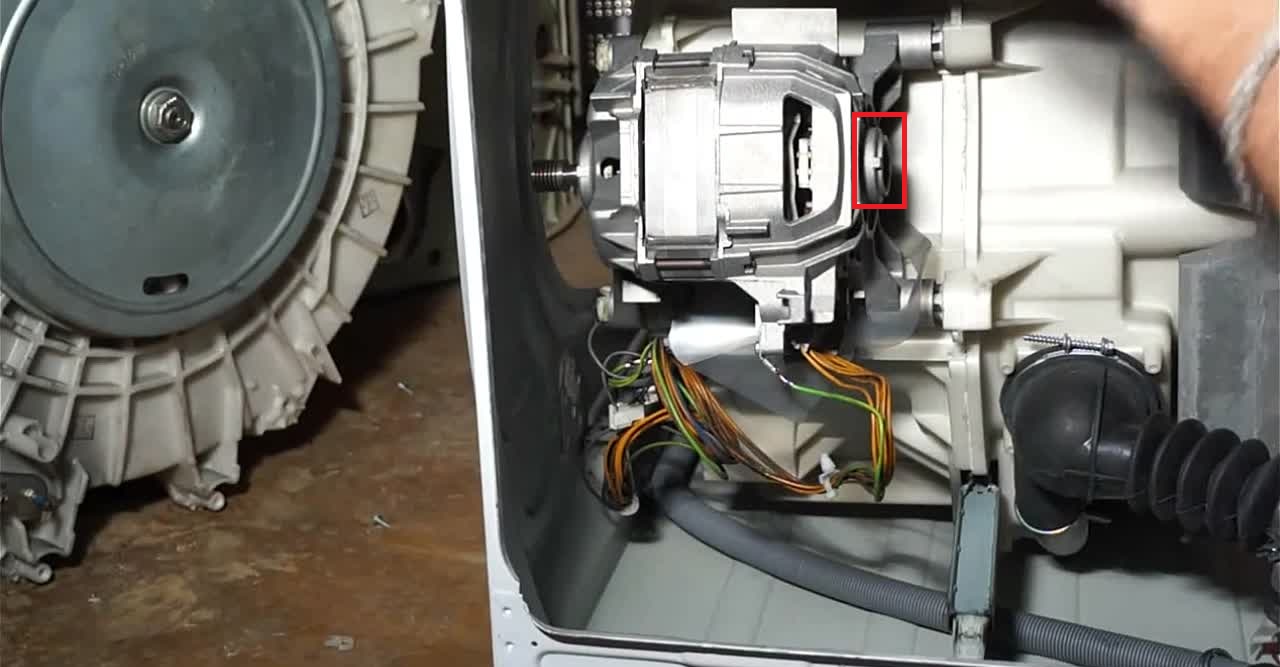
- take a photo of the contact locations;
- release the "chip" from the wires;
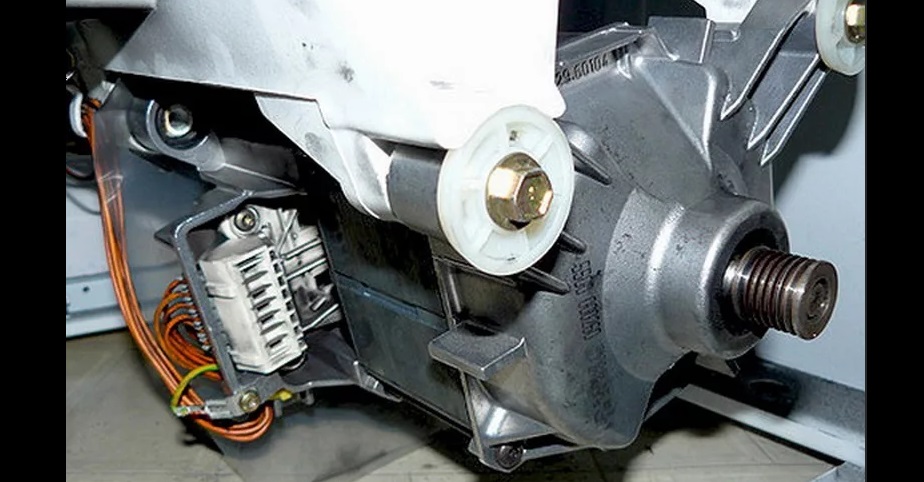
- unscrew the engine fixing bolts;
- “drown” the motor in the “nest” (it is permissible to carefully tap the element with a mallet);
- pull out the engine;
- detach the Hall sensor.
The next step is to check the sensor. The multimeter probes are connected to the contacts, and the value displayed on the display is compared with the standard. If a "0" or "1" appears, the tachogenerator is faulty. The broken device must be replaced, for which a suitable one is purchased for the model LG analogue.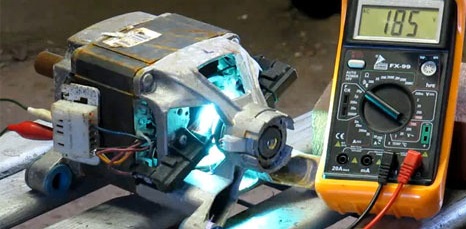
If there are no problems with the sensor, then you should inspect the motor itself (not suitable for machines with an inverter motor). The commutator has a weak point—the electric brushes, which rub against the motor housing during operation and eventually need to be replaced. To check the condition of the graphite rods, you will need to:
- detach two “cases” from the body (on both sides of the engine);
- unsnap each brush;
- compress the spring mechanism and remove the graphite rod;
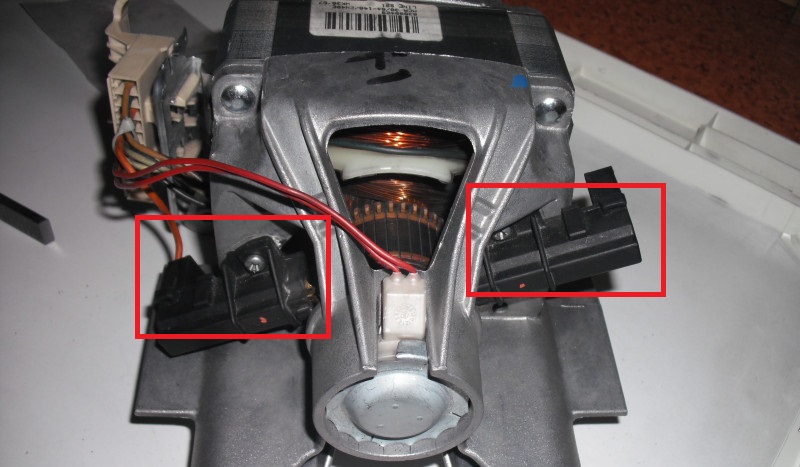
- measure the length of the "coals";
- remove the old rods if at least one of the brushes is not long enough (an important detail: brushes are always changed in pairs);
- Fix new brushes to the motor.
A faulty motor with a damaged stator winding. In this case, the electric motor loses power and fails to reach its proper speed, even though it appears to be working properly. It is difficult to visually determine the problem; it is better to use a multimeter to test the wiring for a breakdown. It is important to examine each turn, as the leak may be local.
Engine problems are indicated by a burning smell, sparking, and melted insulation on the contacts.
A broken winding cannot be repaired. The entire motor will have to be replaced. When purchasing a new motor, be sure to refer to the serial number of your LG washing machine. To avoid choosing the wrong motor, bring your old unit to the store and ask a sales associate to find a replacement.
Interesting:



Readers' comments
Headings
Washing machine repair




For buyers




For users


Dishwasher




Add a comment