
LG washing machine does not spin.
 Sometimes users notice that their LG washing machine isn't picking up speed during the spin cycle. The machine runs normally and starts the rinse cycle, but at the end of the cycle, it can't reach the required speed. Let's look at what to do in this situation and what parts of your "home helper" need to be checked.
Drum overload, imbalance or dampers
These three causes are grouped together for a reason. They are the ones that most often cause spin problems. In the case of overload and imbalance, the machine can be restored to working order in just a few minutes. If the dampers are damaged, more extensive repairs will be required.
The first and most important rule is to keep track of how much laundry you put in the washing machine. If you exceed the maximum load weight, it is likely that the machine will not be able to spin the drum to the required speed. When the laundry gets wet, it becomes heavier; the sensors detect too much weight, and the control module prevents the spin cycle from starting, as there is a high risk of damaging the spider.
If the washing machine is overloaded, simply remove some of the items from the drum and the washing machine will then spin smoothly.
If the laundry in the drum has become clumps, the washing machine will also not spin. To resolve this, simply spread the laundry evenly in the centrifuge. Once the clumps are removed, resume spinning.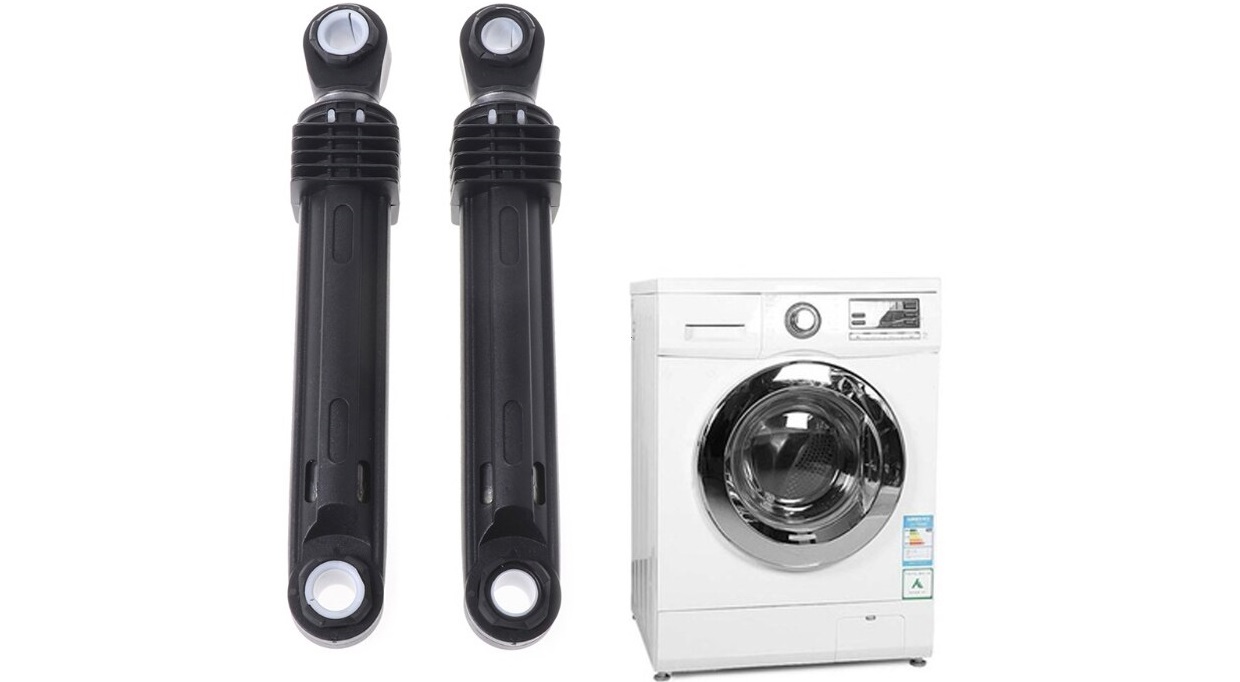
Sometimes the above measures may prove ineffective due to damage to the shock absorbers in your LG washing machine. In this situation, the drum is not secured in the machine and wobbles, risking damage to other internal components. The control module doesn't detect this problem, but the automatic weighing sensor registers it as an overload and prevents the spin cycle from starting. Repairs will require replacing the shock absorbers.
Incorrect settings
In some cases, items remain wet in the drum due to simple carelessness. Sometimes, in a rush, users select a wash cycle they didn't intend, or activate a different program that doesn't include a spin cycle or is set to the lowest speed. This situation can occur when activating the following functions:
- "Delicate";
- "Night wash";
- "Silk";
- "Sportswear";
- "Wool".
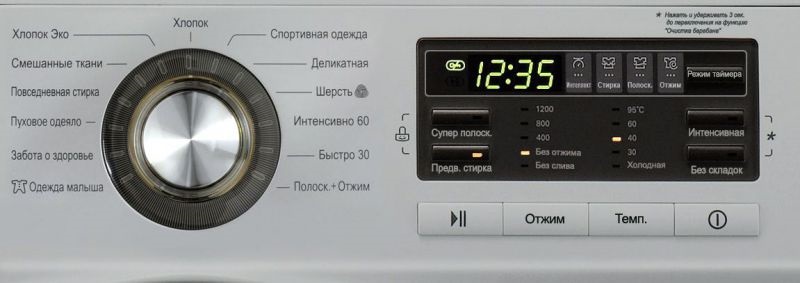
If you select one of the programs listed above, don't expect your washing machine to perform a full spin cycle. If you notice your laundry is still wet, simply run the spin cycle separately, setting the desired spin speed.
LG washing machines have a "No Spin" button on their control panel. If you accidentally press it while activating any program, be prepared for your clothes to remain wet.
Let's pay attention to the Hall sensor or motor
A faulty tachogenerator may be the reason why your washing machine won't spin clothes. The Hall sensor regulates the engine speed, so if it breaks down, the drum speed is disrupted. You can check the element yourself, for this you need to:
- remove the rear panel of the machine body;
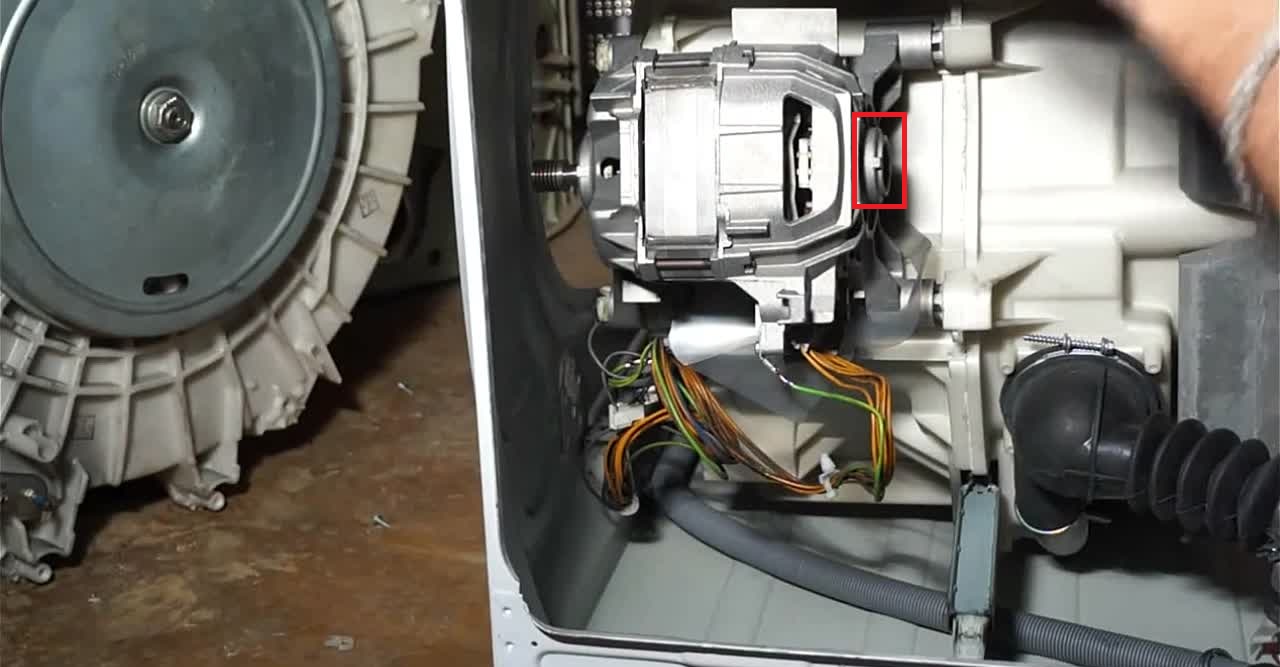
- find the motor and tachometer (they are located below, under the tank);
- take a photo of how the wires are connected to the elements (to avoid making mistakes when reconnecting the parts);
- reset the wiring from the engine and Hall sensor;
- unscrew a couple of bolts holding the motor in the retaining feet;
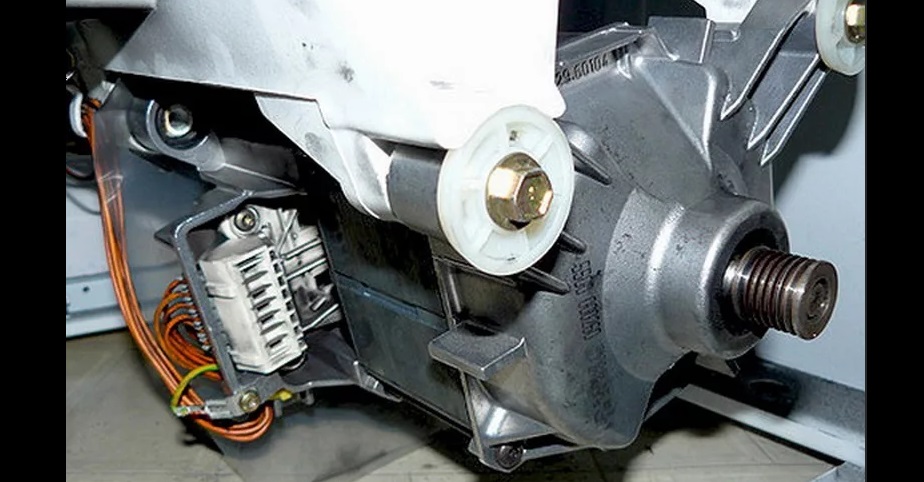
- press on the electric motor body to “sink” it inward;
- remove the motor from the machine body;
- remove the tachometer sensor (small ring) from the electric motor;
- test the Hall sensor using a multimeter.
The multimeter is set to resistance measurement mode. The device's probes are then placed against the Hall sensor contacts. If the tester display shows a zero or a one, the tachogenerator is faulty.
For replacement, you should buy an original Hall sensor for the LG washing machine; analogs will not work.
A failed electric motor could also be the cause of a lack of spin. Inverters break down extremely rarely, literally in isolated cases, but commutators have a couple of weak points. Typically, the brushes and stator winding are damaged.
If the brushes are truly worn out, repairing the machine is relatively simple. Simply purchase the appropriate components and install the new ones yourself. If the winding is damaged, the entire motor will have to be replaced. To inspect the motor, remove it from the housing. To remove and inspect the brushes, unscrew a small bolt on each side. Then, remove the graphite rods from the groove. If one is even a few millimeters shorter than the other, the pair must be replaced.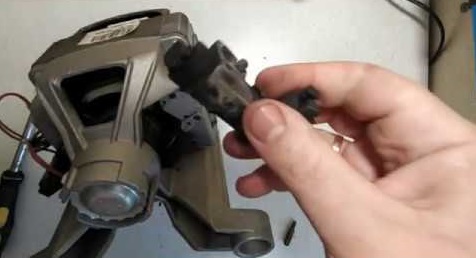
If the brushes are in perfect working order, the stator winding may be the problem. It is tested with a multimeter for breakdown. During diagnostics, every turn must be checked. An indirect sign of damage is a burning smell coming from the motor. A breakdown in the stator winding causes the electric motor to lose power. This prevents it from accelerating to high speeds. Rewinding the motor is very expensive; it is much easier and cheaper to buy and install a new motor. The unit is selected for the specific model of the washing machine.
If you notice your washing machine isn't spinning, don't panic. The answer is usually obvious: the function was accidentally disabled, you overloaded the machine, or the washing machine detected an imbalance in the drum. This is extremely rare. Even if the tacho sensor or motor is faulty, you can repair the machine at home. Replacing these components is quite simple, and no special skills or knowledge are required.
Interesting:



Readers' comments
Headings
Washing machine repair




For buyers




For users


Dishwasher




Add a comment