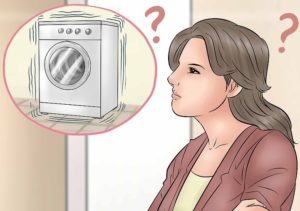
If your LG washing machine is jumping around during the spin cycle for no apparent reason, don't ignore it. This behavior may seem harmless and insignificant, but in reality, it can sometimes mask a major technical issue. Ignoring the problem can lead to internal damage, even death. To avoid making the situation worse, learn how to react appropriately to increased machine vibration. This is what we'll discuss below.
What causes shaking?
Normally, the machine should vibrate, but almost silently, and a noticeable increase is only permissible during the spin cycle. If the vibration develops into an unhealthy and suspicious shaking, then there are good reasons for this. Some of them are harmless and easily fixed, while others indicate major problems and require costly repairs. To understand the appropriate course of action, let's examine the entire list:
unstable position of the machine;
the resulting imbalance;
exceeding the maximum weight limit when loading items or, conversely, not enough laundry in the drum;
unremoved transport bolts;
foreign objects (keys, hairpins, pins, small toys, children's socks) getting inside the machine;
faulty shock absorption system;
worn bearing assembly;
problems with counterweights (loosening of fixation or damage to the concrete block);
broken electric motor.
Many causes can be identified and corrected at home if you understand the washing machine's design and adhere to safety precautions. The key is to take immediate action rather than letting the shaking continue. Specific steps and recommendations are provided below.
How to find a breakdown?
If you decide to take action yourself, we begin by identifying the culprit and what to do to "calm down" the washing machine. The troubleshooting process should proceed sequentially, from the simplest to the most complex. First, rule out an imbalance, which can be resolved in a couple of minutes. An imbalance causes the machine to start jumping violently, as during the wash cycle:
the linen is crumpled in one place, for example, it got caught in a hole in the duvet cover;
the weight of the clothes is above the set maximum limit for the washing program included;
the weight exceeds the loading norm, or, conversely, there are too few items.
The LG washing machine's self-diagnostic system will signal an imbalance with the error code UE or UB.
During the first wash in a newly purchased washing machine, a suspicious vibration indicates that the transport bolts have not been removed. These bolts are installed in the machine to secure the drum and must be removed before using the machine.
Another simple cause is improper installation of the machine body. Checking the machine is easy: simply rock the machine while it's turned off. If the washing machine moves with a gentle push, the problem has been detected. To confirm this, measure the machine's position with a spirit level.
Next, open the hatch door and shine a flashlight into the tank while rotating the drum. It's likely that a hard object is lodged inside the housing, preventing the motor from spinning. As a result, the machine begins to wander around the room and hum.
If the "culprit" of the shaking isn't detected at this stage, we'll have to move on to more serious problems. The first to be addressed is the shock absorbers, which are supposed to smooth out all mechanical vibrations in the machine. When the shock absorbers wear out, the machine "jumps," and the drum begins to knock against the walls of the machine. A similar knocking sound is also heard when the counterweight weakens. Bearings indicate wear with another sound – a loud grinding noise.
If your washing machine is under warranty, you can't try to cover up the case yourself—diagnostics and repairs should only be performed by a service center technician.
To accurately diagnose the problem, remove the top panel of the machine and inspect each of the aforementioned parts one by one. If no faults are found, two options remain: a faulty electric motor or a manufacturing defect. Once the problem is identified, you can begin repairs—step-by-step instructions are provided below.
Do-it-yourself repairs
Once it's clear why the washing machine is "walking" on the floor, you can begin troubleshooting. The solution depends on the nature of the problem. So, if an imbalance occurs, we proceed sequentially.
We stop the started program.
We disconnect the machine from the power supply.
Wait until the drain is complete and open the drum. If the water doesn't drain automatically and the locking device doesn't shut off, use the emergency drain through the service hatch.
We break up the "clump" of items and distribute them evenly throughout the drum. If there's an overload, remove some laundry; if there's an underload, add more.
We close the drum.
We start the program or spin.
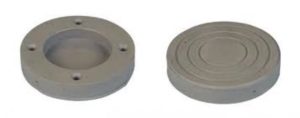
If the washing machine is jumping due to improper installation, the solution is to level the surface with a spirit level. The feet should also be adjusted to ensure the washing machine is as level and stable as possible. You can also use anti-vibration and anti-slip pads on the feet.
Removing items trapped under the drum requires some effort. First, try hooking the item with a bent wire, and if that doesn't work, remove the back panel, take out the heater, and retrieve the lost item by hand.
If the shock absorbers are faulty, replacement is the only solution. Dampers are only replaced in pairs, even if the left or right one appears to be virtually untouched. The procedure for dismantling and installing spring structures is complex, so it is recommended to study a separate article devoted to this topic.
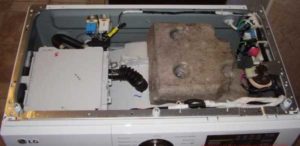
If the counterweight is the culprit, you'll have to remove the top panel of the frame and inspect the concrete blocks from the inside. The weights are secured with bolts, which are best tightened with pliers and wrenches. If the screws don't lock but rather spin, you'll have to remove the old fasteners and install new ones. The same procedure applies if the concrete is damaged.
If the automatic transmission is jumping due to bearings, it's best to call a service center immediately. Replacing the bearing assembly is a very labor-intensive process. If you want to figure it out yourself, check out our instructional article on this topic.
Experts recommend replacing bearings and seals every 77 years.
The worst case scenario is when the motor fails. Few people can repair the motor themselves, and a new one will be very expensive. Often, repairs and replacements aren't worth it—it's cheaper and easier to buy a new washing machine.
Opinion of professionals
"Jumping" is a common problem that can go from harmless and trivial to quite destructive and costly. To avoid crossing this line, it's worth considering several expert tips that can minimize the effects of vibrations and reduce them to zero. These recommendations include the following:
use special rubber or silicone pads for the legs that have sound-insulating properties;
lay a layer of sound insulation behind the wall of the machine;
do not place the machine close to the headset or other objects;
do not load the machine more than 1/3 full;
remove transport bolts in a timely manner;
remove small objects stuck in the machine with a magnet or vacuum cleaner;
sort things by size and type of material.
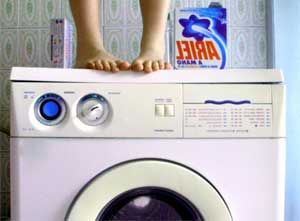
Do not use the top of the machine as a storage surface – it should be empty.
The most important thing is not to experiment. For major breakdowns involving the engine, bearings, control board, and dampers, it's better and more reliable to contact professionals. Remember that LG direct-drive washing machines require a different approach than belt-drive washing machines, and only an experienced technician can determine the optimal approach.

 If your LG washing machine is jumping around during the spin cycle for no apparent reason, don't ignore it. This behavior may seem harmless and insignificant, but in reality, it can sometimes mask a major technical issue. Ignoring the problem can lead to internal damage, even death. To avoid making the situation worse, learn how to react appropriately to increased machine vibration. This is what we'll discuss below.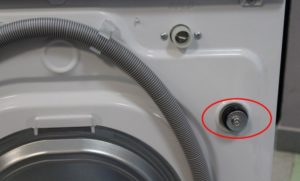
 During the first wash in a newly purchased washing machine, a suspicious vibration indicates that the transport bolts have not been removed. These bolts are installed in the machine to secure the drum and must be removed before using the machine.
 If the washing machine is jumping due to improper installation, the solution is to level the surface with a spirit level. The feet should also be adjusted to ensure the washing machine is as level and stable as possible. You can also use anti-vibration and anti-slip pads on the feet.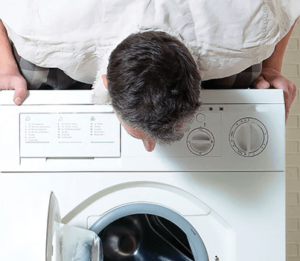

















Add a comment