
LG washing machine freezes during spin cycle
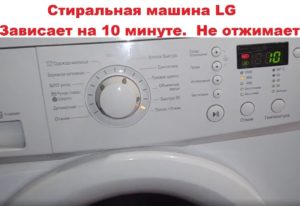 What should I do if a normal wash cycle ends with the laundry stuck instead of spinning? After rinsing, the washing machine should proceed to the next stage, but certain system malfunctions prevent this. The machine may display an error code, but more often, the device doesn't indicate the cause of the problem. If your LG washing machine gets stuck during the spin cycle, you'll have to troubleshoot the problem yourself. Where should I begin?
What do we check first?
The machine may freeze not only due to problems with the system, but also due to trivial errors in using the washing machine. First of all, the user needs to exclude reasons related to the specific operation and control of the machine. Necessary:
- Make sure you're in a wash cycle that includes a spin function. It's possible the selected program doesn't include draining and spinning. This applies to the "Wool," "Delicates," and other cycles. Turn on the "Spin" option to resolve the issue.

- Check that the drum's maximum load capacity is not exceeded. Otherwise, items will become heavier when wet, which could damage the drive mechanism. The machine will stop working until the problem is corrected. You will need to remove some of the laundry from the drum and restart the wash cycle.
- Make sure there's no imbalance. This can happen when washing a large item, such as a bedspread or curtain. When the drum spins at high speeds, the item clumps together, causing an imbalance. This can be corrected by evenly distributing the laundry inside the drum.
If the problem isn't the control errors described above, you need to dig deeper. You'll have to inspect the insides of your washing machine and repair it yourself. We'll tell you where to start.
Possible malfunctions
When repairing a washing machine, you should begin by inspecting the drum. There's likely a foreign object inside: a coin, a bra underwire, a sock, a button, etc. Foreign objects can cause the washing machine to stop working. Other possible causes of the machine freezing during the spin cycle include:
- Severe wear of the shock absorbers. Modern washing machines are very sensitive to system malfunctions. During the spin cycle, increased vibration is observed, which is absorbed by the dampers and springs. Wear of the shock absorbers can cause the drum to freeze and the machine to stop working. Repairs will include replacing shock absorbers;
- Malfunction of the electric motor and tachometer. The motor electronics are likely damaged or the brushes are deformed. The Hall sensor records the engine's RPM; if it fails, a new, working tachometer should be installed;
- Damaged water level sensor. The pressure switch transmits signals about the water volume in the tank to the control module. If the sensor is not functioning, the washing machine stops between the "Rinse" and "Spin" cycles;
- The washing machine must drain the waste water from the drum before the spin cycle. If the drum is full of water, the machine will not be able to start spinning the laundry. In this case, it is necessary to examine the equipment’s drainage system, as well as the sewer pipe, for blockages;
- Damage to the main control unit. This can occur due to a power surge. Module failure can also occur if the component is exposed to moisture.
If you don't have enough experience working with washing machine electronics, it's best to entrust repair of the control board to a qualified technician.
What to do if damage is detected? The nature of further work depends directly on the detected defect. Let's look at the main areas of car repair.
Let's clean the machine
We recommend starting with cleaning the drain filter. It's located at the bottom of the washing machine, under a special false panel. Before removing the waste filter, place a small container under the machine. Unscrew the filter element from the housing. Clean it of any hair, lint, or other debris.
Next, inspect the drain hose, outlet pipe, and sewer pipe. Clean the hoses and the drain trap. It's best to use specialized cleaning solutions for this job.
Let's look at the shock absorbers
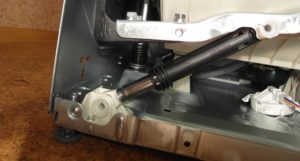 You may have noticed increased vibration, unusual creaking, and knocking sounds before your machine started freezing. This indicates the shock absorbers need to be checked. The springs are located under the washer's drum. The automatic washing machine stops working in the “Spin” mode when the shock absorbers are damaged, the fastening bolts are worn out, or the seal is worn out. To check the dampers, you should:
- de-energize the washing machine;
- remove the top cover of the unit housing;
- Press down hard on the tank, lowering it down;
- Stop pressing on the tank abruptly and observe the movements of the element.
If the tank suddenly jumps up and remains in its initial position, the shock absorbers are working at full capacity. If the tank wobbles back and forth, the dampers will need to be replaced.
The procedure for replacing shock absorbers depends on the design of each individual washing machine model.
Some washing machines simply need to be turned on their side and the bottom removed to access the shock absorbers. Other models require removing the front or rear panel. Samsung and Hansa machines require removing the shock absorbers along with the drum. The mounting locations of the springs and dampers may also vary, but in most cases they are held in place by plastic bushings.
Testing the water level sensor
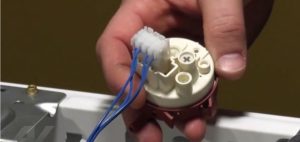 You can check the pressure switch yourself. The sensor is needed to measure the water level in the washing machine's drum. A frozen washing machine could be caused by clogged pressure switch hoses or a faulty sensor. The device is located directly under the top panel of the machine. The procedure for checking the pressure switch is as follows:
- de-energize the washing machine and remove the top cover;
- disconnect the wiring from the sensor;
- unscrew the fasteners and remove the level sensor;
- Inspect the hose for blockages and blow into it. If you hear clicking sounds, the device is working properly. Otherwise, replace the pressure switch.
Reconnect the element in reverse order. If you notice a problem with your washing machine freezing, don't rush to disassemble it. The problem may be as simple as an incorrectly selected mode or overload.
Interesting:



2 reader comments
Add a comment
Headings
Washing machine repair




For buyers




For users


Dishwasher




Ours froze the other way around, because the laundry was too light. That is, it was heavy enough for washing, but not for spinning.
Hello! Could you please tell me why my LG washing machine freezes after one minute and runs endlessly?