
Why doesn't the washing machine spin one item?
 Many housewives don't do laundry every day, but rather once a week on the weekends, when they not only have time but also enough laundry for one cycle. Occasionally, however, there are situations when you need to urgently clean just one item. Unfortunately, in this situation, you often encounter a problem with the washing machine not spinning a single item. That is, the wash and rinse cycles proceed smoothly, but then the machine simply stops during the spin cycle. Let's look at why this happens and how to fix it yourself.
The system that protects the machine from imbalance is to blame
Most often, the reason a "home helper" fails to spin a single item is due to the equipment's imbalance protection technology. This useful feature is present in almost every modern washing machine, so it's no surprise that housewives have trouble spinning small loads. It is thanks to imbalance control that the washing machine always reacts promptly to any problems related to the balance of the machine.
This occurs because of a special sensor that detects either uneven distribution of clothes within the system or other dangerous deviations from the norm. Once a problem is detected, the sensor sends a signal to the control module, which first attempts to correct the fault. If this fails, it simply stops the current cycle to prevent further damage. If the drum imbalance isn't prevented, a large lump of wet clothes can cause excessive vibration, leading to the appliance jumping and mechanical damage to key internal components. This can lead to damage to the bearings, the spider shaft, and the drum surface.
However, this usually occurs due to a heavily loaded drum, so loading just one item doesn't pose such a serious problem. However, in this situation, the control board still reacts to an imbalance, which is caused by the imbalance detection function not working perfectly. The problem is that the washer often perceives a single wet item as a lump of clothing, which threatens the system's balance and the entire shock-absorbing system.
So, what should you do in this situation? It's worth noting that this type of washing machine error can occur only occasionally, and is most often found in machines from Korean brands like LG and Samsung. There's no perfect solution, as there's no guarantee the problem will be fixed the first time. Most often, simply removing the item from the drum, spinning it lightly by hand, loading it back into the washing machine, spreading it evenly against the walls, and activating a separate spin cycle.
If this does not help to correct the situation, then it is worth trying to repeat the steps again.
There is also a known method for eliminating this problem using an ordinary balloon. The idea is to fill the ball with about five glasses of plain water, then tie it securely and place it inside the washing machine drum next to the item to be washed. According to washing machine users, this action prevents the machine from reacting to drum imbalances, so the cycle proceeds without incident.
The machine freezes during the spin cycle regardless of the load.
We've described a case where the system freezes after loading a single dirty item. But what if the washing machine isn't working properly even with a normal load? This can happen for a variety of reasons.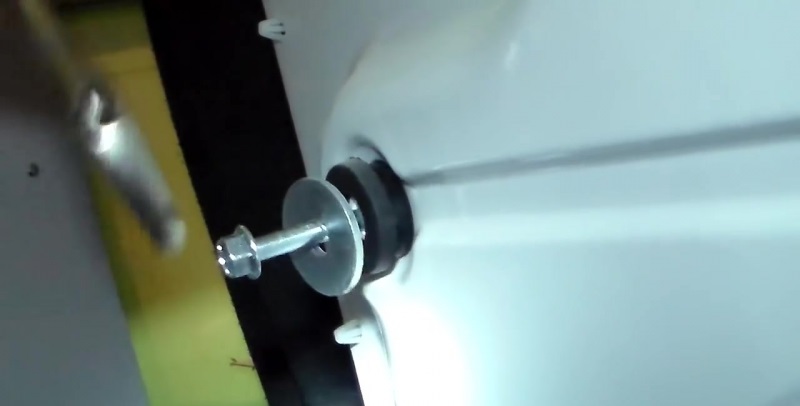
- Forgotten transport bolts. These fasteners are installed in the washing machine to ensure safe transport from one location to another, without risking damage to the tub and drum, which can fail if left unsecured. However, if the user forgets to remove the bolts and starts a wash cycle, this can damage key components, resulting in expensive repairs. Typically, there are four of these transport bolts, and they can be found on the rear panel of the appliance.
Starting the operating cycle without removing the transport bolts will void the warranty, so be extremely careful when installing your new "home assistant."
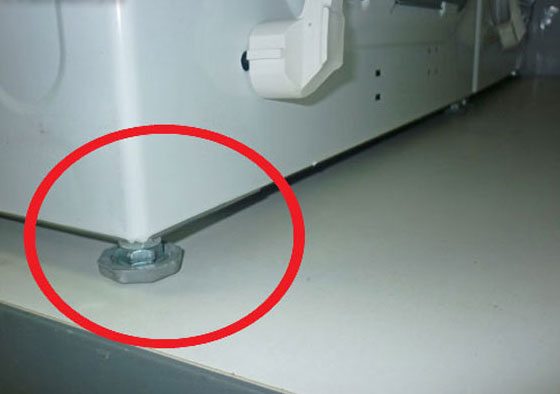
- Incorrect installation. The placement of household appliances also directly affects imbalance, as the more stable the machine is, the less vibration it will experience during operation. It's best to place the appliance on concrete or tile, then carefully level it using adjustable feet and a spirit level. For additional safety, consider purchasing a special anti-slip mat and foot pads. However, placing the washing machine on wooden floors, linoleum, laminate, carpets, or other unstable surfaces is strictly avoided.
- Damaged shock absorbers. To reduce vibration and imbalance, washing machines are equipped with shock absorbers that smooth out drum vibrations. However, if the parts have become damaged or the fasteners have simply loosened, the dampers will no longer be able to effectively dampen vibrations. Checking the components is very easy – simply remove the top panel of the machine, press down on the drum, and observe what happens. If the drum doesn't bounce a few centimeters and stop, but instead begins to wobble erratically, the shock absorbers will need to be replaced.

- Counterweight failure. Household appliance manufacturers also use concrete counterweights to ensure their products effectively absorb the centrifugal force from the drum, especially during the spin cycle. Several concrete counterweights are placed at once—at the top, sides, and sometimes even at the bottom—to effectively support the drum from all sides. If such a counterweight becomes deformed or damaged, it will cause an imbalance in the system, preventing vibration dampening, causing the washing machine to bounce during operation, and causing its internal components to bang against each other. To remedy this, you'll need to partially disassemble the machine, examine the counterweights, and either secure them more securely if the mounting bolts have become loose, or replace them if the chips and cracks cannot be repaired.
Minor damage to concrete counterweights can be easily repaired using cement mortar and ordinary PVA glue.
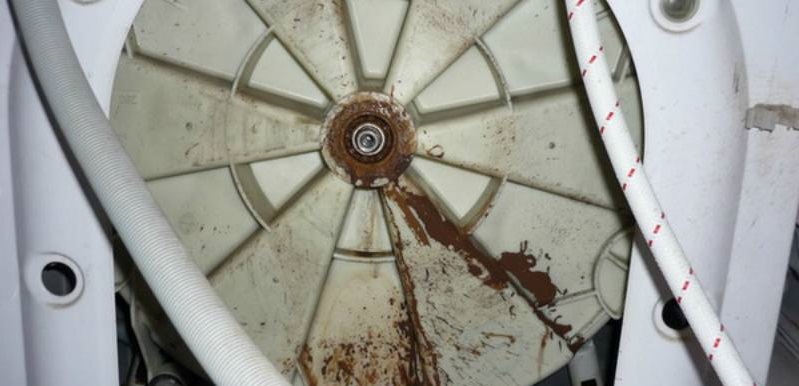
- Bearing failure. Finally, the problem could be caused by a damaged bearing assembly, which you'll notice if the drum spins slowly or if a loud clanking noise occurs during the wash cycle. Diagnosing and repairing this component on your own is very difficult, so it's best to call a repair service to avoid further damaging your washer.
Never use damaged appliances, as this will not only prevent you from getting a high-quality wash but also risk making the problem worse. Always closely monitor your washing machine's performance so that you can begin repairs immediately at the first sign of a problem.
Interesting:





Readers' comments
Headings
Washing machine repair




For buyers




For users


Dishwasher




Add a comment