
The washing machine does not drain water completely.
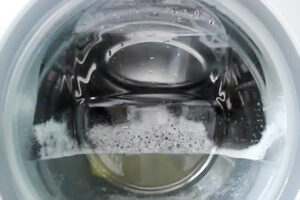 When a washing machine doesn't completely drain, the cycle can't complete properly. Items continue to swirl around in the soapy water. This problem is common and can usually be fixed without professional help. Let's look at the reasons why your machine might be acting this way.
Why does some of the waste remain in the machine?
First, you need to figure out why the water isn't draining completely. Observe the operation of your "home assistant." The pump may not be activating, in which case you won't hear the characteristic "buzzing" sound. There could be a variety of reasons:
- A clogged drain filter. It collects all the debris that ends up in the tank, including pieces of paper, candy wrappers, hairpins, keys, and coins. If you don't clean it for a long time, it will become so clogged that it won't drain at all. This is why experts recommend cleaning the "dustbin" at least once every three months.
- Clogged drain hose. During each cycle, tens of liters of wastewater flow through the hose. Undissolved powder granules, lint, and other debris settle on its inner walls. If the tank does not drain completely, unhook and clean the corrugated hose.
- Failure of the drain pump. A malfunctioning pump can result in insufficient water draining from the tank. This component of an automatic washing machine consists of the impeller, housing, motor, and hoses. Hair and threads tangled around the impeller or foreign objects lodged between its blades can cause the pump to malfunction. Furthermore, the motor itself may be damaged. In this case, the entire part will need to be replaced.
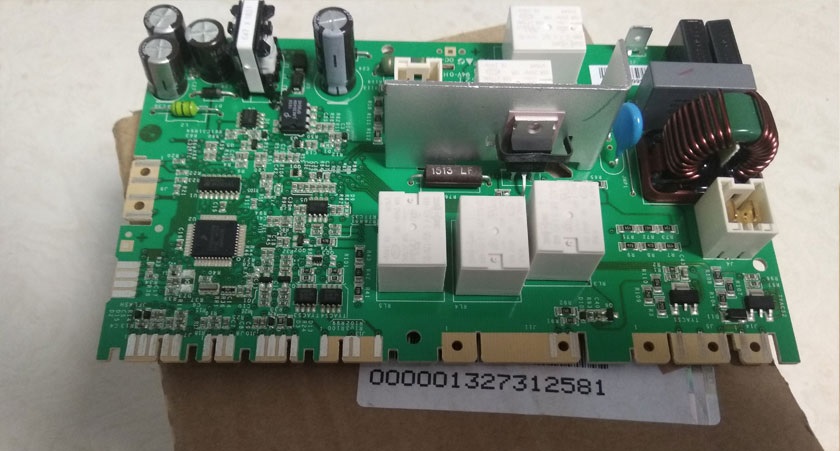
- Control module problems. A burnt-out semiconductor on the electronic board or the slightest firmware glitch will cause the unit to fail. For example, the machine's "brain" won't be able to command the pump to pump out water. In this case, diagnostics of the programmer are necessary;
- Incorrect drain hose connection. After several years of use, the pump's output decreases and is no longer sufficient to properly pump out water. This is especially true if the corrugated hose is longer than the standard 1.5 meters (this happens if the machine is installed far from utility lines);
- Damaged electrical wiring. The washing machine vibrates during operation, especially during the spin cycle. This can cause a break in the wiring in the system. This will disrupt the water pumping function. To correct this, all contacts will need to be inspected.
- The common house sewer pipe is clogged. In this case, the riser needs to be cleared. For assistance, contact the plumber who services the building.
If your washing machine is more than 6-8 years old and it makes a lot of noise during the spin cycle, it's likely that water remains in the tank due to a broken pump.
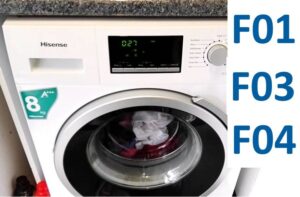
A self-diagnostic system, which all modern automatic machines are equipped with, will help you figure out exactly what's wrong with your machine. If your washing machine displays an error code, decipher the error – this will help determine the cause of the non-functioning drain. All information is in the instructions for the electrical appliance.
Options for removing residual water
To diagnose and repair your "home helper," it's necessary to remove any remaining water from the system. There are several methods for "forced" draining. Let's look at each one.
Before draining the water from the tank yourself, be sure to disconnect the power from the washing machine.
It's important to follow safety precautions. Forgetting to unplug the power cord and starting to drain the water can result in electric shock. Let's look at all the available methods for emptying the tank of an automatic washing machine.
A drain hose will come to the rescue. This is the fastest and easiest method. Disconnect the corrugated hose from the drain connection, lower the hose below the bottom of the drum, and point its end into a container. At this point, liquid should begin to drain from the washing machine on its own.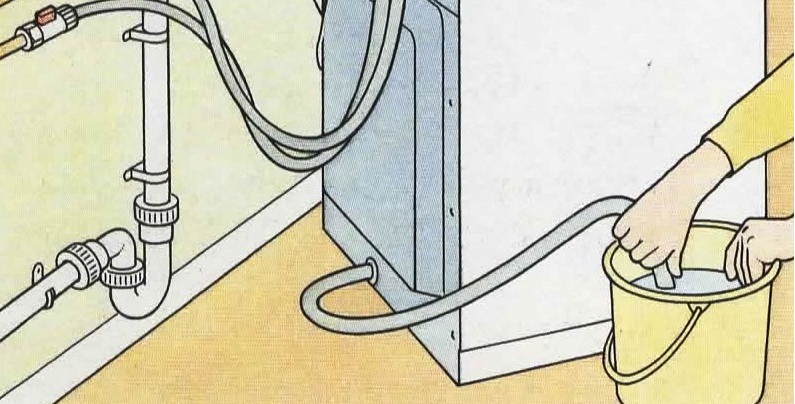
This option is the most effective, allowing you to completely drain the tank in just a couple of minutes. Unfortunately, this method is not applicable to all automatic washing machines. Bosch and Siemens models have a loop built into the drain hose to prevent self-draining. This safety device prevents water from escaping from the tank.
The second option is to empty the centrifuge using a debris filter. This device is found on all automatic washing machines. Its main purpose is to prevent dirt and foreign objects from entering the pump. It traps paper, paper clips, hairballs, and other debris.
What to do next? First, be sure to prepare a large container to collect the water and several dry rags. The drain filter is located at the bottom of the washing machine body, directly under the tank. Depending on your washing machine model, the dustbin may be covered by a decorative false panel or a small access hatch. Once you've located the filter, follow these steps:
- Cover the floor around the machine body with rags;
- Tilt the washing machine back and place a basin underneath it, right in the area where the dust filter is located;
- unscrew the plug half a turn, make sure that the water flows into the basin;
- Remove the element completely and collect any remaining liquid.
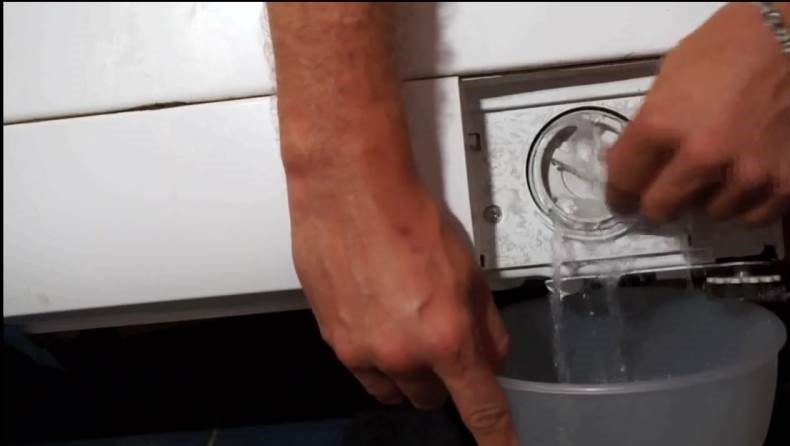
Modern automatic machines have an emergency drain hose near the waste filter. This is a third option for quickly draining water from the system. Simply point the end of the hose into a basin and remove the plastic plug.
If none of the above methods work, you can drain the tank through the hatch. This option is the most labor-intensive of the listed ones. To complete the procedure, you must:
- Check how full the drum is. When the water level reaches the middle of the door, you'll have to tilt the washing machine backward. To free your hands, you'll need to somehow secure the appliance in this position.
- carefully open the hatch door;
- Using a mug or other container, scoop water out of the tank.
This method isn't always practical either. Modern washing machines lock the door when the drum is full, making it impossible to simply open the door. This method isn't very convenient; besides being time-consuming, it also means that not all the water in the drum drains.
Finally, you can drain the drum of an automatic washing machine using the drain pipe. This option is used as a last resort. In this case, the water will be forced out directly from the machine's tank.
It's possible that no water will flow when you unscrew the drain hose. This indicates that it's clogged. This will not only allow you to empty the drum but also identify the cause of the machine's malfunction. To drain the drum through the drain hose yourself, follow these steps:
- make sure the washing machine is de-energized;
- unhook the back wall of the washing machine body;
- find the drain pipe;
- place dry rags under the machine;
- place a low basin in the area where the pipe connects to the pump;
- loosen the clamp securing the tube to the pump;
- remove the pipe - water will immediately flow out of it.
If after disconnecting the drain pipe from the pump, water does not flow, it means that its cavity is clogged and the blockage will have to be removed.
Once the water has been drained from the tank, reconnect the hose to the drain pump. The element is securely fastened with clamps. It's important to ensure a tight seal to prevent leaks during the next wash cycle.
After emptying the machine, you can begin diagnostics. It's best to work from the simplest to the most complex. First, check the debris filter and drain hose for blockages. Then, test the pump, inspect the wiring, and inspect the control module. Electronic repairs are best left to professionals.
Interesting:

Readers' comments
Headings
Washing machine repair




For buyers




For users


Dishwasher




Add a comment