
The washing machine does not wash, but it spins and rinses.
 It's easy to tell if your washing machine isn't washing, but is rinsing and spinning. In this situation, the machine freezes when you start the standard program, and then stops when you activate the "Rinse + Spin" mode. A full wash cycle becomes impossible. This strange behavior can be explained by several reasons. To make a definitive diagnosis, a comprehensive diagnostic of the washing machine is necessary.
How does the machine fill with water?
If you have problems starting the wash cycle, the first thing you should do is try again, assessing the quality of the fill. Immediately after activating the main program, pull out the detergent drawer and observe the machine’s behavior. If the machine starts humming and water starts pouring into the detergent dispenser, but the system freezes after a few minutes, the problem is with the heating element.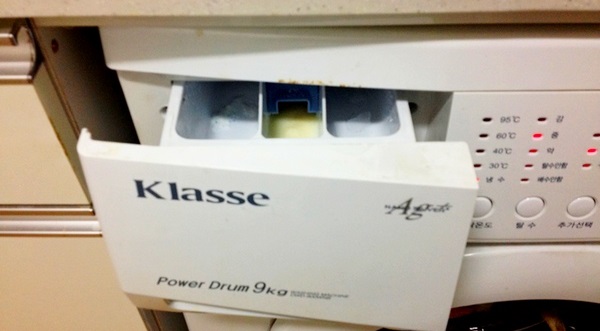
It's a different matter when the dispenser doesn't start and the washing machine stops working. In this case, the cause of the freeze is a simple blockage—one of the pipes leading to the detergent drawer or the inlet filter mesh. Fixing the problem is simple: simply remove the top cover, loosen the clamps, and remove any trapped debris or scale. If there's a problem with the heater, the instructions will be different. We'll provide a step-by-step procedure below.
All attention to the heating element
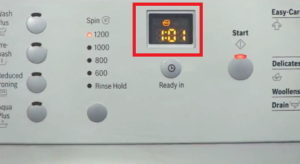
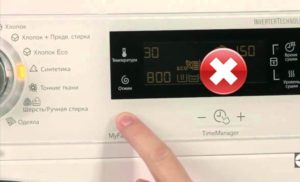
The washing machine won't start washing if the heating element or the temperature sensor connected to it is broken. The explanation is simple: before starting a cycle, the system automatically checks all key components, detects any heating issues, and cancels the cycle. Sometimes the program stops with an error code on the display, but more often the machine hangs silently.
To confirm the guess, it is necessary to check the heating element for proper operation. The heating element on most washing machines is located at the bottom, under the washing tank. But first, unplug the circuit breaker and move it away from the wall. Then, unscrew the bolts holding the rear panel in place, move the back panel aside, and locate the rounded "plug" with multiple wires attached next to the motor. This is the heater. Once you've located the heating element, proceed as follows: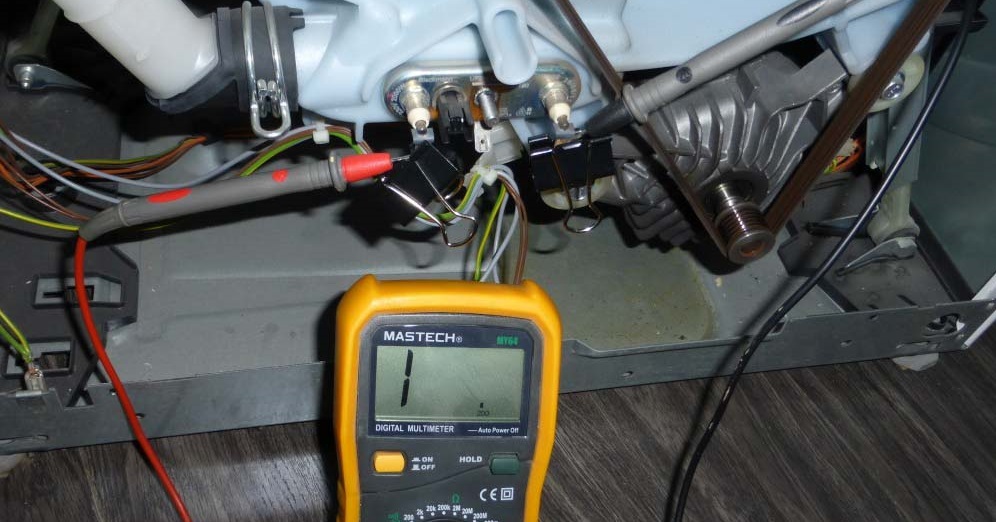
- we photograph the location of the connected wires, thereby simplifying the reverse connection;
- we release the wiring from the terminals;
- take a multimeter, turn it on to the “Ohmmeter” mode and set it to 200 Ohm;
- we apply the tester probes to the heating element contacts;
- We evaluate the device readings (normal – 26-28 Ohm).
A burnt-out heating element cannot be repaired – it can only be replaced with a new one!
If the multimeter displays a "1" instead of the expected 26-28 ohms, the heating element is faulty due to an internal open circuit. An "0" displayed on the screen indicates a short circuit. In both cases, repair is not possible—only replacement is necessary. The next step is to check the heating element for breakdown. Activate the buzzer mode, touch the probe to the heating element, and evaluate the result. Does the device beep? If so, the element is no longer usable and must be replaced immediately. To replace a faulty heating element, it must be removed. This can sometimes be difficult—the sealing rubber underneath the heating element often expands during use, blocking the device. This can be overcome by the following:
- generously lubricate the gasket with detergent;
- wait 10-20 minutes;
- turn off the temperature sensor;
- loosen the central nut, but do not remove it completely;
- press the bolt in;
- After rocking the heating element, remove it from the grooves.
Finding a new heating element isn't difficult. The key is to use the serial number of your washing machine or heater when searching for a replacement. A safe bet is to bring the removed element to the store and ask them to find a replacement. You can install the new heater yourself. First, clean the mounting surface, then secure the heating element in its grooves, and replace the thermistor and wiring. When connecting the wiring, it's important to refer to the photos you took before removing it.
If the heating element is found to be in good working order
If testing the heating element does not reveal a blockage, breakage, or breakdown, then the washing machine is not working due to the temperature sensor. The temperature sensor is located on the heater body near the central nut. It should be removed and tested. The instructions are as follows:
- disconnect the wiring from the sensor;
- unhook from the heating element;
- turn the multimeter into ohmmeter mode;
- apply the probes to the thermistor contacts;
- estimate the resistance (when operating at a temperature of about 2500The device will show 2000 Ohm).
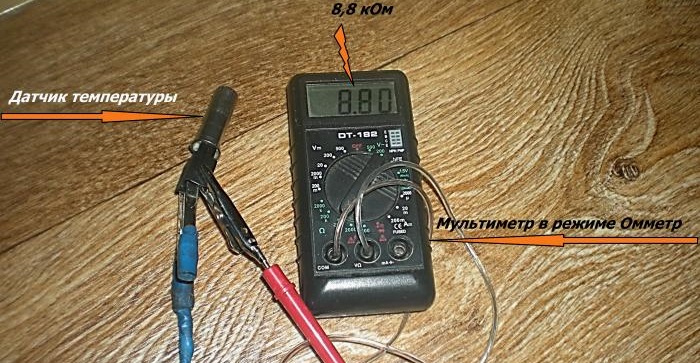
The test continues by immersing the sensor in boiling water and then measuring the resistance. When the temperature rises to 5000The reading should drop to 1300 ohms. If the reading is different, the thermistor is faulty. Repairing the sensor is not a solution; the only solution is to replace it.
Is the thermistor working properly? Then inspect the wiring connected to the heater for damage and loose connections. If diagnostics reveal no problems, contact a service center. The control board may be faulty. Self-intervention here risks worsening the problem, even leading to equipment failure.
Interesting:

Readers' comments
Headings
Washing machine repair




For buyers




For users


Dishwasher




Add a comment