
The washing machine gets stuck on the rinse cycle.
 Some washing machine malfunctions can indeed be caused by serious issues and require professional intervention. However, a washing machine that stops during the rinse cycle is usually not one of them. The problem is often rooted in user error or other minor issues that can be easily resolved on your own. We'll discuss the causes of freezing and what to do in such cases below.
We find the breakdown by symptoms
Of course, no one is saying that constant slowdowns in your car aren't worth your attention, but there's no need to panic either. First, you need to answer a few simple questions.
- At what point in the cycle does the hang-up occur—as soon as the rinse begins, somewhere in the middle of the rinse, or towards the end?
- How regularly does the machine freeze during rinsing – constantly, periodically, or not every time?
- How does the machine itself react to braking - does it try to spin the drum or does it stand rooted to the spot?
- Does the machine respond when the user tries to give it a command, or does it not respond at all?
Each answer to these questions is important for diagnostics. For example, if the washer freezes mid-rinse, it indicates serious problems with the control module, motor issues, damaged electronic components, or a malfunction in the program itself. In this case, stop the wash as soon as possible, wait for the machine to drain, remove the laundry from the drum, and call a service center; you can't fix this yourself.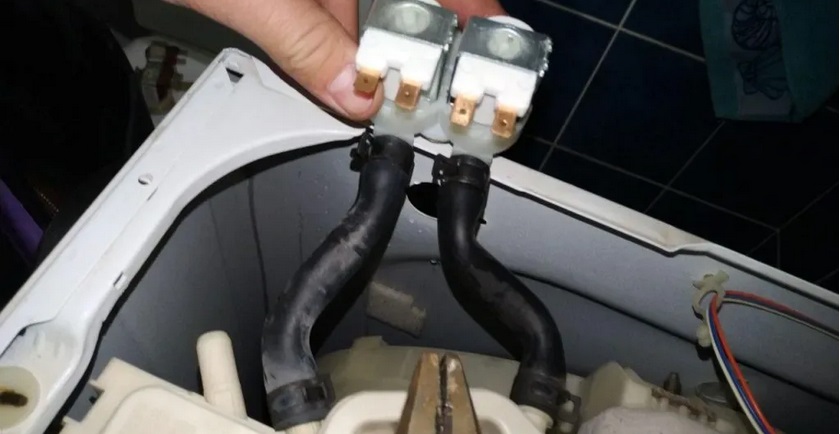
A mid-cycle freeze could also indicate a problem with the drainage system or the control board components responsible for it. This is because during the rinse cycle, the water is changed several times, meaning it's filled and drained from the tank several times. Consequently, drainage problems mean that water cannot enter or leave the tank, and the program is then automatically paused.
If the machine stops within the first few minutes, it may be because the unit was improperly connected to the drain, causing the water to drain away by gravity rather than being retained in the drum. The machine doesn't have time to heat the water and begin the rinse cycle, and then stops due to the lack of water in the drum. This same error is also typical of a faulty pressure switch or inlet valve.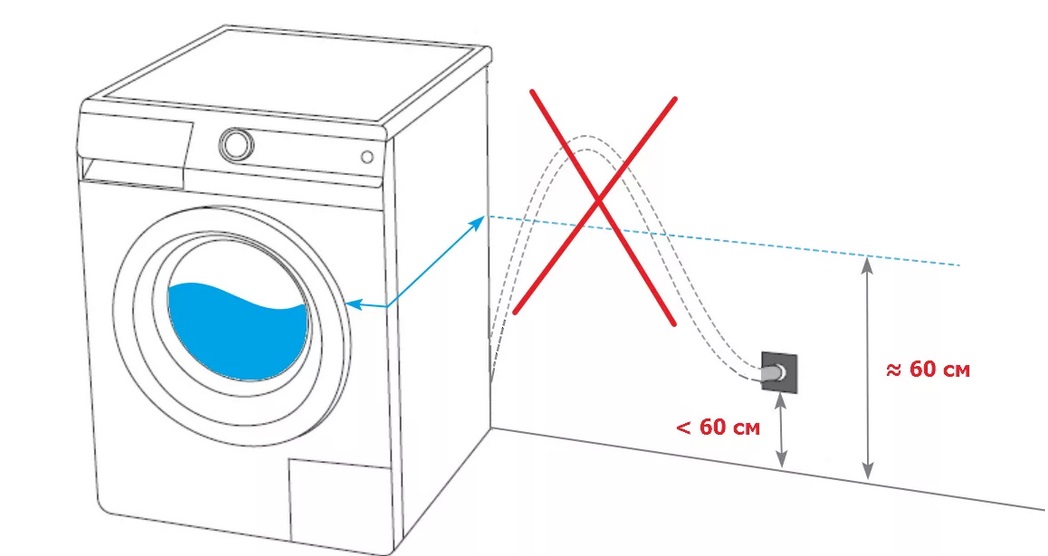
If the program freezes at the very end, just before the spin cycle, this indicates either a problem with the heating element or a faulty shock absorber system. Its purpose is to reduce vibration during the spin cycle, so if a problem occurs, the shock absorbers can no longer absorb centrifugal force, which can lead to further damage inside the machine. The circuit board detects that the spin cycle is unable to start, and the cycle is suspended. Professional repair is essential.
Important! If the unit doesn't respond to your commands while frozen, you should immediately contact a professional, as you're likely dealing with an electronics failure.
The problem was caused by the owner
However, not all of the symptoms listed above necessarily indicate serious problems. For example, a refusal to start the spin cycle may be due to a simple overload of the drum. If the laundry is too heavy or has formed an uneven clump, starting the spin cycle is unsafe for the drum. The machine recognizes this and does not proceed to the next cycle. In this case, simply pause the cycle, open the door, remove the laundry, and separate it into two equal portions, then spin each portion separately.
It turns out that an overloaded drum can cause poor rinsing. Powder residue gets trapped in the folds, preventing water from reaching them.
As a result, the detergent remains on the surface of the fabric and forms streaks. Excess detergent is also a cause of poor rinsing. Sometimes, housewives add so much detergent that no amount of water is enough to completely rinse it out.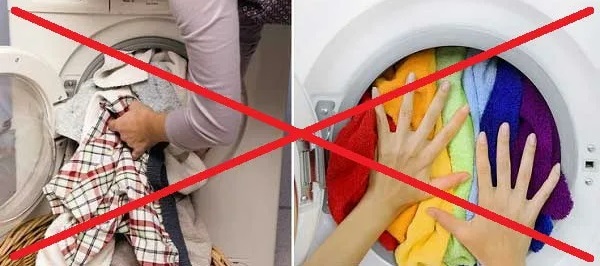
A clogged hose or filter is another reason why the machine freezes during the rinse cycle. This is again related to water waste. Small debris, hair, and foreign objects clog the filter and impede water circulation. As a result, the machine doesn't understand what's happening and stalls.
Interesting:




Readers' comments
Headings
Washing machine repair




For buyers




For users


Dishwasher




Add a comment