
My Indesit washing machine is jumping a lot during the spin cycle.
 Most washing machines can spin the drum at speeds of up to 1,000 rpm, sometimes even higher, during the spin cycle. At high speeds, the only thing that can absorb this centrifugal force is heavy counterweights and shock absorbers, but even these can be insufficient, causing increased vibration. However, a slight vibration of the drum is one thing, and quite another when an Indesit washing machine jumps during the spin cycle. This is a sign that the machine requires a thorough diagnosis, so to prevent the problem from getting worse, it's crucial to begin troubleshooting immediately.
Why does the equipment jump?
During washing, any washing machine shakes, but not excessively, as the technology can absorb most of the centrifugal force using counterweights and shock absorbers. This allows the washing machine to operate without significant vibration and almost silently, not interfering with everyday activities. Noise and vibration increase only during the spin cycle, but this is normal. If during the spin cycle the device stops vibrating and starts shaking or even jumping, then something is clearly wrong with it.
However, excessive shaking isn't always caused by damage to the appliance; sometimes the user or the service technician installing it is to blame. Fortunately, most causes of this behavior can be resolved in just a few minutes, without even calling a repair service. Let's list all the situations that can cause this problem.
- Incorrect installation of the washing machine.
- The occurrence of an imbalance in the device.
- Overload or underload of laundry in the drum.
- The shipping bolts have not been removed.
- Foreign objects such as keys, coins, hairpins, needles, buttons, bra underwire, etc. have entered the space between the drum and the tank.
- The shock absorption is damaged, say, the springs or dampers are weak.
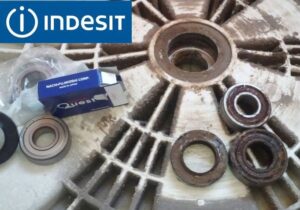
- The bearings are worn out.
- The counterweights have become damaged, for example, a retaining bolt has become loose or the concrete blocks have cracked.
- The electric motor failed.
The most important thing is that if you notice strong vibration, do not delay in eliminating the cause, so that your household appliance does not break down even more. Any problem can be solved by following detailed instructions and observing basic safety rules.
What is the best way to troubleshoot?
Don't rush to call a service center specialist right away, as the main causes of excessive shaking can be addressed at home. Therefore, it's important to first conduct a thorough diagnosis of your washing machine, starting with the most basic issues and gradually moving on to more complex problems.
One of the most common is imbalance, which occurs when the drum is out of balance, causing it to deviate from its intended path and begin to bang against the walls. This is what causes the noise, vibration, and jumping of the washing machine. Imbalance typically occurs in the following situations:
- the things in the drum have gathered into one big lump, for example, they have penetrated into the duvet cover;
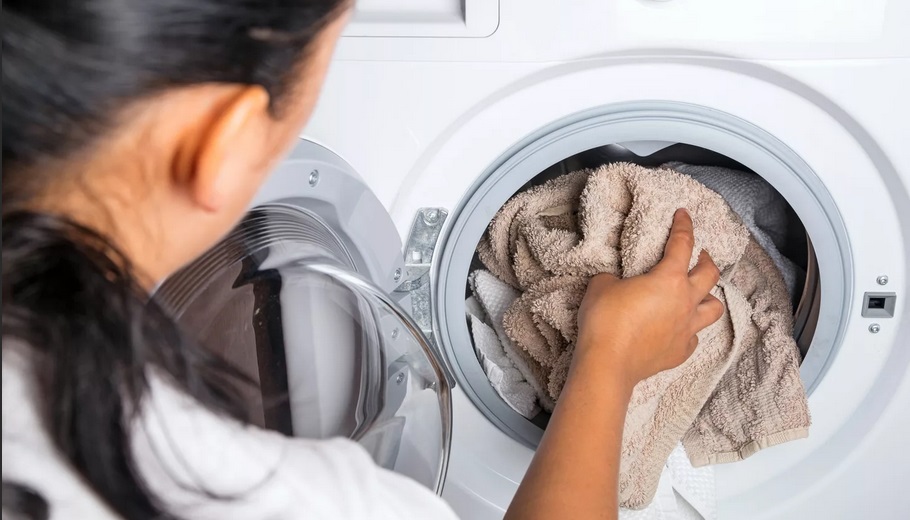
- the owner of the appliance added too few items for washing, or, conversely, exceeded the maximum permissible weight;
- the weight of the loaded laundry is too little or too much to start a particular wash cycle.
Service center technicians also frequently encounter situations where users fail to remove the shipping bolts after purchasing the appliance. This is especially true for brand-new automatic washing machines, which are being used for the first time immediately after purchase. The user manual clearly states that operating the machine with the shipping bolts in place is prohibited, as this can damage the internal components of the washing machine and will therefore void the manufacturer's warranty.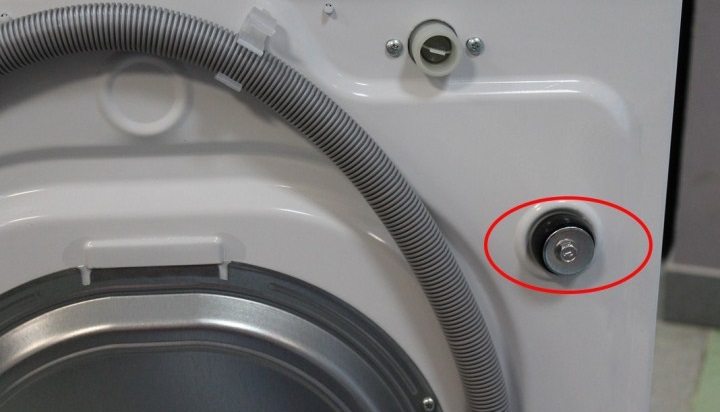
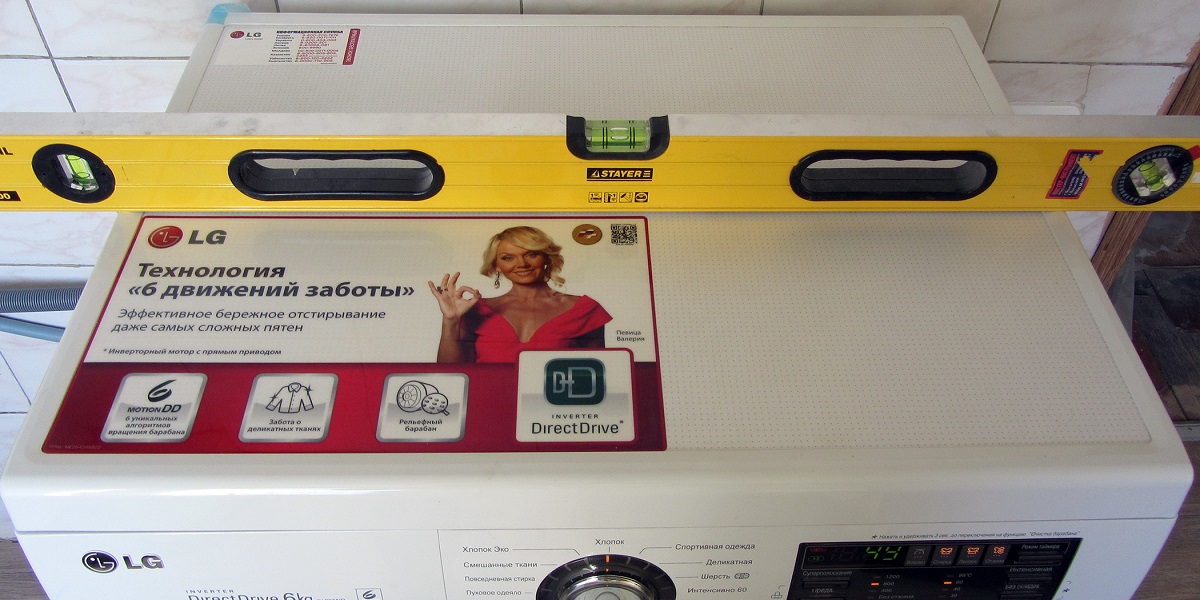
Another reason your "home assistant" shakes and jumps excessively is because it wasn't installed correctly. You can confirm this by trying to rock the machine yourself. If the washing machine moves with gentle pressure, it wasn't installed correctly, so you should level it with a regular spirit level.
Another relatively simple cause of malfunction is a foreign object lodged inside the machine. To rule this out, open the door and manually rotate the drum while shining a flashlight into the machine's drum. This will help detect the foreign object causing the imbalance during operation.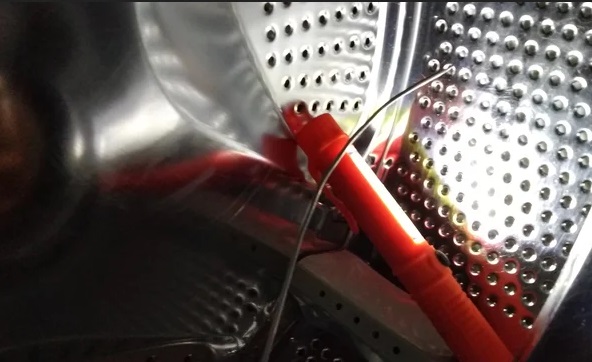
At this stage, we move on to serious problems that cause the washing machine to shake and bounce. The first problem is the shock absorbers, which are supposed to dampen shaking and strong vibrations. The problem is that during operation, the shock absorbers wear down and the springs weaken, causing the drum to hit the walls of the machine, causing loud noise and bouncing. A similar problem occurs when the concrete counterweights are weakened or damaged. However, if the machine produces a grinding or even clanking sound rather than a dull thumping sound during operation, the problem is clearly in the bearings.
Don't attempt to open the case yourself if the device is still under warranty—this will void the warranty, as only a service center employee has the right to perform such major repairs.
If the warranty has expired and the shaking problem persists, you can remove the top panel of the washing machine yourself and inspect all the key components that may be causing the problem. If there is no imbalance or foreign objects in the tank, the transport bolts have been removed, the "assistant" is leveled precisely, the bearings and shock absorption are normal, and even the counterweights are intact, then the cause most likely lies in the electric motor or a manufacturing defect.
Fixing the problem yourself
Don't wait too long after discovering a problem; it's best to begin repairs immediately to ensure safe use of the washing machine. The list of steps and tools required varies depending on the cause of the shaking. If you're fixing the imbalance, you'll need:
- complete the current work cycle;
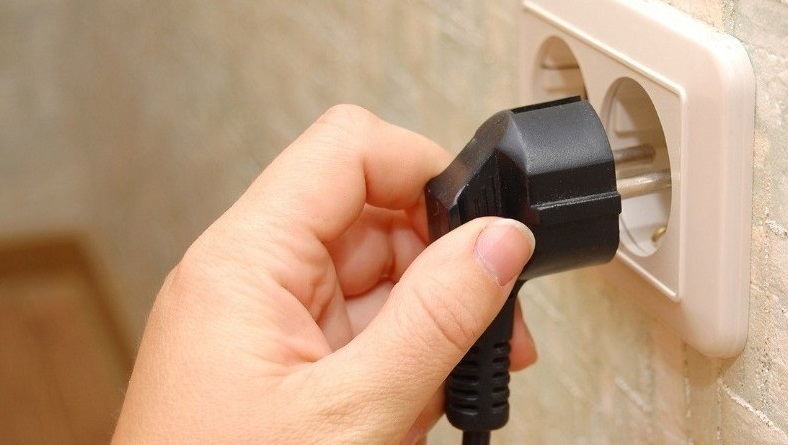
- disconnect the machine from the power supply;
- activate the drain of waste liquid;
If the drain function suddenly does not work, the water can be drained by removing the waste filter plug.
- open the hatch and fix the problem in the drum yourself.
Most often, an imbalance occurs due to either too much laundry, or, conversely, too little, for the selected cycle. In this case, you'll need to add more clothes or remove some items. If the laundry has bunched up, break it up and carefully arrange the clothes so they lay evenly in the drum. Only then can you reconnect the power and continue washing.
If the problem is due to instability, use a spirit level and place it on the washing machine. This will allow you to precisely adjust the machine's feet to level it. It would be even more effective to buy special anti-vibration pads and install them.
Restoring the washing machine's normal operation is much more difficult if foreign objects have entered the drum. You can try to remove them using a makeshift wire hook threaded through the hole between the drum and the drum. If this doesn't work, you'll have to remove the back panel of the machine, take out the heating element, and manually remove the foreign object through the resulting hole.
When the shock absorbers are damaged, simply fixing the unit won't do the trick; you'll need to replace the parts. You'll likely need to buy new dampers and springs, which should only be replaced in pairs, even if one appears to be in good condition. This is a difficult job that should either be left to a professional or done yourself, carefully following the instructions.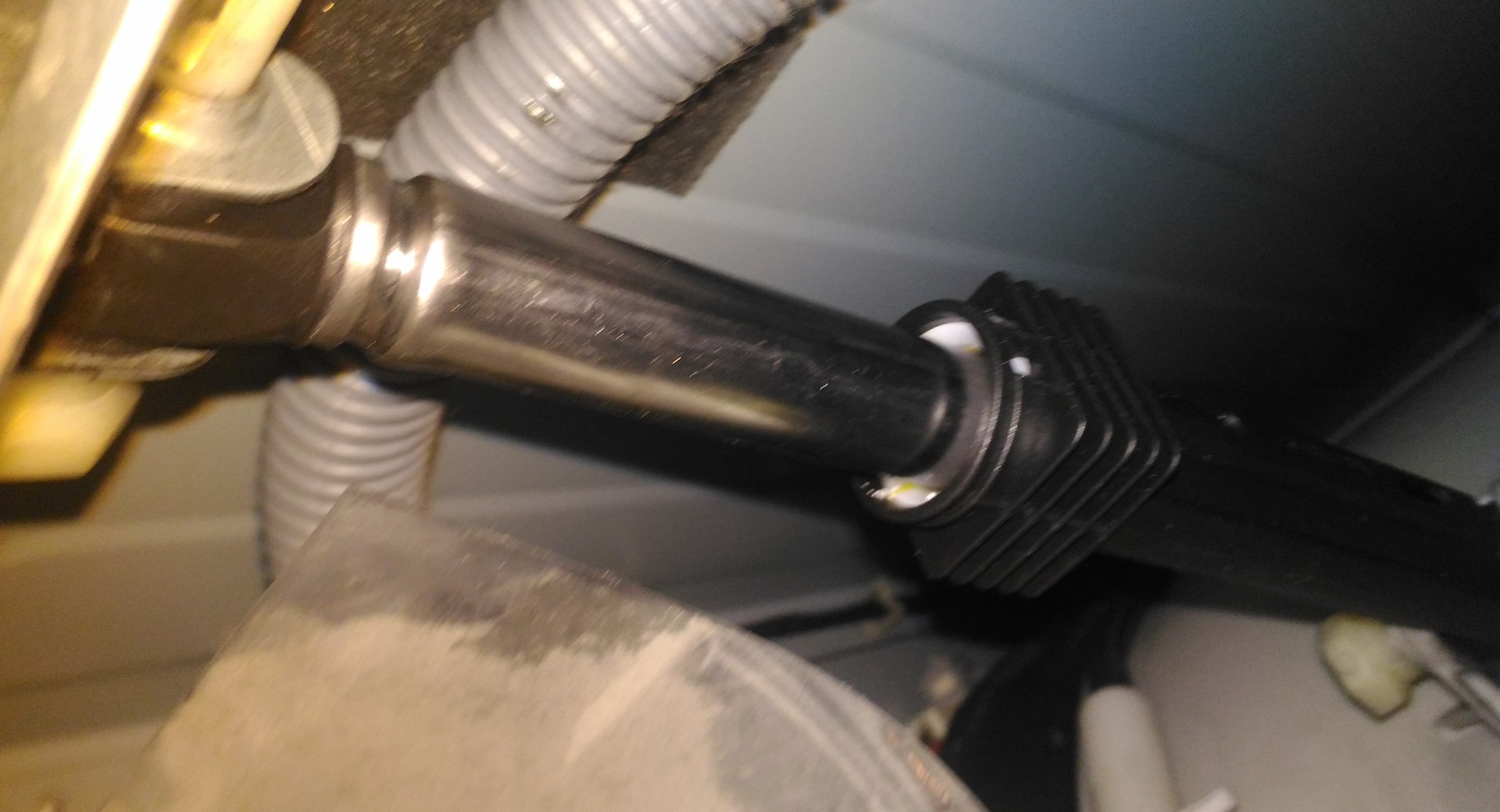
If the counterweights are broken, there's no easy way to fix them either. First, you'll need to remove the top panel of the washing machine, then inspect the blocks and their retaining screws. Tighten the screws firmly, and if there are small cracks or chips in the concrete blocks themselves, you can fix them with glue. If the cracks are large or numerous, it's best to simply buy new counterweights.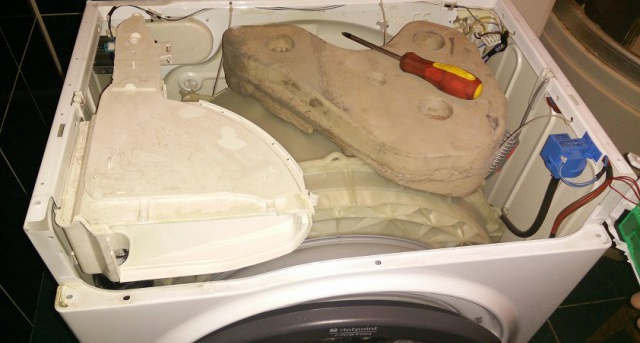
The jumping problem can also be caused by bearing failure. If this occurs, the only solution is to replace them, which requires almost complete disassembly of the appliance. This process is best left to service center technicians, as disassembly is very complex and time-consuming, especially without clear instructions.
The most frustrating situation is when the electric motor is at fault. Without specialized experience, it's very difficult to diagnose this component and even more difficult to repair. Usually, it’s easier and cheaper to solve this problem by simply buying a new washing machine.
Don't neglect good advice
It's always crucial to promptly address any shaking or swaying of a washing machine. It's much easier to eliminate vibration and sway than to eliminate any subsequent damage caused by this problem. To avoid unpleasant consequences, follow these simple recommendations.
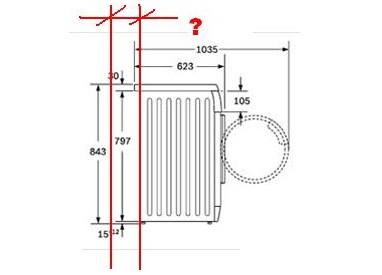
- Leave a distance of 3-5 centimeters around the machine.
- Control the drum loading.
- Do not store any foreign objects on the SM.
- Always check pockets before washing.
- Don't forget about the transport bolts.
- Sort clothes by fabric type.
- Correct any problems immediately.
Keep a close eye on your "home helper" and perform timely preventative maintenance so that it serves you for a long time and doesn't break down.
Interesting:



Readers' comments
Headings
Washing machine repair




For buyers




For users


Dishwasher




Add a comment