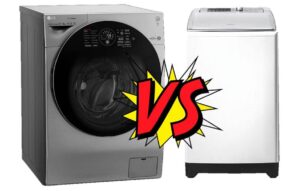
If we delve into the history of washing machines, we'll see that the first machines were exclusively top-loading. Only later did washing machines with a front-loading door appear. Today, both types of models are available on the market. It's impossible to give a definitive answer to the question of which type is preferable. Everything depends on the situation. For example, a top-loading machine is more suitable for a narrow bathroom, while a front-loading machine is the only option for installation in a furniture set. How do you choose between the two types of equipment?
What is the difference between the two types of machines?
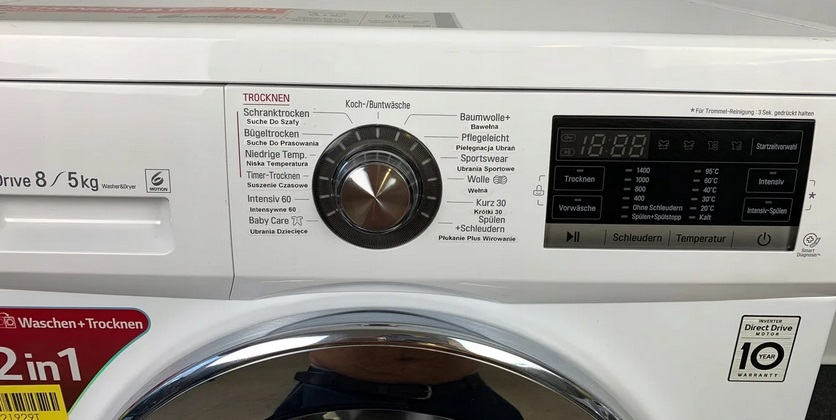
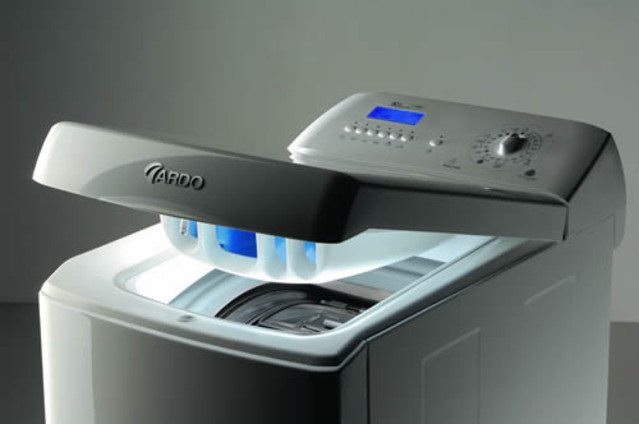
Front-loading washing machines are becoming more common on the home appliance market. In these machines, laundry is loaded into the drum through a hatch on the front wall of the machine. Top-loading models are less common, but there are plenty to choose from. To load clothes into a top-loading machine, you'll need to open two lids.
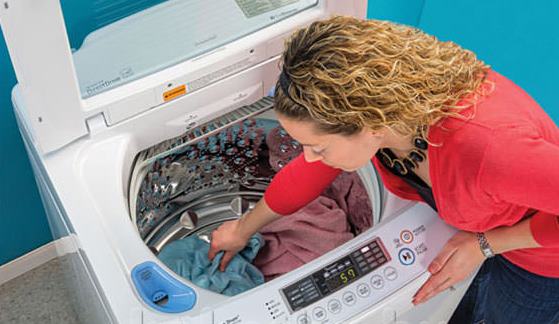
Top-loading washing machines are easier to remove. Users don't have to bend over to reach items. This is why people with back problems often choose top-loading washing machines.
Several years ago, top-loading washing machines lacked an automatic parking feature, which was inconvenient for users. At the end of the cycle, the door would remain down, requiring manual rotation to remove items. This process takes less than a minute, but many found it truly annoying. Modern models eliminate this problem; the drum stands upright after washing, with its doors remaining upright.
Almost all top-loading washing machines have the same body dimensions: width 40 cm, depth 60 cm, height 80-90 cm.
Front-loading washing machines come in a variety of sizes. Their designs can also vary dramatically. This is a major advantage of front-loading machines.
Front-loading washing machines are typically larger than top-loading models. However, small, medium, and large models are available in stores. The machine's capacity often depends on the machine's frame dimensions. The largest vertical washing machine can hold 10 kg of dry laundry, and a horizontal washing machine can hold 15-16 kg of items. Of course, for everyday use, an average family will be satisfied with a 5-7 kg machine.
Vertical washers are better because they're less susceptible to vibration due to their design. These machines are more stable and don't bounce around the room during the spin cycle. It's believed that top-loading machines break down less often because they're less susceptible to centrifugal force.
As for the functional features, this doesn't depend on the loading method. Both horizontal and vertical washing machines can be loaded with various options and add-ons. Therefore, before making your final choice and purchasing a washing machine, be sure to compare the key features of the models you like, namely:
energy efficiency class;
the maximum possible spin speed;
number of washing modes recorded in the intelligence;
washing class;
drying possibility;
availability of technologies (EcoBubble, AddWash, etc.);
equipped with a steam generator, etc.
Both types of washing machines can range from basic to advanced. Inexpensive models can wash clothes on basic cycles. Mid- and high-end models, both horizontal and vertical, provide superior and gentle care.
Dimensions of the case
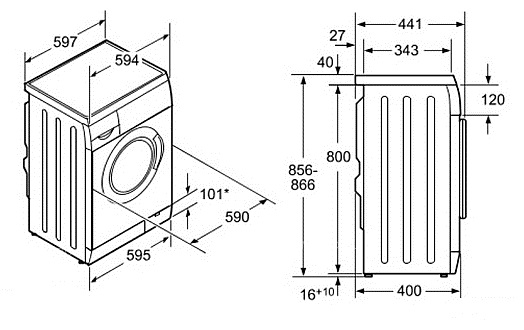
When choosing a home appliance, the dimensions of the machine are crucial. Front-loading washing machines come in a variety of sizes, from smaller to larger than top-loading models. However, it's important to remember that with front-loading models, you also need to consider the door opening, leaving room for the door to swing open freely.
Some front-loading machines only have a 90-120 degree opening angle, while more modern models offer a 180 degree opening angle. Top-loading machines require space above the door to allow for easy lifting.
"Top-loading" refrigerators are typically standard in size: 40 cm wide, 60 cm deep, and 80-90 cm high. Front-loading refrigerators can vary in size, ranging from 47 to 60 cm wide, 32 to 60 cm deep, and 68 to 90 cm high. Some top-loading refrigerators have a removable lid for easy installation.
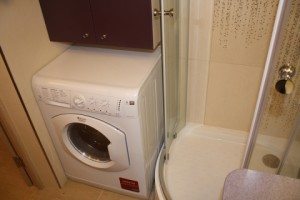
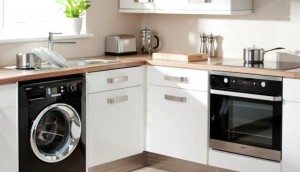
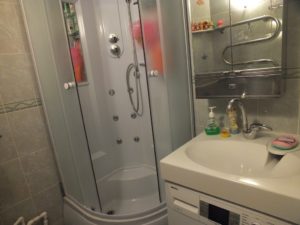
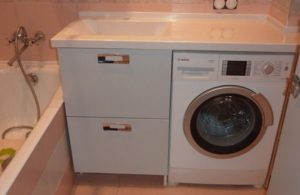
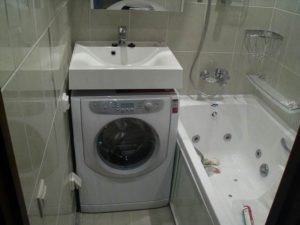
One of the downsides of a vertical washing machine is that you can’t store anything on its lid, since the panel has to be lifted for each wash. The "frontalka" can easily be used as a shelf; these machines can also be "hidden" under the sink or hung on the wall. However, if there is not at least 60-70 cm of free space in front of a horizontal washing machine, then opening the hatch and loading/unloading clothes will be problematic.
The most convenient machine
It's very difficult to immediately answer the question of which type of washing machine is better. Everything will depend on the buyer's situation and specific goals. We can only highlight a few advantages of front-loading and top-loading washing machines.
Buying a top-loading washing machine is ideal if:
there is very little space in the room allocated for the automatic washing machine, and access to the device will be limited;
there is a need to add laundry during the cycle;
There are small children in the family – if you buy a vertical washing machine, it will be difficult for them to reach the lid and interfere with the washing process;
no more than 10 kg should be washed at a time;
there is no need to use the washing machine as a shelf;
I don't want to constantly bend over to unload laundry from the drum.
You should consider a front-loading washing machine if:
it is necessary to build the equipment into furniture or hide it under the sink;
I don’t want to constantly have to deal with two “locks”, first lifting the top cover and then opening the drum flaps;
the washing machine is planned to be used as a shelf;
you need a car with an unusual design, for example black or gray;
More than 10 kg of items need to be washed at a time.
If we compare the cost of front-loading and top-loading washing machines, which have similar functionality, then front-loading washing machines are cheaper.
If you still have doubts even after listing the advantages of each type of washing machine, pay attention to the features that are most valuable to you. Knowing about the machine's software will make it easier to choose a specific model.
Which car is more beautiful and easier to repair?
When deciding which washing machine to choose, consider the repairability of each type. Since both types of washing machines are common, repairs shouldn't be particularly difficult. Technicians can easily fix problems with both front-loading and top-loading machines. Components for top-loading machines are slightly more expensive, but often the price difference is insignificant.
In terms of design, front-loading models are more appealing. Therefore, if the interior is dark, it's best to choose a front-loading machine, which comes in both black and gray. Top-loading machines are overwhelmingly classic white, so they'll blend in with lighter surroundings.
Both top-loading and front-loading washing machines can have a tub made of either plastic or stainless steel. Therefore, this isn't a crucial factor when choosing a new "home helper." It's best to avoid washing machines with a tub made of polyplex, as the material is extremely unreliable. A carbon fiber tub, however, will last a long time.
When choosing an automatic machine, pay attention to the manufacturer.
Well-known brands value their reputation and strive to produce the highest quality equipment. This will also make it easier to get your vending machine repaired under warranty—large companies strive to meet their obligations on time.
Which cars are more expensive?
There's a common misconception that top-loading machines are more expensive than front-loading ones. While this is true, there are sometimes exceptions, depending on the model. Let's analyze the prices of different types of washing machines from a single budget brand. We'll compare top-loading and front-loading Indesits.
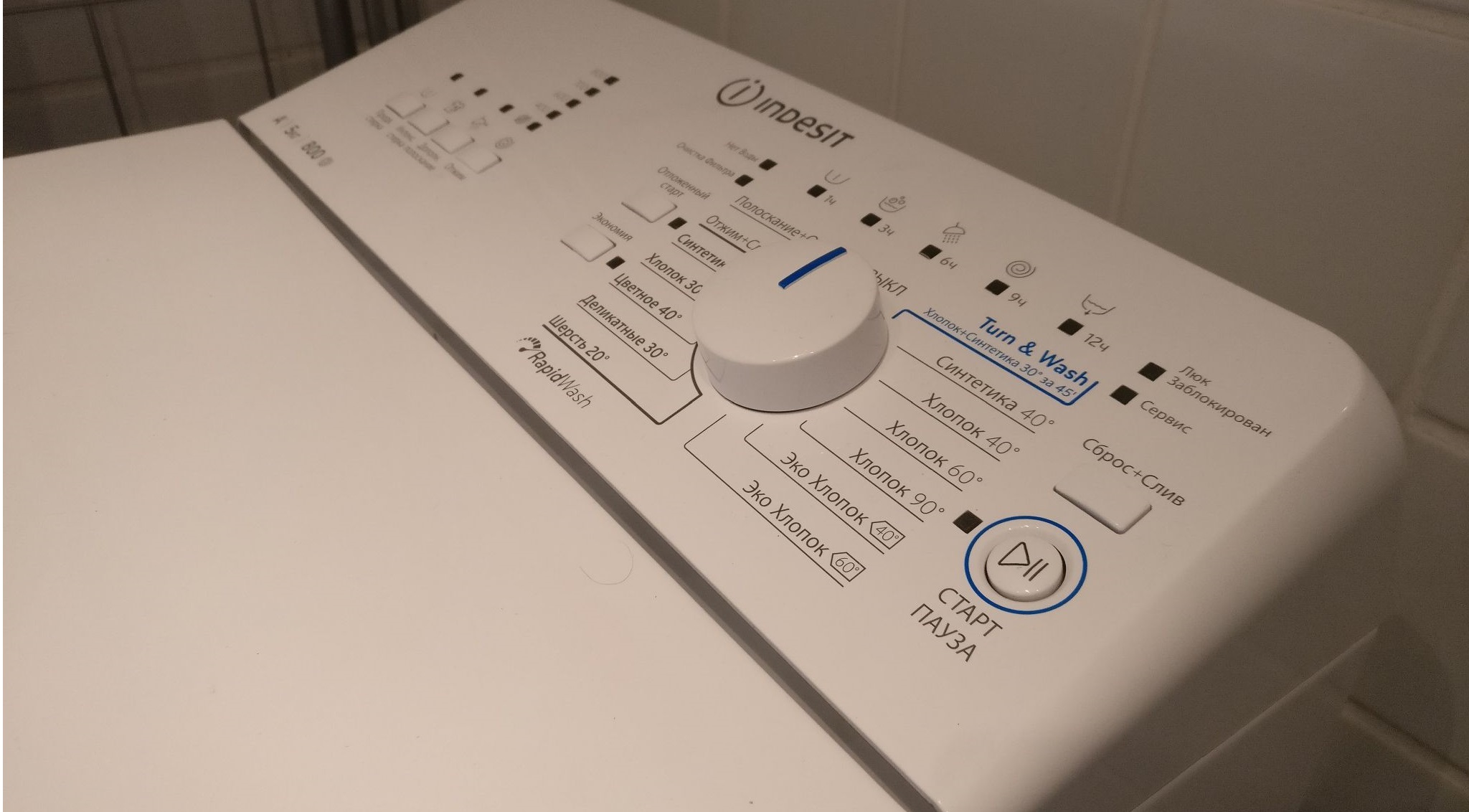
For example, the Indesit BTW A5851 (RF) vertical dishwasher costs approximately $185. The model has minimal functionality. Key technical specifications include:
drum capacity – up to 5 kg;
energy efficiency class – “A”;
maximum spin speed – 800 rpm;
12 washing programs;
noise level – up to 73 dB;
complete protection against leaks.
The Indesit IWSD 51051 front-loading washing machine has a similar description:
maximum loading weight – 5 kg;
energy efficiency class – “A”;
maximum spin speed – 1000 rpm;
16 special washing modes;
noise level – up to 76 dB.
The front-loading model is significantly cheaper at $135. It also features a delayed start timer for up to 24 hours and a digital display. The downside is the lack of a child lock for the control panel.
These are budget models from a well-known brand. Compared to mid-price models from, say, Electrolux, the PerfectCare 600 EW6T upright washer costs $540. Its basic specifications are as follows:
loading capacity – up to 6 kg;
energy efficiency class – “A+++”;
spin – up to 1000 rpm.
The Electrolux EW6F4R08WU front-loading washer, with a maximum load of 8 kg, a similar energy efficiency rating, and spin speed, is considerably cheaper at around $445. Therefore, the perception that top-loading machines are more expensive is entirely justified.
When deciding on a washing machine load capacity, consider all the details. Of course, the main factors when choosing remain the machine's size, capacity, and programming. It's equally important to look at the manufacturer and real reviews from people who have already used the model.

 If we delve into the history of washing machines, we'll see that the first machines were exclusively top-loading. Only later did washing machines with a front-loading door appear. Today, both types of models are available on the market. It's impossible to give a definitive answer to the question of which type is preferable. Everything depends on the situation. For example, a top-loading machine is more suitable for a narrow bathroom, while a front-loading machine is the only option for installation in a furniture set. How do you choose between the two types of equipment?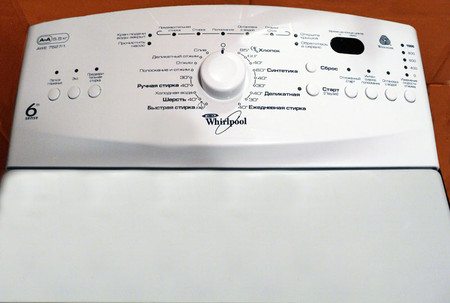














Add a comment