
Pros and cons of washer-dryers
 Automatic washing machines make modern life much easier. Washers with dryers are even more helpful. They eliminate the need to hang and then remove wet laundry, saving significant time. That's why buyers are increasingly considering washer-dryers. What are the pros and cons of washer-dryers? How can they be beneficial? Let's explore all the nuances.
Why do people buy such cars?
When choosing a new washing machine, consumers are increasingly looking for models with a drying option. Before purchasing such equipment, it's worth considering a few nuances. Let's explore the main pros and cons of multifunctional appliances.
A definite plus is that choosing a machine with a drying function eliminates the need to purchase an additional tumble dryer.
What is so special about the presence of such a function? Once you take your laundry out of the automatic washing machine with a drying option, all that remains is to iron it and put it away in the closet. The washing machine generates warm air and blows it over the clean clothes. There are three types of dryers: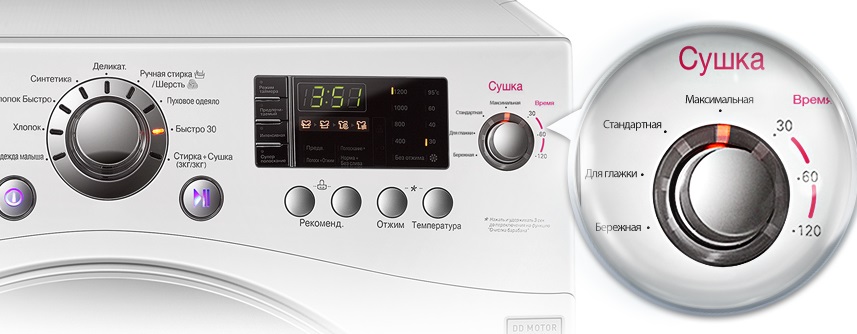
- timer-controlled (at the end of the cycle, the user needs to set the drying time);
- controlled by a mode (when the wash is finished, the housewife needs to start one of the programs: “Iron”, “In the closet”, “Quick dry”);
- sensor-controlled (the user sets the percentage of residual moisture in the fabric, and the machine dries the items until the set level is reached).
Many housewives choose these machines to forget about clothes hanging on the balcony or in their apartment. This way, laundry won't be left hanging on the dryer for days, making the home much more comfortable.
Main advantages
Undoubtedly, washer-dryers have many advantages. Managers at home appliance stores will be happy to explain all the benefits of these models. Let's look at the main advantages of washer-dryers.
- Time savings. Housewives won't have to hang laundry on lines or special drying racks. Plus, they won't have to wait a day, or even longer, for items to dry. This is especially important for new mothers, who have a lot of laundry to do and simply have nowhere to hang children's clothes.
- Space saving. If you're planning to purchase a separate dryer, keep in mind that it will take up space in your apartment. It will also be more expensive. It's much more practical to buy a dryer with a drying option; it's the same size as a standard washing machine without it.
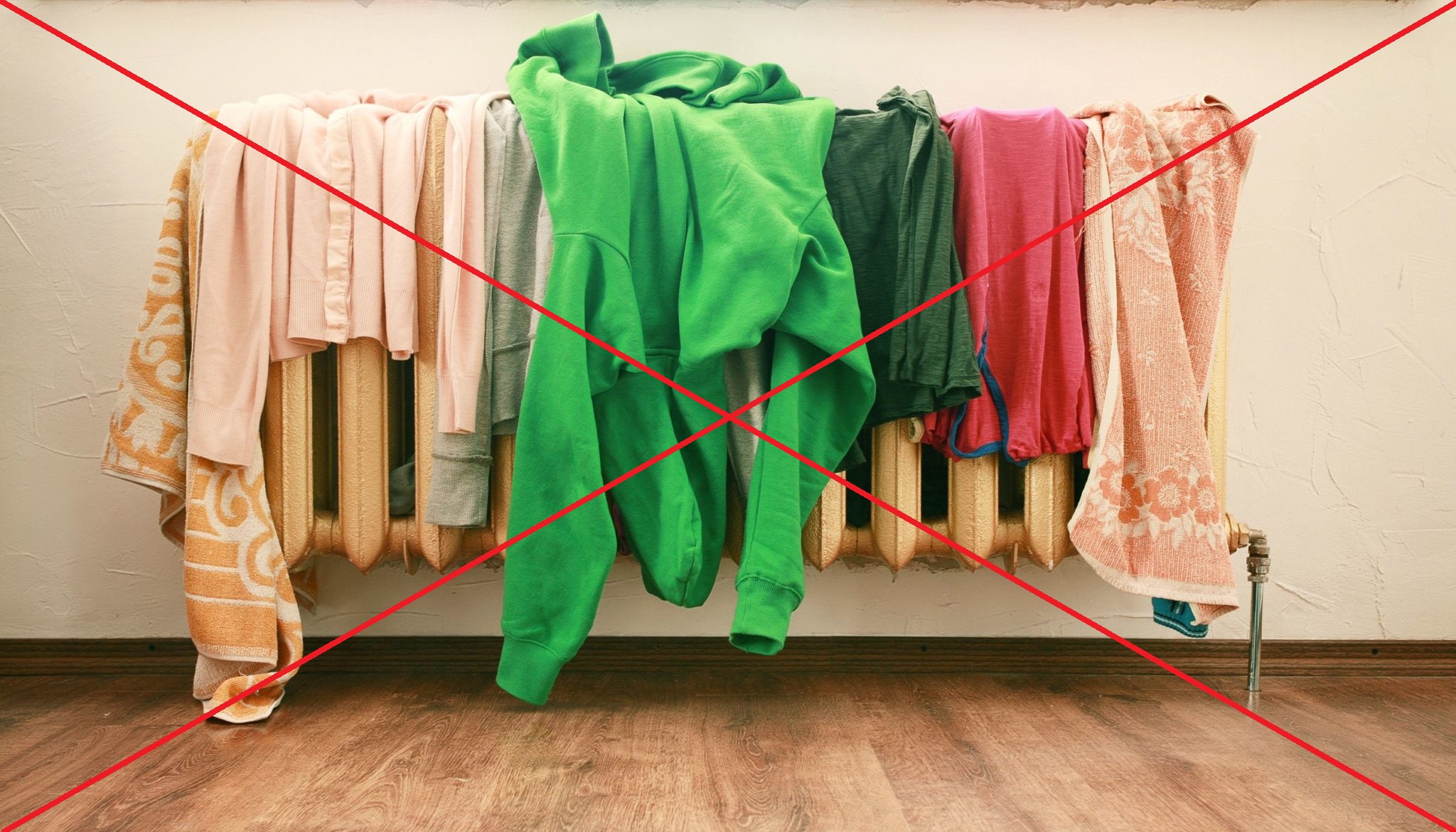
- No dust. Drying clothes on lines or radiators can accumulate a lot of dust. Using a washer-dryer will keep not only your clothes but your home cleaner, too.
- Eliminating Dampness. When wet clothes are hung to dry in an apartment, the air feels damp and stale. Furthermore, if clothes are left to dry for a long time, bacteria can begin to grow in the fibers. Owners of a washer-dryer can forget about the problem of constant dampness.
- Empty balcony. By purchasing a clothes dryer, you'll no longer have to clutter the balcony with clothes, blocking sunlight from entering your apartment.
- Aesthetic effect. Laundry hanging on drying racks, interior doors, or radiators noticeably spoils the appearance of a room. A washing machine will help eliminate this problem, and you won't have to blush in front of unexpected guests.
Washer-dryers are a great option for people with allergies to dust or dampness.
The advantages of automatic clothes dryers are truly numerous. Besides saving time, they can also address certain health concerns. Allergy sufferers will find it much easier to live in an apartment without dryers full of damp laundry.
Obvious disadvantages
Every household appliance has its drawbacks. When considering purchasing a washer-dryer, it's best to familiarize yourself with its shortcomings beforehand. While some may find these insignificant, others may reconsider buying a washer-dryer.
- Small capacity. For example, if a machine is designed for 6-7 kg of laundry, it will only dry half of it at a time—3-3.5 kg. The user will have to run two cycles. A full-size dryer has a larger chamber, eliminating this problem.
- Increased energy consumption. It's important to understand that a machine with a drying option will consume one and a half times more kilowatts than a standard washing machine.
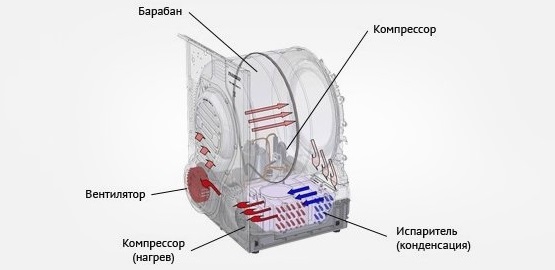
- Limited programming options. Compared to a freestanding dryer, the functionality of dual-use dryers is quite limited. They typically lack various settings, such as "Very Dry," "Drying by Fabric Type," and so on.
- Lack of a humidity sensor. This applies to models in the low- and mid-price segments. The timer is inconvenient because the laundry may remain damp or, conversely, become overdried.
- Higher cost. Compared to standard washing machines and those with a drying function, the latter are more expensive.
- Less reliable compared to a separate stationary dryer. During drying, the flow of hot air generated by the machine has a negative effect on some internal parts of the machine. For example, bearings and seals on washing machines with a drying function will have to be replaced more often.
Compared to a separate dryer, a washer-dryer has an air filter that collects all dust from clothes. Conventional dryers lack this filter element, so dust particles remain on clothes and settle on the internal components of the dryer.
Machines with dryers, like any appliance, have their drawbacks. However, it's important to consider the choice. If you can buy a separate washer and dryer, that's great. When deciding between a washer and dryer with this option, it's certainly better to opt for a more versatile unit.
Interesting:


4 reader comments
Add a comment
Headings
Washing machine repair




For buyers




For users


Dishwasher




The main drawback is that laundry dried in this type of dryer smells unpleasant. Like rubber.
Thanks to Slava for the comment
Slavin's comment is the most important argument not to save!
Slava, do it beautifully!