
Samsung washing machine not spinning
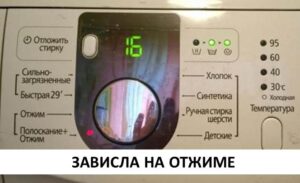
 Sometimes older Samsung models encounter a frustrating problem: the machine won't pick up speed during the spin cycle. The washing machine rinses the clothes and starts the next stage, but can't get the drum up to speed. The machine "freezes" mid-spin cycle, slowly spinning the laundry for hours until the user manually ends the cycle. What should you do in this situation? Which parts of the washing machine should you inspect first?
The user is confused about the settings
Often, a Samsung washing machine fails to spin due to simple user oversight. Sometimes, a user is in a hurry or distracted, and starts a wash cycle that either doesn't include a spin cycle or is set to a low spin cycle. These programs are:
- delicate wash;
- wool;
- silk;
- baby clothes.
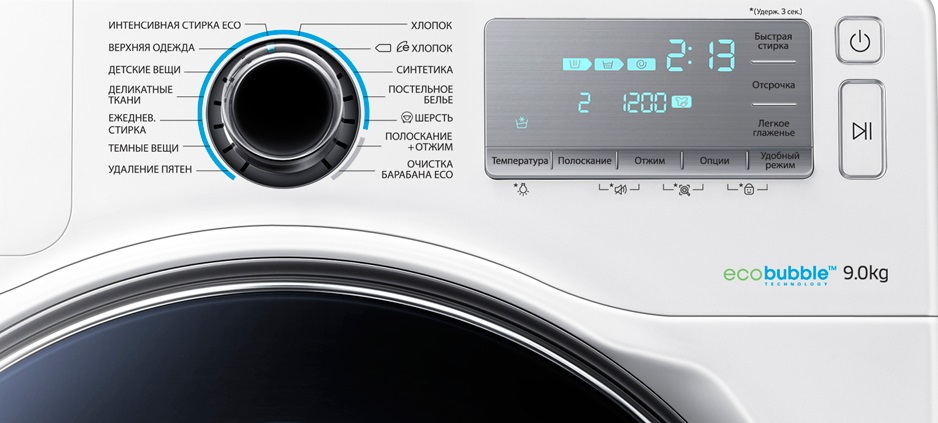
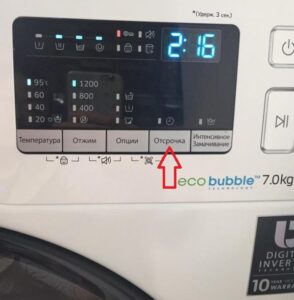
If you use one of the above-mentioned modes, don't expect the machine to perform a full spin cycle. Also, almost all Samsung washing machines have a "No Spin" button on the control panel. Accidentally pressing this button will cause the machine to skip this stage of the cycle when starting any wash program.
The drive belt is about to break.
Belt problems are likely to affect only owners of washing machines equipped with a commutator motor and belt drive. Owners of inverter direct-drive washing machines can safely rule out this cause of failure. In collector-type automatic machines, the electric motor's speed is transmitted to the pulley via a drive belt, and if the belt is stretched, loose, or slipping, the motor will not be able to accelerate the drum to the required speed.
Sometimes the drive belt simply slips or breaks, but in this situation, the machine won't allow any washing program to start, much less the spin cycle. Therefore, if you're experiencing these symptoms—namely, poor spin performance—it's likely a sign of a stretched belt. You can check the drive belt as follows: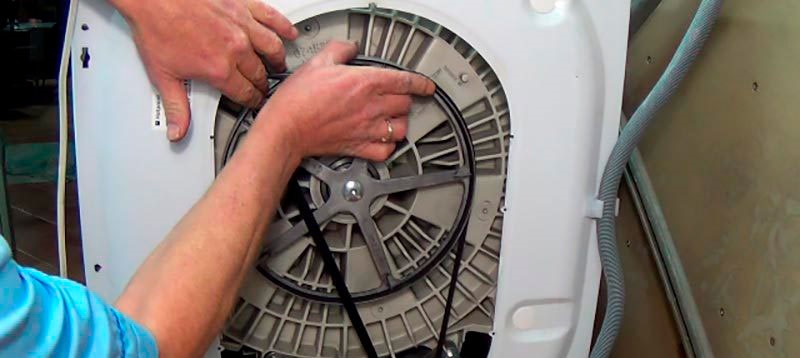
- unplug the washing machine;
- Move the machine away from the wall to have free access to the walls of the case;
- remove the rear panel of the unit by unscrewing the bolts that secure it;
- Check the belt tension, try to bend it manually and turn the pulley.
If the drive belt simply flexes and slides along the drum pulley, it is stretched and needs to be replaced.
The Samsung machine will not spin properly until the rubber belt is replaced. The user will need to purchase a genuine belt suitable for the specific washing machine model, remove the old element, and install the new one according to the instructions. After the repair, the problem should be resolved—the motor will now freely accelerate the drum to the required speed.
Speed sensor or motor
In addition to a stretched drive belt, poor spin performance can be caused by a faulty tachogenerator or a damaged motor. The Hall sensor monitors the motor speed, and if it's damaged, the drum rotation speed may be affected. To check the tachogenerator:
- pull the drive belt off the wheel, put the rubber band aside;
- Take a photo of the wiring diagram connecting the engine and tachometer. This will help you avoid mixing up the contacts during reassembly;
- disconnect the wires to release the electric motor and tachogenerator;
- unscrew the bolts holding the motor in the mounting feet;
- Press firmly on the engine housing; it should "sink" inward slightly. If you can't push the element back, lightly tap the pulley with a hammer;
- remove the engine from the Samsung;
- remove the Hall sensor (a small ring-shaped part) from the motor housing;
- Diagnose the tachogenerator using a multimeter. To do this, touch the tester's probes to the component's contacts. A resistance reading of "0" or "1" indicates a faulty Hall sensor.
When replacing a Samsung car, you must buy an original tachometer sensor, even though there are a huge number of alternatives available on the market.
In addition to the tachogenerator, the washing machine's motor itself can fail. Incidentally, commutators aren't the most fragile motors, but they still have a few weak points. The most common ones to fail are the brushes and stator winding. If the problem is with the brushes, then the repair will be quite simple – you can replace the graphite rods yourself. If the stator winding is damaged, the entire motor will have to be replaced, as rewinding will cost more than replacement.
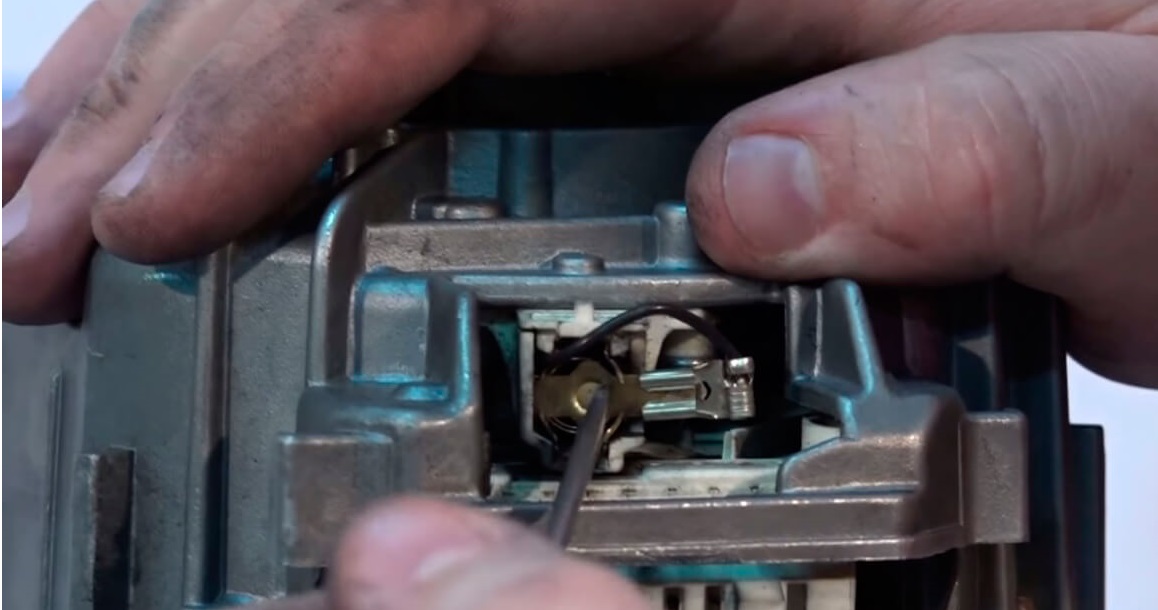
What should you do when you need to check your electric motor? First, inspect the brushes. On the side of the motor housing, you'll see small screws that can be removed with a screwdriver. Afterward, the spring-loaded brushes can be easily removed from the motor. Inspect the carbon brushes—if one appears even slightly shorter than the other, both brushes need to be replaced. Both brushes on a washing machine's motor must be replaced, even if one appears completely intact.
If the brushes are in good working order, it's time to check the stator winding. Using a multimeter, it's tested for breakdowns. Diagnostics can take a while, as breakdowns sometimes only occur on a single winding, making them difficult to locate. A broken winding causes the electric motor to lose power and fail to reach the required speed, even though it appears to be in good working order.
An indirect “symptom” of a broken engine winding is a burning smell coming from the motor.
What should you do if you discover a breakdown? If you discover damage to the winding, you'll have to replace the entire motor. The replacement part is selected for a specific Samsung washing machine model.
Pay attention to the machine's "brain"
Another likely cause of poor spin results is a faulty control module. Without the necessary knowledge and experience working with electronics, it's best not to mess with the washing machine's "brains." It's best to leave this type of repair to professionals.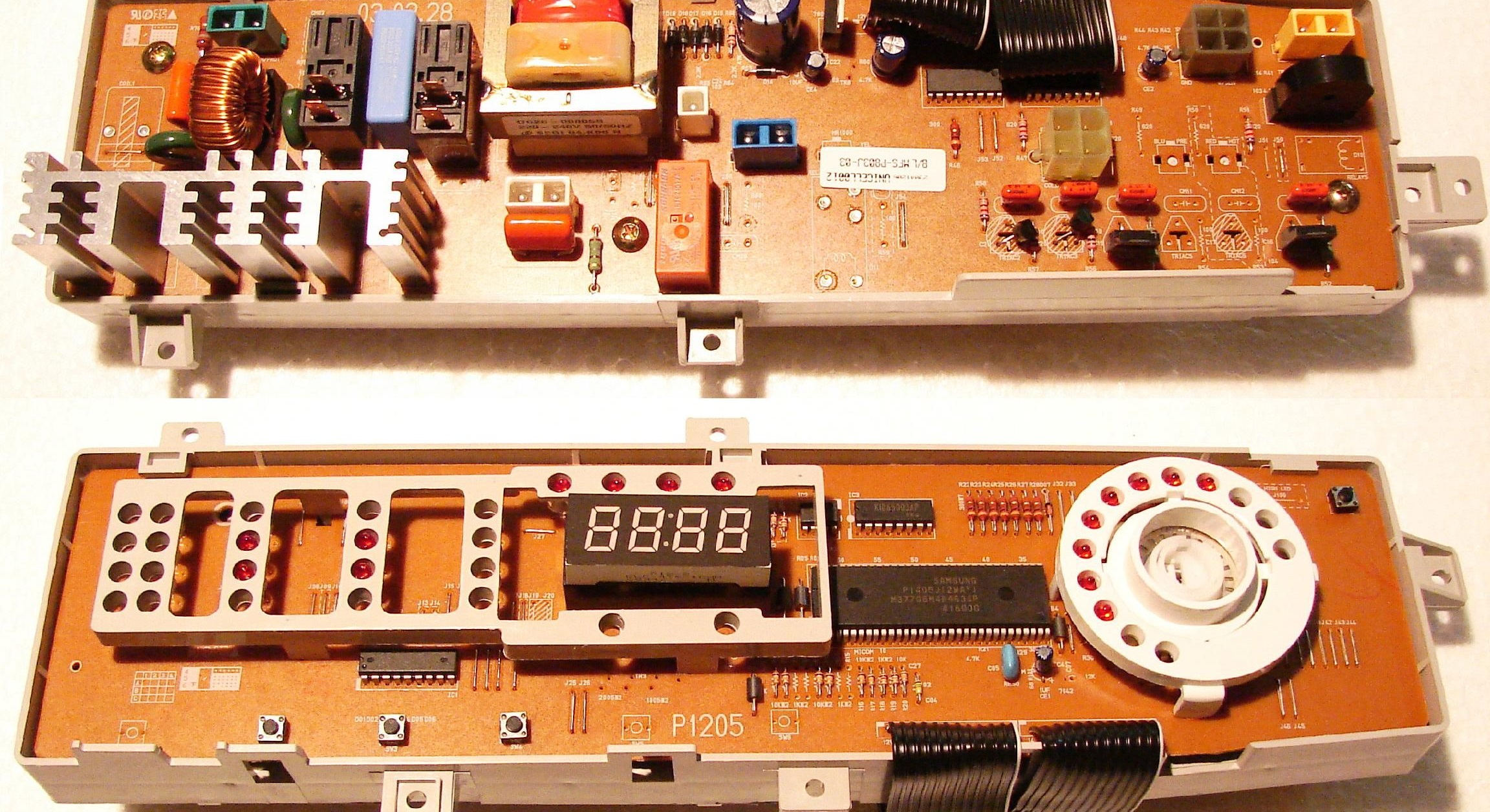
The technician will remove the electronic control unit, perform the necessary diagnostics, and determine whether the board is faulty. If a fault is detected, the specialist will assess the module's repairability. If repairing the element is not practical, the technician will recommend replacing the unit.
Repairing a control board on your own is very difficult. Not everyone can handle it. To avoid making the problem worse and permanently damaging your Samsung washing machine, it's best to seek help from qualified technicians.
Interesting:
Readers' comments
Headings
Washing machine repair




For buyers




For users


Dishwasher




Add a comment