
Why does my washing machine make a loud noise when rinsing?
 A slight noise during the operation of an automatic washing machine is normal. For example, during the rinse cycle, the washing machine constantly turns on the pump, which draws out water, making noise. If the noise becomes louder than before, you should be concerned. Then, it's likely a malfunction.
Let's figure out why your washing machine makes a loud humming noise during the rinse cycle. What problem does this noise indicate? We'll tell you how to fix the problem yourself.
The main filter of the washing machine is clogged.
If your washing machine makes a loud humming noise during the rinse cycle, check the drain filter. A foreign object (a coin, key, or paper clip) may have gotten into the filter. This can impede the pump impeller, causing the machine to make noise.
The drain filter traps all debris that enters the washing machine's drainage system. Checking and cleaning the plastic coil is very easy. The procedure takes no more than 5-10 minutes.
Before unscrewing the drain filter, be sure to disconnect the power from the washing machine.
Where is the "trash bin"? Most washing machines have a drain filter located at the front, in the lower left corner. It's hidden behind a technical hatch or a false panel. The procedure is as follows:
- de-energize the washing machine;
- disconnect the washing machine from the water supply and sewerage system;
- move the washing machine away from the wall;
- open the technical hatch door or remove the lower false panel (a thin screwdriver will help to cope with the fasteners);
- Tilt the washing machine body slightly backwards to raise the front part by 5-10 cm;
- Place a container under the machine in the area where the drain filter is located to collect water;
- Use the emergency drain hose to remove any water that has accumulated in the system (remove the plug from the pipe and direct its end into a basin);
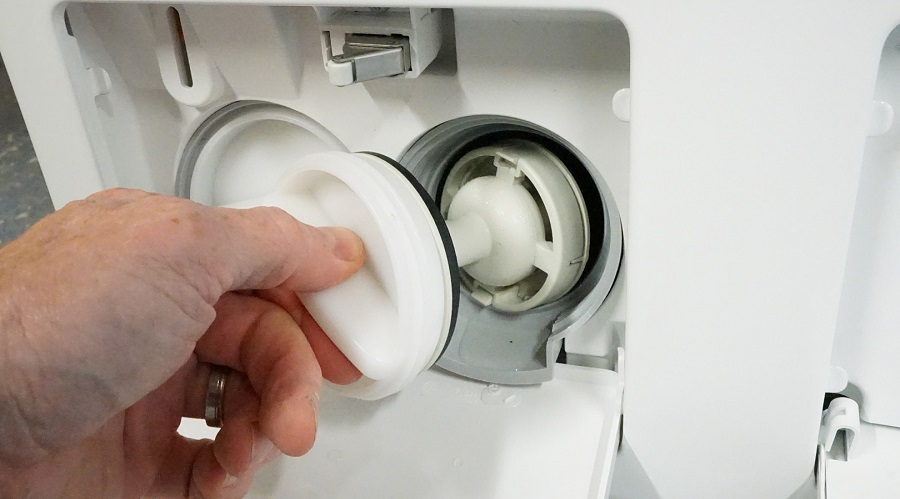
- Unscrew the plug of the waste filter by half a turn, wait until the water flows into the container;
- remove the filter element.
After this, the filter should be cleaned and washed in warm water. You can soak it for a couple of hours in a concentrated citric acid solution. Avoid boiling water on the plastic, as it may warp. Next, pay attention to the mounting surface.
Shine a flashlight into the hole and remove any foreign objects from the machine. Then, wipe the walls of the seat with a clean, damp cloth to remove any dirt. You can see the pump impeller in the back. If any hair or thread is tangled around the blades, be sure to remove it.
Once you're done cleaning, you can replace the drain filter. Make sure the coil is properly positioned. Then, run a test wash. If there's no leakage, the drain filter is installed correctly.
Clogged drain hose
A clogged drain hose can cause a loud humming sound during rinsing. Often, the debris filter is clean, but the base of the drain hose is clogged. In this case, water flows into the drain in a thin stream, the pump operates under increased load, and the machine becomes noisier.
The quality of tap water in many regions of Russia leaves much to be desired. Impurities gradually settle on the walls of the drain hose, clogging it. Eventually, a plug forms in the corrugated pipe, preventing the normal removal of waste water from the washing machine's drum.
In addition to the noise, this situation can lead to rapid pump failure. The pump is working under increased strain, trying to push water through the clog. Therefore, it's logical that the part will fail faster if the hose isn't cleaned.
To remove the drain hose of the washing machine, you need to: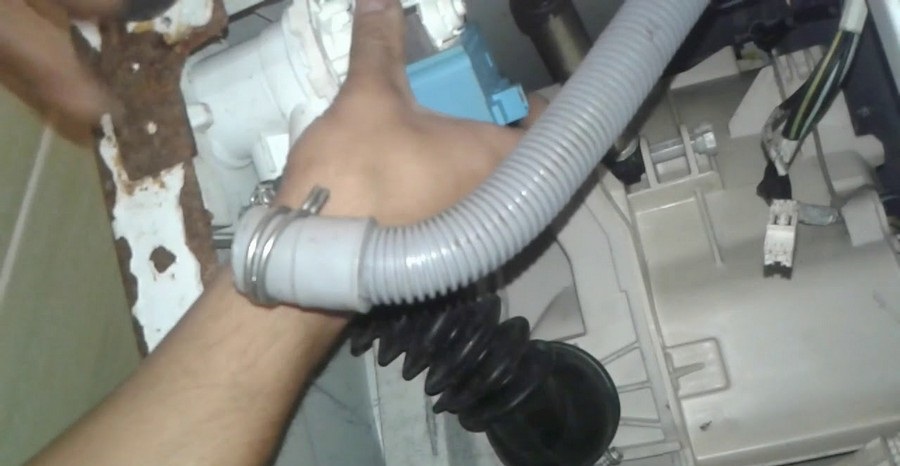
- turn off the power to the washing machine and disconnect it from the utilities;
- drain the remaining water from the system by unscrewing the debris filter;
- place the machine on its back wall (this will allow you to reach the place where the drain hose is attached);
- remove the clamp that secures the sleeve to the machine;
- Pull the hose off and remove it from the washing machine body.
When pulling the drain hose out of the housing, it's important not to damage the plastic latch. Now you can begin cleaning the outlet. To do this:
- prepare a concentrated solution of citric acid (dissolve 30-50 grams of powder in 1 liter of water);
- soak the drain hose in the resulting solution for 1-2 hours;
- Rinse the sleeve under running warm water.
Citric acid or special household chemicals will help deal with limescale deposits.
After cleaning, connect the drain hose to the washing machine. Next, run a test wash. Observe how your "home helper" works—if a clog was the cause, the loud humming noise won't reoccur.
Checking and replacing the pump
The worst case scenario is when the loud humming noise during rinsing is caused by the pump itself. The first thing to check is the pump impeller. To do this, unscrew the debris filter plug and shine a flashlight into the resulting hole. Inspect the impellers—they should be intact.
Next, check the impeller's movement. Try turning it. The part should move, but not freely, with a slight effort. You'll likely need to clean or replace the pump itself. To do this, you'll need to get to the part. The procedure is as follows: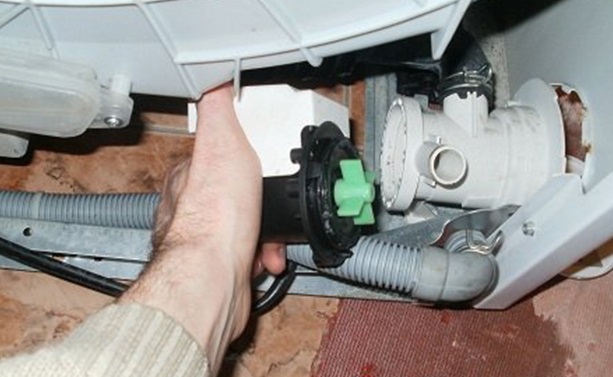
- turn off the power to the washing machine, disconnect it from the water supply and sewerage system;
- Place the washing machine on the floor, on its left side;
- remove the bottom of the case;
- Find the pump – it is located just under the tank.
Before changing the pump, it is recommended to check it. Diagnostics of the drain pump is performed using a multimeter. If the tester shows that the part is faulty, the element will have to be replaced; it cannot be repaired.
When purchasing a new pump, you should select the model and serial number of your washing machine. Alternatively, you can remove the old part and find a similar replacement at the store. Installing the drain pump is done in reverse order.
If the multimeter doesn't reveal a problem, simply cleaning the pump will likely suffice. Dirt can also accumulate in its housing. Remove the pump and disassemble it. After removing the debris, replace the part and run a test wash.
Interesting:

Readers' comments
Headings
Washing machine repair




For buyers




For users


Dishwasher




Add a comment