
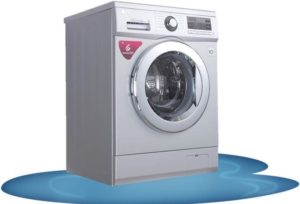
The washing machine leaks during rinsing.
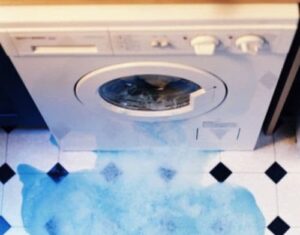
 A washing machine uses significantly more water for the rinse cycle than for the main wash. Therefore, the risk of leaks increases during this stage. If you notice a puddle under the washing machine, act immediately.
Of course, if your washing machine leaks during the rinse cycle, it's likely that some water is leaking during other stages of the program as well. It's just that the leak is especially noticeable when the drum is filled to the top. Let's figure out what might be wrong with your "home helper" and how to fix the problem.
Where to start checking?
According to our technicians, leaks are usually caused by loose hose connections. Therefore, the first step is to inspect the joints. If the machine is leaking from the bottom, you should pay attention to the drain pipe that runs from the tank to the pump.
If your washing machine is leaking from the top, you'll need to check the dispenser hose. The detergent drawer itself could also be the cause. Check the drawer; it may be heavily soiled, preventing water from flowing freely into the drum and causing it to overflow. If the detergent drawer is cracked, it will need to be replaced.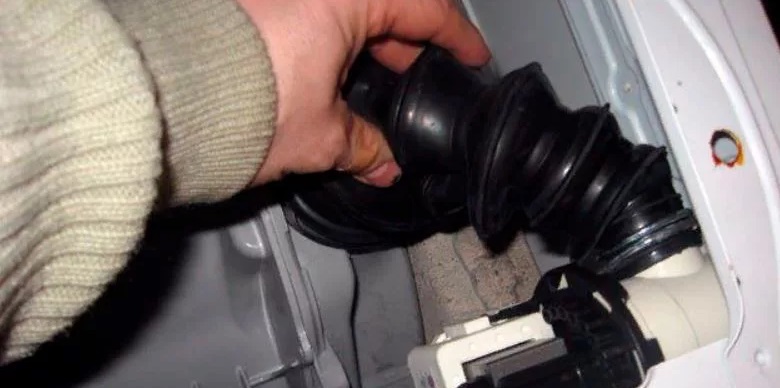
Inlet hose
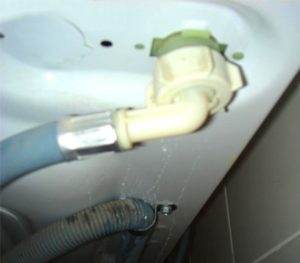
To repair the machine, you need to identify the cause of the leak. What to do next? Next, inspect the inlet hose. Check it for defects and carefully inspect the area where it connects to the washing machine body. The inlet hose of an automatic washing machine can leak due to:
- wear of the rubber seal at the hose joints;
- violation of the connections of the components inside the tube;
- squeezing or twisting of the hose.
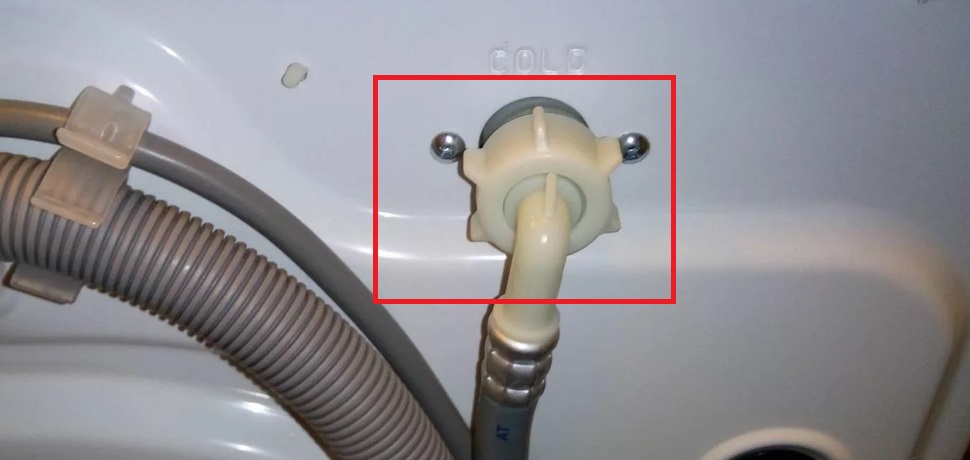
If water droplets are indeed found on the surface of the inlet hose, the repair procedure will depend on the cause of the leak. It may be necessary to replace the seal at the joints, straighten out any sharp bends, or purchase a new hose.
The trash bin is leaking water
Leaks are often caused by a clogged drain filter. It is recommended to clean the filter regularly, approximately once every 2-3 months. After washing lint-rich bedspreads, additional cleaning of the filter element is necessary.
The waste filter is located at the bottom of the washing machine. To access it, you need to remove the decorative panel or open the access hatch. The next step is as follows:
- cover the floor around the washing machine with dry rags;
- tilt the machine body slightly back, place a container under the washing machine in the area where the “trash bin” is located;
- unscrew the filter half a turn and wait until the water drains;
- clean the filter element from debris;
- Shine a flashlight into the resulting hole; if there is debris there, take it out and wipe the walls with a wet cloth.
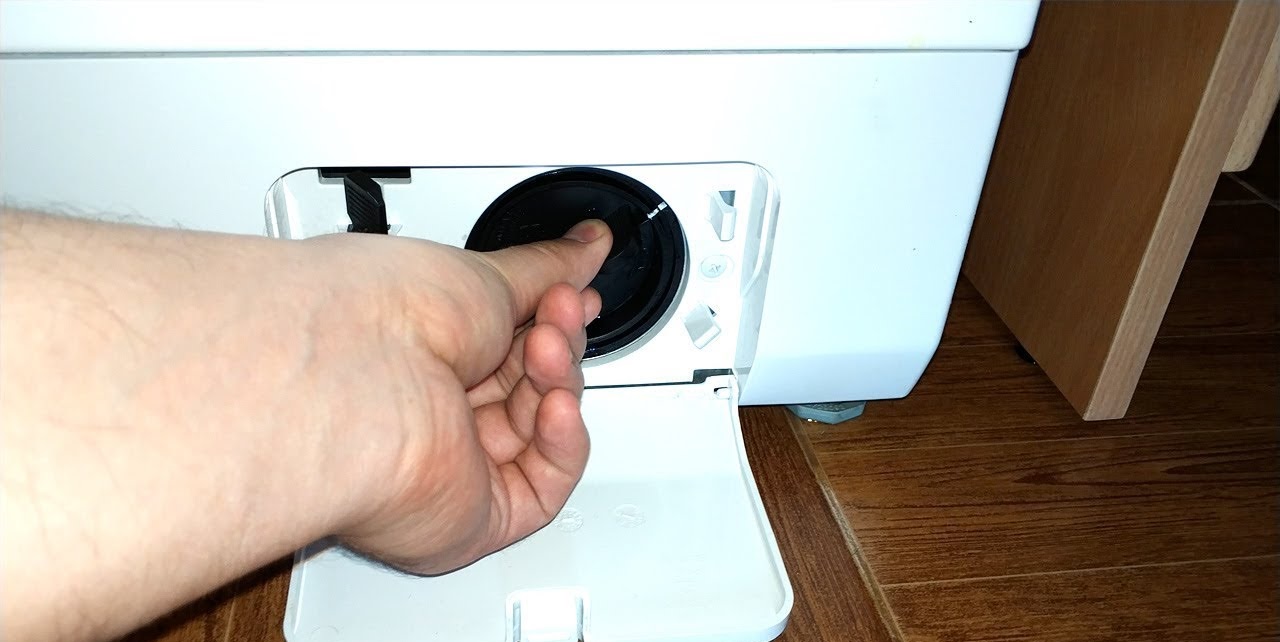
Then you can screw the filter back in place. Make sure to insert the plug straight, otherwise the machine will leak again. After inserting the filter, run a test wash and observe the machine's behavior.
Powder rack
After several years of use, the detergent drawer of your automatic washing machine can become loose. This is another common cause of leaks. To determine if this is the cause, observe how the washing machine fills with water.
A stream of water under high pressure enters the powder receptacle, washing out the detergent. If the tray is loose, splashes can enter the hole between the tray and the body and leak out.
Another possible cause is a heavily soiled detergent drawer. If you don't clean the drawer regularly, a thick layer of deposits will build up on the walls, clogging the openings that supply water to the washing machine. Water will flow into the machine and partially overflow the drawer.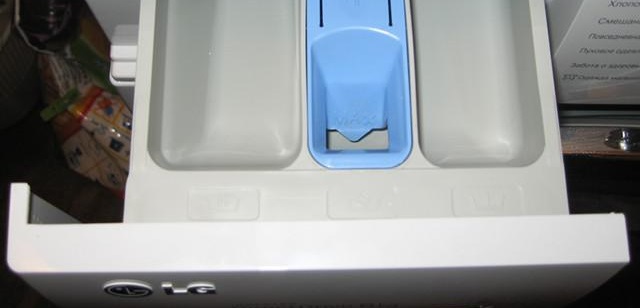
To fix this problem, clean the walls of the detergent drawer and the openings through which water enters the tank. If the drawer is cracked or loose, it will need to be replaced. Minor damage can be sealed with a water-resistant sealant.
Cuff, tube or pump
Leaks are often caused by damaged or loose hoses. Fixing the problem may require sealing the joints, tightening the clamps, or replacing the hoses entirely. You can do the job yourself.
If the machine is leaking from the bottom, check the drain pipe, and from above – the inlet valve or dispenser tubes.
If water leaks from under the door during washing, inspect the door seal. Minor cracks in the seal can be repaired with a special patch or treated with water-repellent adhesive. If the damage is significant, the rubber gasket will need to be replaced.
Remove the outer and inner clamps holding the seal in place, and remove the damaged gasket. Next, install the new seal. Note that the drain holes on the seal should be located at the bottom.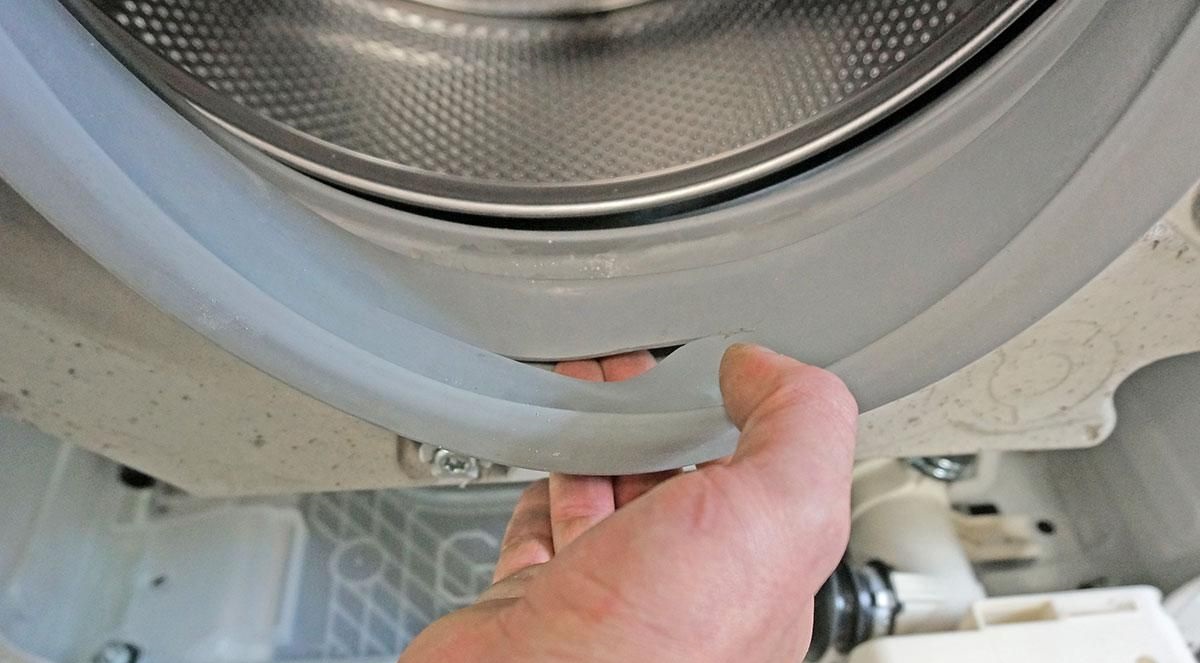
A faulty drain pump can cause a leak. A pump failure will be indicated by an unusual humming sound from the machine during the draining process. Repairing the pump station is impractical; it's much easier to buy and install a new unit.
You can replace the drain pump yourself. To do this, unplug the washing machine, drain any remaining water through the waste filter, and lay it on its side. The easiest way to access the pump is through the bottom.
Once you've located the pump, disconnect the wiring and disconnect the connected hoses. Then, unscrew the retaining bolt, remove the element, and replace the working pump. Reconnect the hoses and contacts in reverse order.
Tank, bearings, seals
If your washing machine is leaking from the bottom, it could be due to a damaged tank. It's best to replace the unit immediately. If this isn't possible, soldering the crack is acceptable. Before starting work, clean and degrease the area to be treated.
Once the area is degreased, use a soldering iron to seal the crack. The seams should be as smooth as possible. Check the quality of the work by pouring hot water over the area. There should be no leaks from the back of the tank.
If the tank is cracked at the bottom, the soldering is additionally reinforced.
A grinding noise emitted by the machine will indicate that the bearings are faulty. Some models are equipped with non-detachable tanks; to access the bearing assembly, the tanks must be sawed apart. However, in most washing machines the tank easily divides into two parts and can be put back together without any problems.
To remove the drum, you need to disassemble the washing machine almost completely. The general procedure is as follows:
- turn off the power to the machine, turn off the water supply tap;
- remove the powder receptacle;
- remove the top and back panels of the case;
- remove the drive belt;
- disconnect the control panel;
- remove the lower false panel;
- remove the counterweight blocks;
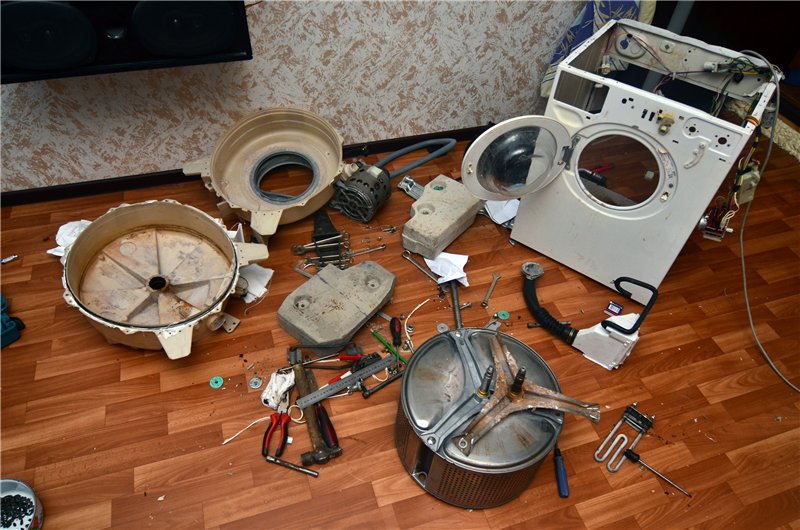
- insert the hatch cuff into the drum and remove the front wall of the housing;
- remove the door sealing rubber by removing a pair of clamps that secure it;
- disconnect all wiring from the tank, disconnect the pipes connected to it;
- Remove the tank after handling the shock absorbers.
If the tank is detachable, like LG washing machines, for example, you should unscrew the fasteners and divide the tank into two halves. Next, remove the seal and knock out the bearings one by one. Clean the seat with a damp cloth.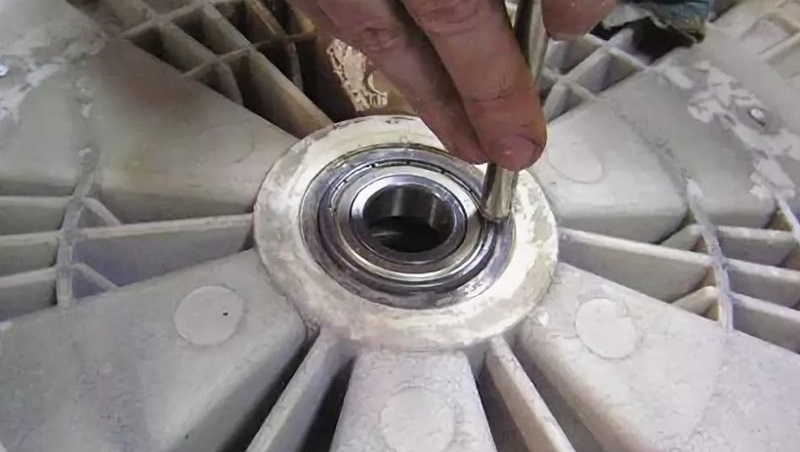
New bearings are lubricated and pressed back in place. An oil seal is placed on top. It is recommended to seal the joint between the half-tanks with a moisture-resistant silicone sealant during reassembly.
The following symptoms will indicate a faulty bearing assembly and worn seal:
- loud noise when the automatic washing machine is running;
- excessive vibration when rotating the drum;
- leaks in the lower, rear part of the tank.
If your washing machine is equipped with a non-detachable drum, replacing the bearings and seal yourself will be quite difficult.
When your washing machine starts leaking, it's important to diagnose it as soon as possible. If you address the problem promptly, cleaning the filter or drawer, tightening the clamps, or replacing the hoses may be sufficient. Ignoring the problem for too long can lead to more serious repairs.
Interesting:


Readers' comments
Headings
Washing machine repair




For buyers




For users


Dishwasher




Add a comment