A dirty puddle under the washer is a clear sign that the washing machine is leaking from underneath when draining. While the system remains sealed during filling and washing, a "drain" occurs when attempting to pump out the waste. Ignoring such a leak is unavoidable, as it puts the floor, the user, and the machine itself at risk. If you notice "streams" under the washer, it's important to find and fix the cause. There's no need to call a service center—you can handle the problem at home.
Why is it leaking?
Fixing a leaking washing machine drain yourself isn't difficult. The key is to be observant and have a pair of pliers and screwdrivers. You don’t even need to disassemble the machine: just restart the system, re-activate the drum emptying and take a closer look.
The user's task is to visually identify the leak. This could be any element of the drainage system: a debris filter, a sewer pipe, a drain hose, a spigot, or a drum outlet. Let's look at each "culprit" separately.
Waste filter. If this attachment has recently been cleaned or replaced, it's worth checking: a loose plug often causes leaks. In this case, a small amount of water "collects" near the front wall of the machine. Fixing the "waste filter" is simple: simply unscrew the coil and reinstall it.
The junction between the sewer pipe and the drain hose. Leaks can also be caused by improper connection of the machine to the sewer system. When installing the machine yourself, users often cut corners and simply insert the hose into the pipe tee when connecting it to the riser. This results in some water spilling onto the floor because the pipe diameter is disproportionate to the corrugated hose, leaving a small gap. A special rubber seal, readily available at any hardware store, can be used to restore the seal.
You can’t seal a torn drain hose – you can only replace it with a new one!
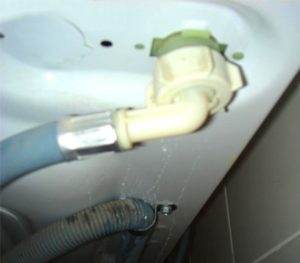
Drain hose. If a puddle starts at the back of the washing machine, inspect the drain hose. Sometimes the problem is damaged rubber, but often it's a loose clamp near the volute. To find the problem, unplug the machine, lay it on its left side, and carefully inspect the corrugated hose. If the problem is a loose clamp, tighten the clamp; if it's a crack, replace the entire hose.
Snail. If damaged, the plastic snail, which houses the drain filter and pump, will also leak. Repair is not possible; the only way to fix it is to remove the old one and install a new one.
Drain hose. The hose connecting the tank to the scuttle can also become loose or come loose from the fitting. This requires repair and replacement of the hose. We strongly advise against using sealant or patches – these are unreliable and can worsen the situation.
When diagnosing a drainage system, it's important to proceed consistently and carefully, checking all rubber components for strength and integrity. If cracks or crevices are noticed, it's best to play it safe and replace the hoses and fittings with new ones immediately. There's no need to call a technician—diagnosis, disassembly, and subsequent installation of the parts won't take much time or effort.
Other leak locations
It is not always the drainage system that causes a leak. Sometimes the seal is broken in completely different parts of the equipment – the tank, the powder receiver, the cuff or the shaft. It's easy to confuse faults: a dirty puddle appears under the machine and is noticed by the user at the end of the cycle.
In any case, you can't accept a "flood." Every possible malfunction should be checked and, if necessary, repaired. Let's consider all the options and instructions.
The tank. This is where the water spends most of its time, and if the tank is damaged, a leak will inevitably form at the bottom of the machine. A crack cannot be patched—only soldered or completely replaced. In the first case, the instructions for what to do are as follows: clean the damaged area, degrease it, solder it, and smooth out the resulting seams. Then, we check the quality of the "patch" by filling the tank and assessing the tightness.
Sealing the tank is only a temporary measure; it is safer to replace the tank.
Powder compartment. The detergent drawer can become loose during use; after 3-5 years, gaps develop between the machine body and the dispenser. As a result, water entering the machine under high pressure splashes and "leaks" out. Streams of water flow down the body, get under the door, and form a puddle at the bottom, creating the illusion of a large leak. To fix the problem, you'll need to adjust the compartment's position, restoring its seal. Leaks are often caused by clogs—a thick layer of scale obstructs subsequent drainage, causing liquid to overflow. A thorough cleaning of the drawers can help. Sometimes, damaged plastic is the culprit.
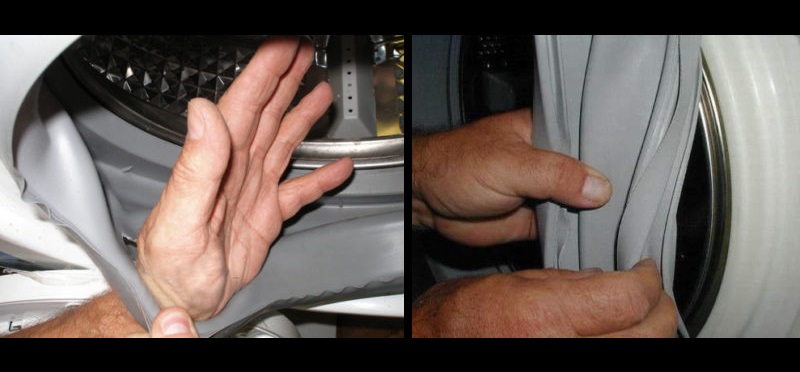
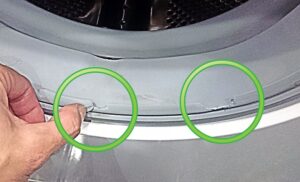
Door seal. If water is definitely leaking from under the door, the problem is with the rubber seal. It's simple: the rubber seal is damaged, the drum's seal is compromised, and a leak has developed. For a temporary repair, the seal can be rotated: remove the clamps, move the torn section up, and tighten it back down. But it's better to play it safe and replace the entire seal. A new seal is purchased based on the washing machine's serial number.
Before any repairs, the washing machine must be de-energized and disconnected from the water supply!
Bearing assembly. Leakage is inevitable when bearings and seals fail. In addition to a dirty puddle under the transmission, other unpleasant "symptoms" indicate this failure: noise, hum, knocking, and imbalance. Rusty stains on the back of the fuel tank will also confirm the diagnosis.
Repairing the bearing assembly is a complex procedure. It requires almost complete disassembly of the washing machine, removing the top cover, control panel, counterweights, shock absorbers, door seal, and the front panel. The tub must be removed, after first clearing all pipes and wiring. Next, the tank must be split in half, the shaft must be knocked out, and finally, the bearings and seal must be replaced. If you have the tools, experience, and time, you can handle the job yourself, but it's better to play it safe and contact a service center.
Using a leaking washing machine is dangerous – there's a high risk of flooding and short-circuiting. This could result in permanent loss of the appliance itself, loss of housing, or serious health problems.

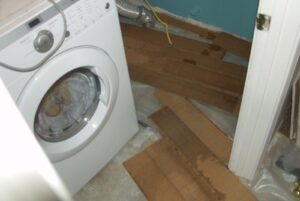 A dirty puddle under the washer is a clear sign that the washing machine is leaking from underneath when draining. While the system remains sealed during filling and washing, a "drain" occurs when attempting to pump out the waste. Ignoring such a leak is unavoidable, as it puts the floor, the user, and the machine itself at risk. If you notice "streams" under the washer, it's important to find and fix the cause. There's no need to call a service center—you can handle the problem at home.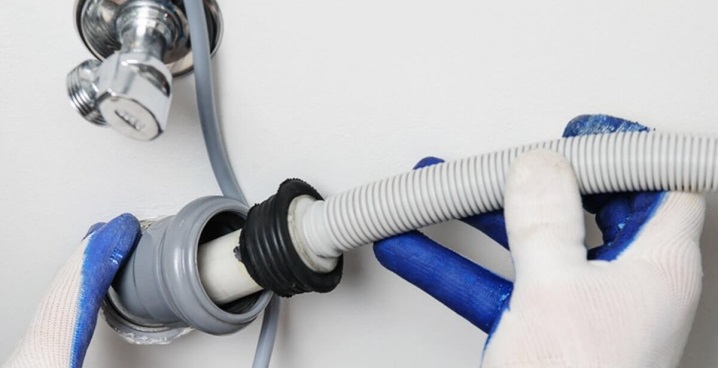

















Add a comment