
The washing machine turns off immediately after being turned on.
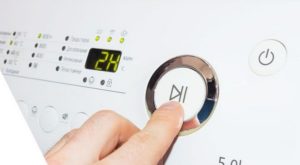 When a washing machine automatically shuts off after loading clothes and starting it, it often leaves users perplexed and a little panicked. The first thought that comes to mind is to reset the machine, turning off the power and reselecting the wash program. Unfortunately, such an attempt proves futile. Let's figure out why a washing machine shuts off immediately after turning it on. How can we restore its functionality?
User errors
There can be several reasons why appliances fail. But they all fall into two categories: breakdowns and user error during operation. If the problem is caused by user error, troubleshooting is fairly simple. So, what are the main user errors that cause appliances to shut down on their own?
- Exceeding the manufacturer's maximum load capacity for a single load in the washing machine drum. Modern machines are equipped with a useful feature—the ability to automatically weigh the laundry being washed. If the permissible kilograms are exceeded, the washing machine switches off a short time after switching on. In some cases, a second before switching off, the machine will display an error code, that is, additionally notify about an overload.

- Incorrect washing parameter settings in the selected mode. Sometimes, automatic shutdown occurs due to a firmware flaw in the washing machine. For example, if, when selecting a specific washing program, the user attempts to manually change certain parameters, such as the water temperature or the spin speed, the intelligent system may interpret the entered parameters as unsupported and shut the machine down. In this case, the machine will only shut down after user intervention. If the machine stopped working before the mode was set, this factor is not at fault.
- An imbalance in the drum. A significant sign of a problem is the machine shutting off not at the very beginning of operation, but after some time, most often during the spin cycle. Items swirling in the drum can form a large clump, causing an imbalance. Most often, the washing machine simply stops and displays an error code, but in some cases, it may even shut off completely.
If your "home assistant" shuts down due to operating errors, no major DIY repairs are necessary. In this case, you only need to address the underlying cause, such as loading a little less laundry into the drum. Fixing a problem that occurs directly within the equipment system will be much more difficult.
Checking the noise suppression filter?
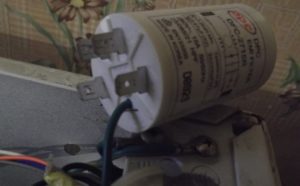 What should you do if you've definitely ruled out user error? If the washing machine stops working within a few seconds of pressing the start button, it's time to check the interference filter. To diagnose the component, locate it in the housing. The steps to access the interference filter are as follows:
- turn off the power to the washing machine, disconnect the hoses from the water supply and sewerage system;
- unscrew the bolts and remove the top cover of the machine;
- look through the top of the case and find the network cable;
- Find a noise suppression filter where the wire goes.
To diagnose an element, you will need a special device - a multimeter, which will allow you to measure the voltage in the semiconductor component.
Once the interference filter has been located, it's important to inspect it carefully. Often, just looking at the capacitor is enough to determine that it's the culprit. The component may give itself away by burnt contacts or a burning smell. If you can't visually detect the filter's defect, use a multimeter.
- Select the dialing mode on the device.
- Place the tester probes on the contacts of the part.
- Record the voltage at the input and output.
- If there are no volts at the output, the capacitor should be replaced.
Even a novice can fix this washing machine malfunction. Purchase a working interference suppression filter, install it in place of the burned-out one, and reassemble the machine in reverse order.
To avoid making a mistake when purchasing a replacement component, it's best to take the defective capacitor to the store. After inspecting the broken part, the salesperson will help you find a working interference filter that matches the original.
Perhaps the heater is to blame?
The heating element is often the cause of spontaneous shutdown of equipment. You can assume that the heating element is faulty when, after starting the washing machine, the indicator light starts blinking, and after 3-4 seconds it suddenly goes out and turns off. The heater should be diagnosed using a multimeter.
First, you need to de-energize the appliance and locate the heating element within the housing. Depending on the brand of washing machine, the heating element may be located in completely different parts of the appliance:
- Indesit, Ariston, LG, Samsung – in the back;
- Bosch, Siemens - in front.
If you're unsure where to find the heating element, carefully study the wiring diagram included with the equipment. If there's no documentation to guide your search, you'll have to find its location yourself. Start by inspecting the back of the case; if it's large, the heating element is likely located behind it. You can also locate the heating element by laying the washing machine on its side and peering inside from underneath. In this case, it's a good idea to have a flashlight handy to shine a light inside the case and quickly locate the heating element's mounting location.
The easiest way is to unscrew a few bolts and remove the back panel of the housing. If there is no heating element behind it, then putting the panel back in place will not be difficult.
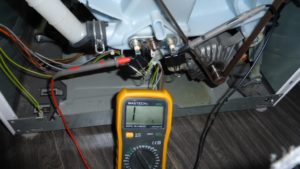 Once the component has been located, carefully remove it from the housing by disconnecting the power supply and loosening the retaining nut. Then, set the multimeter to resistance mode, set the tester to 200 ohms, and attach the probes to the heating element contacts. If the water heating element is working properly, the screen will display a number equal to the original resistance. If the display shows a "1," there's a break inside the component. A "0" indicates a short circuit in the heater. In the latter two cases, the component will need to be replaced with a working one.
If the initial check fails, the water heater should be tested for breakdown. Set the multimeter to buzzer mode, then place one tester probe against the heating element contact and the other against the heater body. If the device makes no unusual sounds, the element is fully functional. A distinctive beeping sound indicates a breakdown in the body, in which case the part will need to be replaced.
If the washing machine's malfunction isn't related to the interference filter or heating element, there's a problem with the controls. Testing the main control module yourself isn't recommended, as it could cause further damage. In this case, it's best to entrust the repair to a qualified technician.
Interesting:

Readers' comments
Headings
Washing machine repair




For buyers




For users


Dishwasher




Add a comment