
The washing machine turns off during the spin cycle.
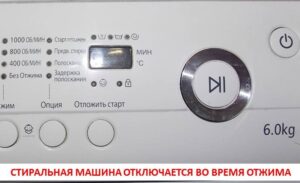 Sometimes my washing machine washes and rinses clothes normally, but then suddenly shuts off during the spin cycle. Why does this happen? Which parts of the washing machine should I check first? Can I fix the problem without professional help?
Checking and changing brushes
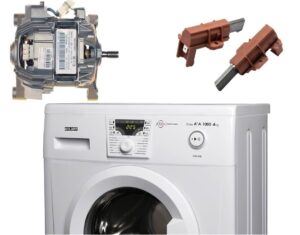
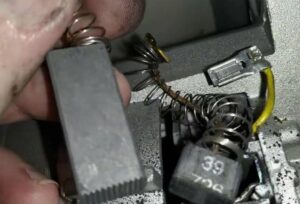
If the washing machine turns off during the spin cycle, in 95% of cases the motor is to blame. This malfunction is typical for washing machines equipped with brush motors. The carbon brushes wear out and the motor loses power.
When the machine places a heavy load on the motor with worn brushes (which happens precisely during the spin cycle), a malfunction occurs. After this, the washing machine simply shuts off. To fix the problem, you'll have to disassemble the washing machine, remove the motor, and replace the carbon rods.
The algorithm of actions will be as follows:
- de-energize the washing machine;
- disconnect the washing machine from the water supply and sewerage system;
- move the device away from the wall;
- unscrew the bolts securing the rear wall of the case;
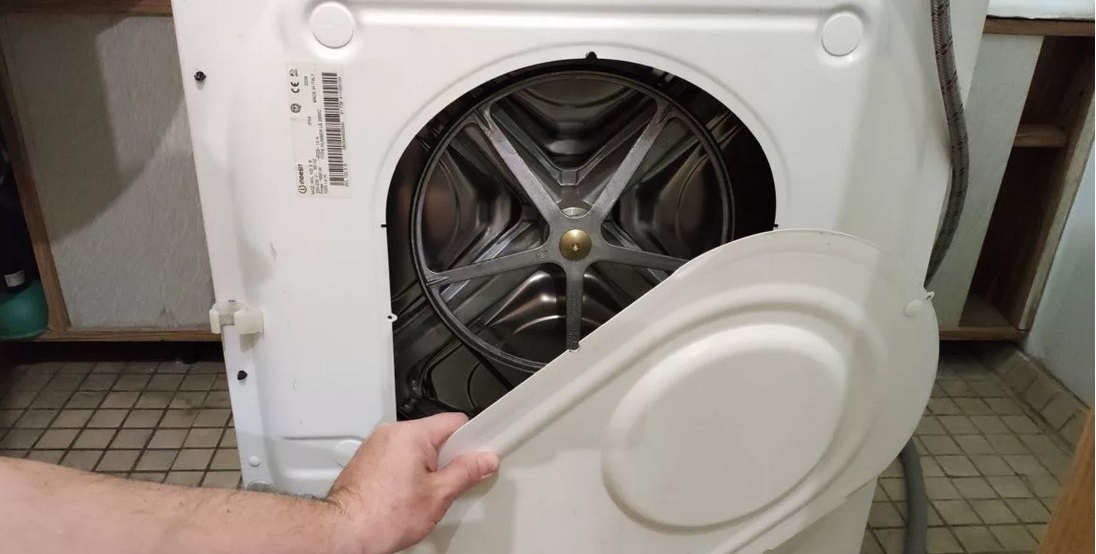
- remove the drive belt from the pulley;
- remove the screws holding the motor;
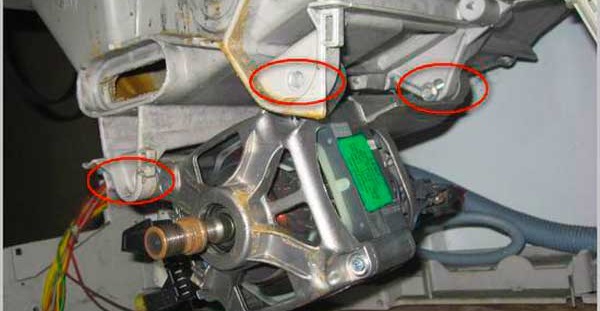
- remove the motor from the washing machine;
- Use a screwdriver to unscrew the screws that secure the brushes and remove the graphite rods.
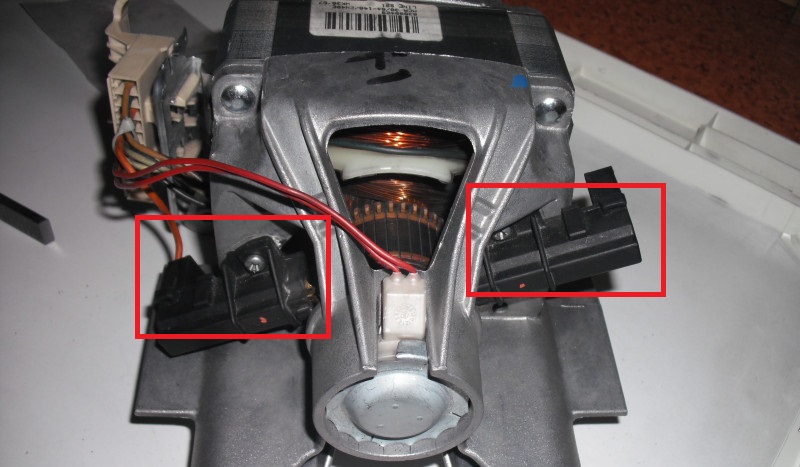
Next, you'll need to purchase new brushes. When purchasing components, be sure to select the make and model of your washing machine. Even better, take the worn brushes with you to the store and ask the salesperson to select similar parts.
Before installation, be sure to grind in the new electric brushes, otherwise the washing machine motor will spark.
If you don't grind the brushes in place before replacing them, the motor will spark. This can cause the machine to shut off abruptly. There are three ways to adjust the carbon rods. The first option involves using coarse-grit sandpaper. The procedure is as follows:
- sand the brushes with a file and coarse sandpaper to match the tip size to the motor;
- attach the brushes to the motor;
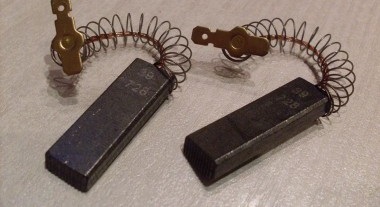
- Place glass sandpaper under the carbon rods;
- adjust the anchor so that the sanding paper touches the brushes;
- clean the engine from carbon particles (you can remove dust with a dry cloth, but it is better to use a stream of air);
- start the engine, giving a load of no more than 30% of the operating capacity;
- Clean the engine again from dust (otherwise there is a risk that the engine will short-circuit in the future).
The second method for lapping brushes involves using a strip of glass wool. It is wound around the motor and secured to the motor housing. Then, the graphite rods are placed in their holders and rotated around the armature. The elements should be rotated in the direction of the entire mechanism.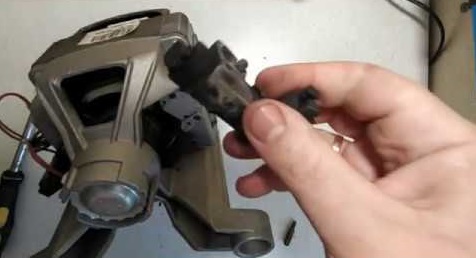
There's a third adjustment option, but it's less common. Run coarse-grain sandpaper over the motor housing 3-4 times. Simultaneously, press the brushes against the sandpaper. The grinding is complete when the graphite rods lie flat on the motor.
The ground-in brushes are secured in the motor housing. The motor is then replaced, and the washing machine is reassembled in reverse order. Next, run a test cycle with a spin speed of no more than 400-600 rpm. Observe the operation of the appliance—if all is well, the repair is complete.
The slats have peeled off
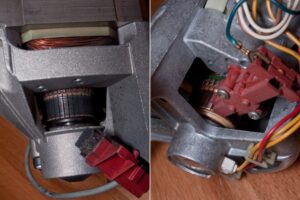
If your washing machine shuts off during the spin cycle and the brushes are fine, check the motor fins. These are the metal plates located on the motor shaft that transmit current through the circuit. When they peel off, the contact is broken, and the system malfunctions.
The reason for the detachment of the lamellas is excessive heating of the plates, which occurs due to a short circuit or jamming of the rotor.
When a current exceeding the working load passes through the lamellas, the thin metal begins to peel off. Typically, lamella peeling occurs due to: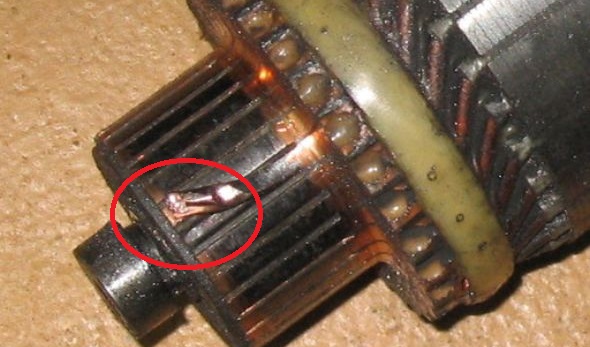
- broken bearings that abruptly stop the engine;
- washing with the drum flaps not locked (typical for top-loading automatic machines).
The plates will not peel off without a reason. The separation of the slats also indicates other related engine failures. Therefore, the best solution in this situation is a complete replacement of the electric motor. When purchasing a new manifold, be sure to match the model of your washing machine.
If your new washing machine shuts off during the spin cycle, contact your service center. Diagnostics and repairs will be performed free of charge and under warranty. It's not recommended to attempt any maintenance in this case.
Interesting:


Readers' comments
Headings
Washing machine repair




For buyers




For users


Dishwasher




Add a comment