Zanussi washing machine fills with water and drains immediately
Even the most expensive appliances occasionally throw up surprises during use, ranging from temporary malfunctions to serious breakdowns. The user's job is to promptly notice the problem, conduct the appropriate diagnostics, and resolve it. For example, if the machine fills with water and immediately drains, inaction can result in an unfinished wash cycle or even a flood. Don't hesitate; respond immediately to this unpleasant symptom and thoroughly inspect your Zanussi for the proper functioning of key system components. Let's break down what to look for and how.
How can we explain this “behavior” of the equipment?
It's hard to miss that your Zanussi washing machine empties the drum immediately after filling. Three symptoms clearly indicate this. First, the cycle doesn't complete at the scheduled time. Second, the machine doesn't start the wash or spin cycle—it sits motionless, with only the hum of the pump running smoothly. Third, wet but dirty clothes are removed from the drum. Several faults could be to blame for this behavior:
incorrectly installed drain hose;
clogged sewer pipe;
malfunction of the drain valve;
broken pressure switch;
problems with the control board.
Modern Zanussi washing machines immediately detect problems with filling or draining, stop the cycle, and display the error code on the display.
Regardless of the reason, such behavior of the machine cannot be ignored. Uncontrolled drainage and filling of water negatively affects the washing machine: the pump with impeller, control board, hoses and valves are at risk. There is also danger outside the equipment – there is a high probability of leakage, short circuit and flooding.
Is the drain connected correctly?
You can solve the problem of uncontrolled drainage yourself—you just need to rule out possible problems one by one. First, pay attention to the drain hose, especially if the machine has just been moved to a new location. Incorrect installation of the drain hose is often the cause of endless water filling the drum.
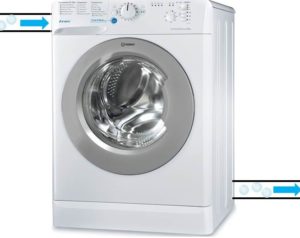
According to the instructions, the drain hose should be positioned above the drum, approximately 50-60 cm from the floor. Each Zanussi washing machine model has its own recommended height—this is to ensure the "siphon effect" is activated. Due to the pressure differential, water does not drain spontaneously. However, if installation errors are made, the balance will be disrupted, and liquid will continuously flow down the drain. The pressure switch will detect the empty drum and initiate a refill. This cycle can continue indefinitely until the power goes out, human intervention occurs, or the pump or circuit board fails.
The drain hose is installed at a height of at least 50-60 cm from the floor!
There's another way to check the drain hose. Simply turn on the quick wash cycle and stand by the machine for a minute. If the washing machine fills with water and the pump immediately starts humming, the problem is definitely improper installation.
Adjusting the hose position is quick and easy. Simply refer to the Zanussi manufacturer's instructions, follow the guidelines and recommendations, and then apply them. Attach the special loop to the back wall and thread the corrugated hose through it. Then, simply run a test cycle to check the quality of the repair.
The accumulation of dirt is to blame
Another reason for continuous filling and draining is a clogged drainage system. Accumulations of dirt in the pipes, on the impeller, on the filter and on the volute negatively affect the functioning of the pump - it begins to "freeze" and turn on erratically. The problem is solved by cleaning the clogged elements.
Cleaning begins with the debris filter. To access the filter head, follow these steps:
de-energize the machine, turn off the water;
pry up the technical hatch at the bottom of the case with a knife, press the latches and remove the false panel;
find the trash filter – the black “washer” on the right;
place a container under the plug (water will flow out of the hole!);
take hold of the protrusion and unscrew the nozzle, acting counterclockwise;
clean the “spiral” and, if necessary, soak it in a warm lemon solution;
shine a flashlight into the filter seat and inspect the drainage system;
clean the drainage from debris, foreign objects and plaque.
When you unscrew the waste filter, water will flow out of the machine - be prepared!
Another option is to check the drainage through the bottom. Simply unplug the washing machine, move it away from the wall, turn it on its right side, and look through the bottom. Most Zanussi machines don't have a drain pan or Aquastop system, which will significantly simplify the diagnostic and repair process.
A sensor that monitors the amount of water
A persistent "whirlwind" may indicate a problem with the pressure switch. This is the sensor that monitors the drum's filling level. Once water reaches a certain level, the device signals the control board to stop dispensing. However, if the device is clogged or broken, the information is not recorded correctly or is not transmitted to the electronic unit. As a result, an overflow occurs, to which the Zanussi safety system responds with an emergency drain. The only thing that can stop the endless stream is the user, a power outage, or an internal failure.
The pressure switch fails for several reasons:
oxidation or detachment of contacts;
short circuit on the chip;
breach of membrane tightness;
clogging, damage to the pressure switch tube.
Ignoring a malfunctioning pressure switch is a bad idea – it can lead to internal breakdowns, leaks, and even flooding. It's best to immediately begin diagnosing the sensor. Here's how:
we disconnect the equipment from communications;
unscrew the screws on the back panel that secure the top cover;
push the lid until it clicks, lift it up and remove it from the grooves;
we take out the pressure switch;
We inspect the sensor, wash it, and clean the contacts.
If there's visible damage, there's no point in repairing the sensor—it's easier to buy a new one. Install the pressure switch yourself in reverse order. Finally, start the washing machine and evaluate its performance.

 Even the most expensive appliances occasionally throw up surprises during use, ranging from temporary malfunctions to serious breakdowns. The user's job is to promptly notice the problem, conduct the appropriate diagnostics, and resolve it. For example, if the machine fills with water and immediately drains, inaction can result in an unfinished wash cycle or even a flood. Don't hesitate; respond immediately to this unpleasant symptom and thoroughly inspect your Zanussi for the proper functioning of key system components. Let's break down what to look for and how.
 You can solve the problem of uncontrolled drainage yourself—you just need to rule out possible problems one by one. First, pay attention to the drain hose, especially if the machine has just been moved to a new location. Incorrect installation of the drain hose is often the cause of endless water filling the drum.















Add a comment