
How to remove the drum from an Electrolux washing machine?
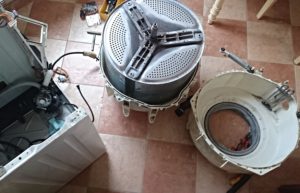 In almost any washing machine, after 7-10 years of use, the bearing assembly begins to "knock." You can replace the components yourself, without the help of a technician. Keep in mind that the repair will be complex. You'll need to disassemble the housing, disconnect all components and wiring from the drum, remove the counterweights and shock absorbers, and remove the drum from the Electrolux washing machine. Let's look at what's involved and what rules to keep in mind.
Gather everything you need for repairs
To disassemble your washing machine without incident, you need to carefully prepare for the procedure. First, you need to ensure you have a suitable workspace. Move the washing machine to a spacious room with at least 4-5 square meters of space. It's important that the room is well-lit and ventilated. Be sure to cover the floors with rags, or better yet, plastic sheeting, as the work will be wet and not entirely clean.
In addition to setting up your workplace, you should:
- Study the washing machine manual. Pay particular attention to the wiring diagram;
- prepare the tools and equipment that will be needed in the process;
- Remember the safety rules. They are important to follow when working with electrical appliances.
Before disassembling the washing machine, be sure to study the manufacturer's instructions and other documents included with the equipment.
To remove the drum from the washing machine, you will need the following tools:
- a pair of screwdrivers: Phillips and slotted;

- screwdriver;
- set of wrenches;
- small hammer;
- 8 mm hexagon;
- pliers;
- WD-40 aerosol lubricant;
- silicone sealant;
- hacksaw for metal;
- marker;
- a shallow basin and a dry cloth (to drain any remaining water from the machine).
Experts also recommend taking photos or even recording videos of individual disassembly steps during home repairs. This will make it easier to reassemble the washing machine and connect sensors, pipes, and valves. Pay special attention to the wiring; it's important to reconnect it strictly to the designated terminals and connectors.
What will prevent the tank from being removed?
Even a person who has never looked inside a washing machine can remove the drum-tub assembly if they strictly follow the instructions. First of all, it is necessary to remove all elements and components that come into contact with the tank: pressure switch, dispenser, heating element, motor, counterweights, etc.
For a smooth and quick disassembly, it's important to understand the best order to remove the parts from the tank. Here's the procedure.
- Unplug the washing machine.
- Turn off the water supply tap.
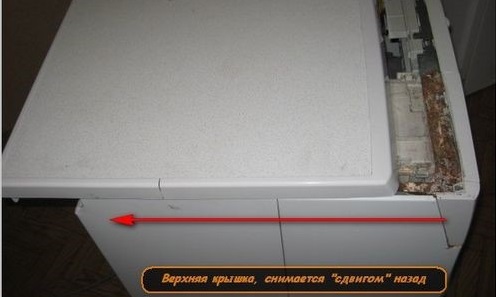
- Remove the screws holding the top of the case. Remove the cover and set it aside.
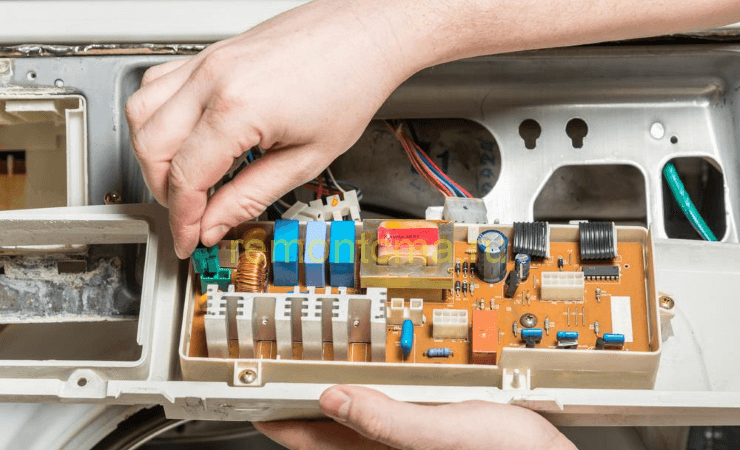
- Unhook the control panel. The instrument cluster is held in place by several fasteners, which will need to be loosened. The first pair of fasteners is hidden behind the powder receptacle, while the others are located around the perimeter of the module. There's no need to disconnect all the wiring connecting the panel to the electronic unit. You can simply lay it carefully on top of the housing, or even better, hang it on the side using a special hook.
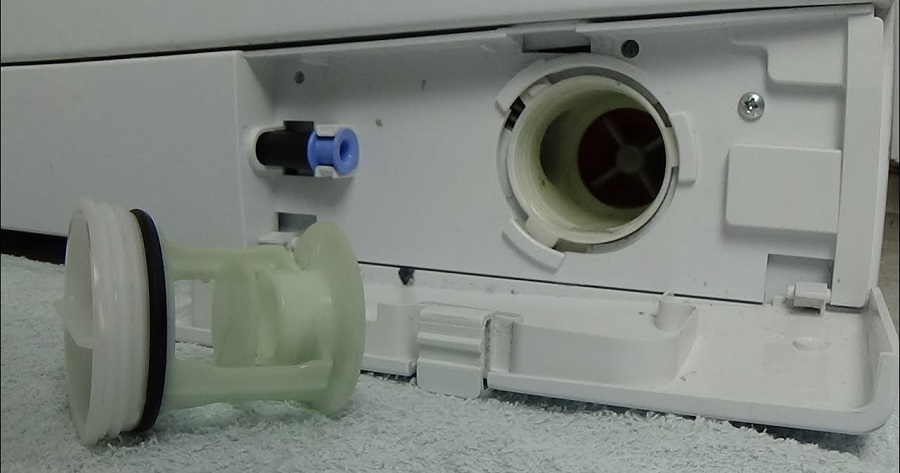
- Drain the remaining water from the machine. There's a drain hatch on the bottom right corner of the front panel. Pry it open with a flat-head screwdriver and open the door. Place a basin under the machine and cover the floor around it with rags. Unscrew the waste filter plug and collect the water that flows out.
- Remove the front panel of the housing. First, loosen the clamp holding the door seal and pull it out. Then, tuck the rubber seal inside the drum. Next, unscrew the bolts located around the perimeter of the panel and pull it toward you. When the "end" moves forward a couple of centimeters, disconnect the wires from the door locking device and remove the lock. Once it's removed, you can completely remove the front panel of the housing.
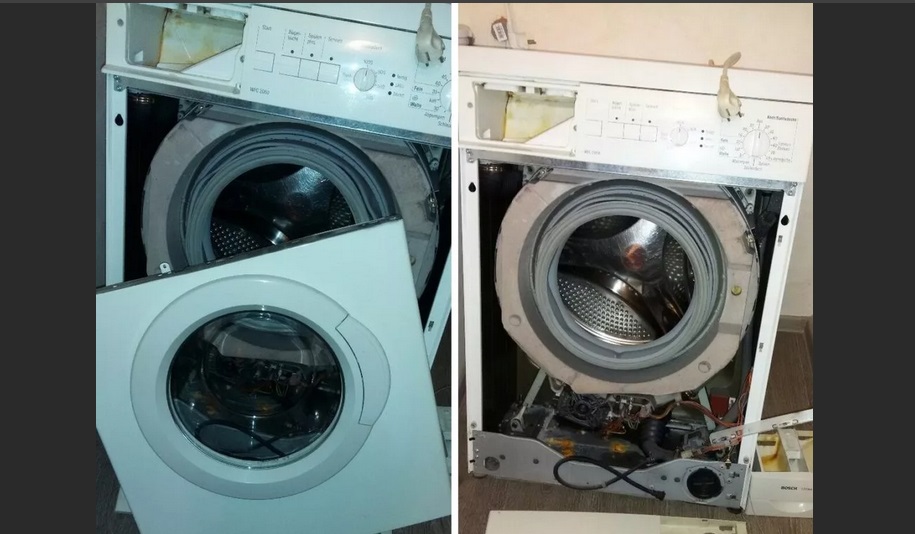
- Dismantle the main elements connected to the tank: heating element, drain pump, pressure switch, electromagnetic valve, etc.
Be sure to disconnect the hose that connects the dispenser to the tank.
- Remove the counterweights. Every Electrolux washing machine has two concrete blocks under the lid. These weights provide stability to the machine and dampen vibrations that occur during the wash cycle. To remove them, unscrew the retaining bolts and gently rock the "stones." Be aware that these weights are very heavy; be careful not to drop the concrete unexpectedly.
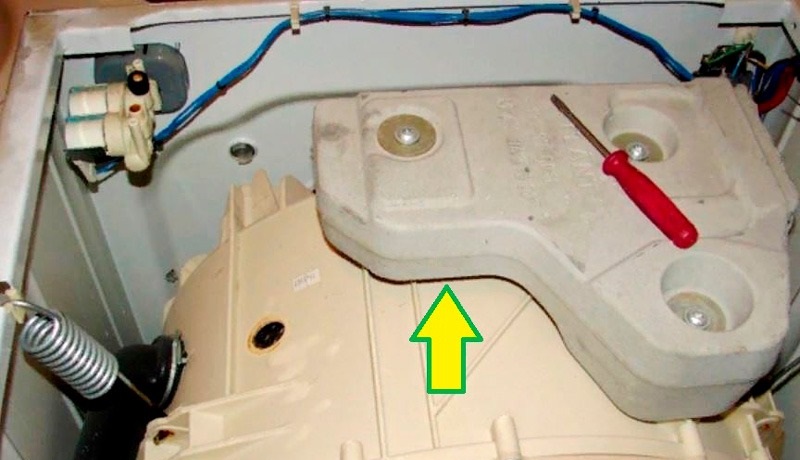
- Remove the shock absorbers. The springs are the last thing that will interfere with the drum's removal. Unscrew the pillars holding the drum in place and remove the shock absorbers.
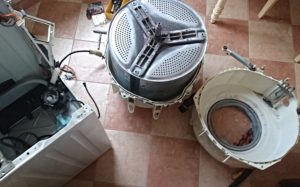
The tank in which the drum is "hidden" is very heavy, so it's best to have two people remove the unit. Grasp the edges of the tank, lift it, and pull it upward.
The removed tank should be placed on the floor or table with the crossbar facing upward. Once removed, disconnect the motor from the plastic container. Loosen the retaining bolt, remove the motor, and set it aside.
Experts recommend taking advantage of the situation and immediately checking all removed parts for functionality. Use a multimeter to test the heating element, water level sensor, motor, and drain pump. It's also best to clean the inside of the machine right away. Wash the debris filter, hoses, and detergent drawer in soapy water, and remove any limescale from the heating element.
We "halve" the tank and take out the drum
Once the plastic container has been removed from the housing, all that remains is to cut it in half and pull out the drum. Most washing machines Electrolux are equipped with detachable tanks, which can be easily separated if necessary.
The tank halves are securely fastened together; this is essential to prevent the container from leaking. Carefully inspect the connection between the plastic "shell" halves. Typically, separating the tank requires removing the screws located around the circumference (using a screwdriver) or loosening the fasteners (using a thin screwdriver).
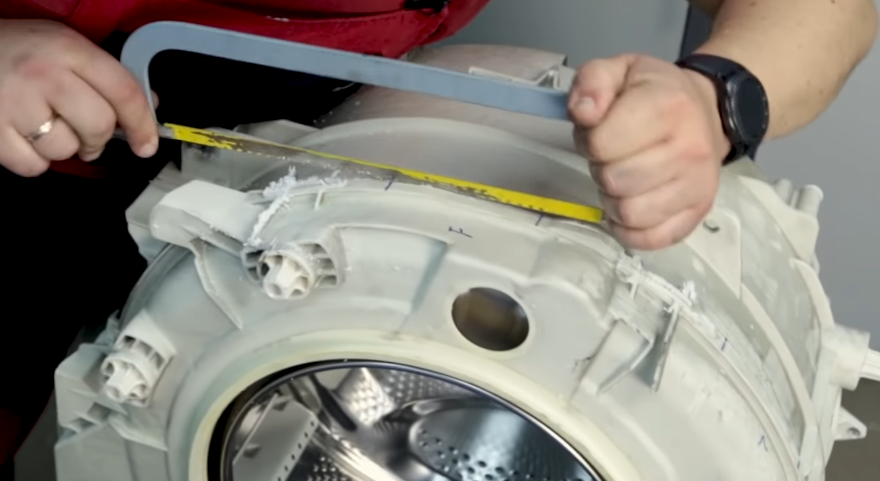
The algorithm of actions is as follows:
- move the bottom of the tank aside;
- remove the pulley;
- put the bolt in place of the pulley and knock out the shaft.
If the shaft is stubborn, treat the joint with WD-40 lubricant. Wait 15-20 minutes and repeat the procedure. After this, you can remove the drum from the tank and perform any necessary repairs, including replacing the bearings and seal.
If the tank is non-separable, you can cut the container with a hacksaw, evenly along the seam, then connect the halves using silicone moisture-resistant sealant and screws.
Then, all that's left to do is reassemble the washing machine in reverse order and run a test wash. If everything works and there are no leaks, consider the repair successful.
Interesting:
Readers' comments
Headings
Washing machine repair




For buyers




For users


Dishwasher




Add a comment