Sometimes you need to disassemble your Beko washing machine yourself, especially if there's a minor problem. To repair it, you need to access the component, but first, you need to partially disassemble the casing. How do you remove the top cover of a Beko washing machine? It's easy; just follow the instructions below.
How to quickly dismantle a part?
Removing the top cover of a Beko washing machine is easy. But first, you need to prepare the appliance for disassembly. Unplug the washing machine, turn off the water supply, and remove any hoses. Move the machine away from the wall to make it easier to disassemble.
Now you can proceed directly to dismantling the top part of the washing machine:
walk around the washing machine;
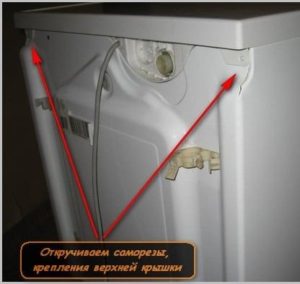
Find and unscrew the two screws holding the top cover (they are located under its protrusion near the right and left corners of the machine body);
grab the lid and pull it towards you just a few centimeters;
lift the top part of the case and put it aside;
This completes the process of disassembling the Beko washing machine.
Caution! If the lid doesn't move, never pry it with sharp objects, as this will only damage the equipment.
If you can't budge the part, it's likely jammed. In this case, it's best to try to loosen it by moving it back and forth. You can gently tap it with a mallet and try again to remove the cover. Don't use excessive force; be patient and try to move the part. The cover can be removed in a similar manner on many modern models of this brand.
What is the use of this?
We've covered how to remove the top cover of a Beko washing machine. But in what situations might it be necessary to remove it? What parts of the machine can be replaced or repaired if this part is removed?
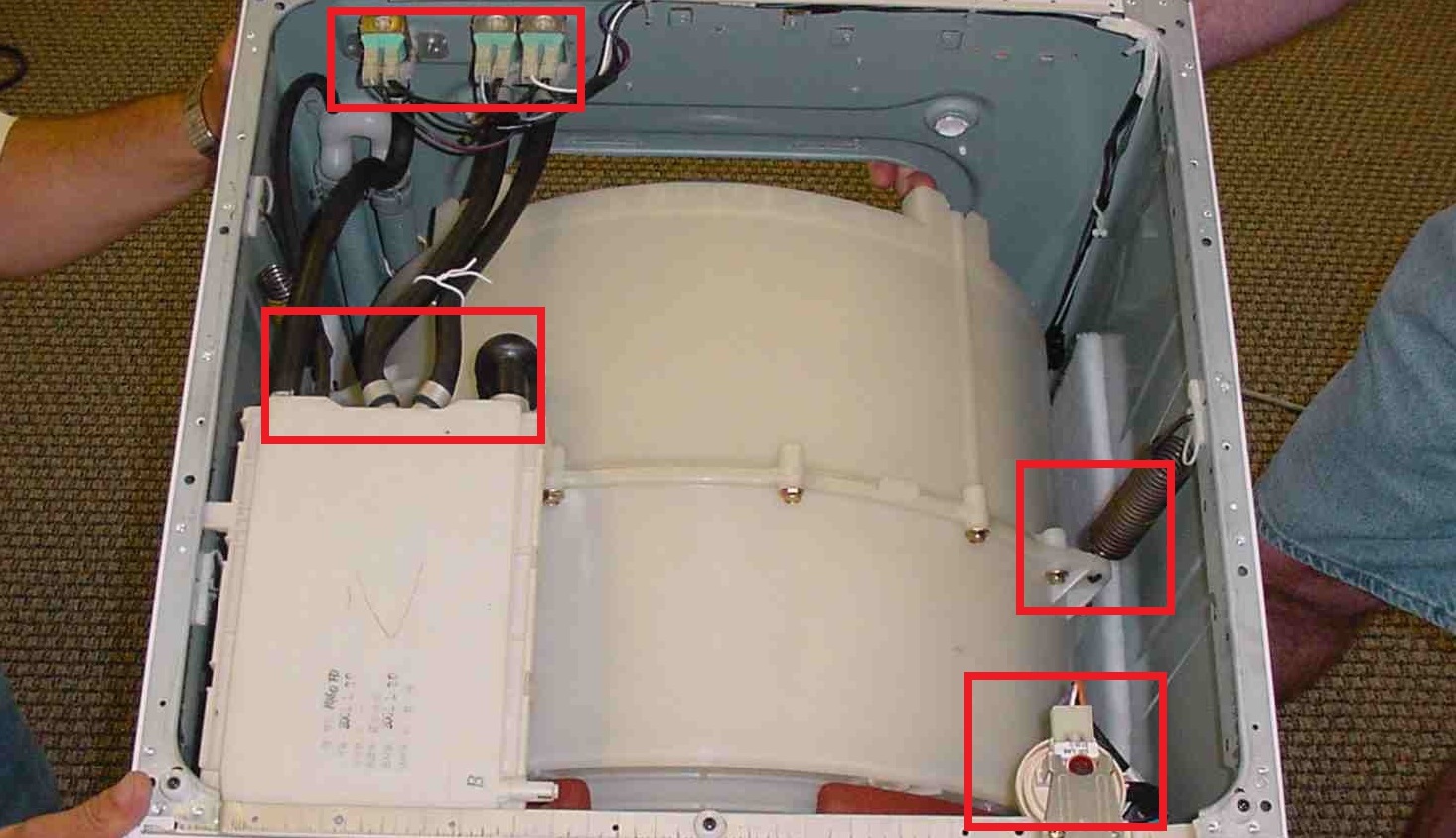
By removing the top of the washing machine, you'll gain access to the inlet valve. It's important to check it if you're having trouble getting enough water, or if there's too much or too little. This part is located in the upper right corner of the machine, near the back cover. You'll be able to inspect the valve coil and other components. If necessary, by removing only the top part of the washing machine, you can completely replace the inlet valve with a new one.
If detergent isn't draining properly after washing, check the condition of the detergent drawer. To do this, remove the lid as described above, then remove the drawer or clean it. If necessary, the faulty part can be completely replaced.
Another important component of the washing machine is located in the upper part of the housing: the pressure switch. It is required for proper water drainage. If the washing machine refuses to drain or drains late, displaying an error message on the screen, the problem lies with this component. To replace it, unscrew the fastener and disconnect the pressure switch from the wires, then install a new part.
Removing the washing machine's lid will give you access to the upper counterweight. While it rarely breaks, it can still cause a malfunction. If you need to repair this part, you'll need to remove the casing cover.
Removing the top will also help you access the electrical part of the Beko washing machine, if necessary.
If desired, you can even remove the drum and tank. However, lifting the top cover alone won't be enough. You'll have to remove the front section and unscrew the access hatch at the rear. However, the disassembly procedure will begin with the top section.
Therefore, knowing how to remove the top of a washing machine can be useful in many situations involving a breakdown. It's the starting point for repairs of any complexity. This instruction manual will certainly be useful for a DIYer who doesn't want to overpay for a technician's services.

 Sometimes you need to disassemble your Beko washing machine yourself, especially if there's a minor problem. To repair it, you need to access the component, but first, you need to partially disassemble the casing. How do you remove the top cover of a Beko washing machine? It's easy; just follow the instructions below.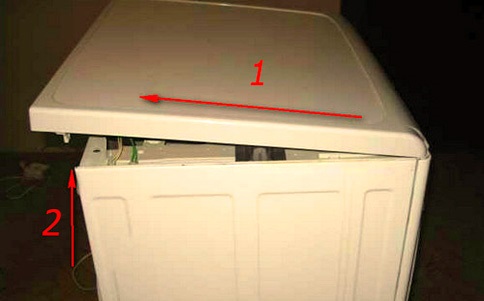
















Add a comment