
How to remove a washing machine door?
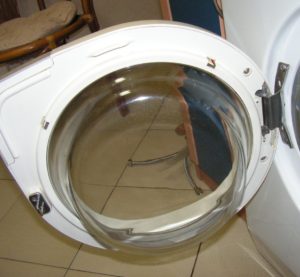 If the door on your front-loading washing machine breaks, don't rush to a service center. The locking mechanism on front-loading machines is quite simple, and even complex repairs can be easily handled. You just need to understand how to remove the door, disassemble it, and replace the damaged components. This detailed instruction manual will help you complete the task.
We remove the element from the body
Repairing a door while it's suspended is a troublesome and extremely inconvenient task. It’s better not to complicate the task for yourself and remove the hatch from the body along with the hinges. It's done simply:
- remove the outer clamp on the hatch cuff;
- we insert the seal inside the drum (it is not recommended to remove the rubber completely, as putting it back in place is difficult and time-consuming);
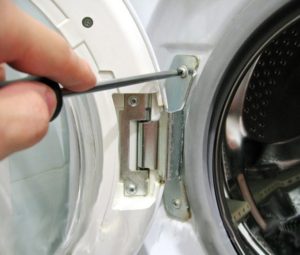
- we find one retaining bolt near each door hinge;
- We take a key that fits head number 8.
- We completely unscrew the bolts.
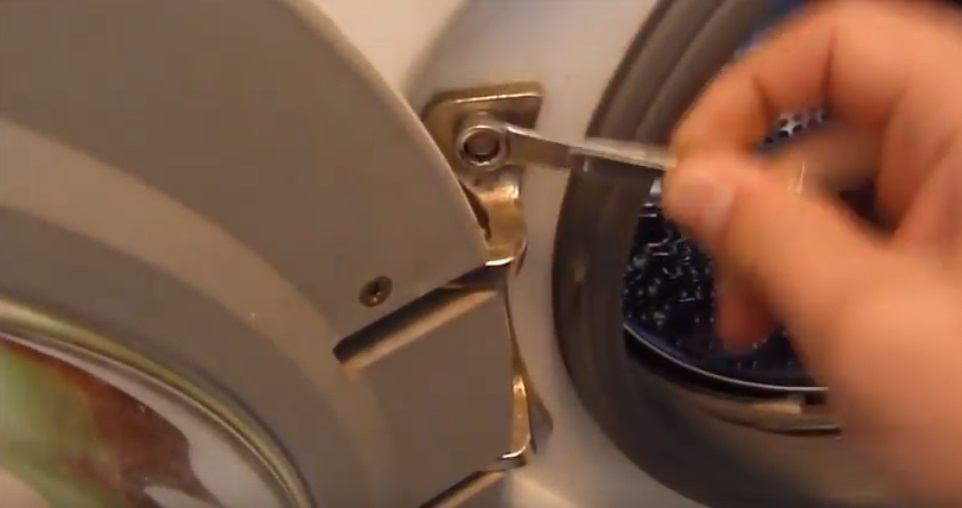
Be prepared for the door to not come off immediately. In addition to the bolts you've removed, it's also held in place by special hooks. To release the door, gently lift the hinges 4-5 mm upwards and then pull them toward you. If done correctly, the door will slide free of its grooves.
When removing the door, be extremely careful: the locking hooks are made of plastic and may break off under strong pressure.
Why remove the manhole cover?
Before beginning any door repairs, it's worth examining its structure and mounting features. Generally, all washing machine manufacturers adhere to the same design. However, each model has its own unique features that must be taken into account during any work. It's also important to study the electrical diagram and try to determine the nature of the fault before disassembling. There are numerous reasons to replace the door or its components:
- broken glass;
- latch that doesn't engage or sticks;
- sagging hinges;
- breakage of the support on the hinge.
In addition to the glass, lock, and hinges, the door locking system can also fail. The door locking mechanism is located separately on the washing machine body but plays a vital role in closing the drum. Now, let's look at each malfunction and the necessary repairs in more detail.
Let's look at the locking device
You can tell if your door lock system is faulty by several telltale signs. The most important one is that the machine will display a corresponding error message. A door that does not open at the end of the cycle or that does not lock when closed also signals problems with the electronic lock.
To remove and test the door lock, you need to remove the device from its housing. But first, you'll need a few tools: a flat-head and Phillips-head screwdriver, a multimeter, and a dual-core cable. The latter should have terminals on one end and a plug for connecting to a 220-volt outlet on the other.
Now remove the door lock from its housing through the top lid of the washing machine. You can also access the door lock through the drum, but, again, it's best not to touch the door seal.
- Disconnect the washing machine from the power supply and water supply.
- We disconnect the drain and fill hoses from the machine.
- We provide free access to the equipment by moving it away from the wall by 0.5-1 m.
- We loosen the bolts holding the housing cover and remove it.
- We find the fasteners that secure the UBL, which are located directly behind the door lock, and unscrew them.
- We put our hand through the top to the UBL and, holding it with the other hand, disconnect it from the connected wiring.
- We take out the device.
Next, we begin diagnosing the locking device. We take a multimeter, set it to measure resistance, and attach the probes to the neutral and live terminals. Then, we evaluate the display: if it shows a three-digit number, there's no problem with the locking device.
Now, use a thin screwdriver to switch the door lock to the "Open" position and connect the device to the power outlet using the cable. If the mechanism engages and you hear a click, the lock is working properly. It's a good idea to attach the probes to the neutral and common contacts. The device is working properly when the display shows "0."
We are repairing the locking mechanism
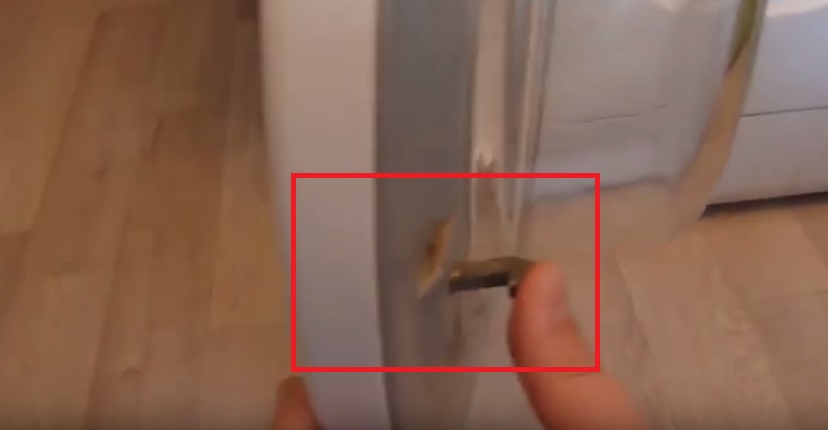
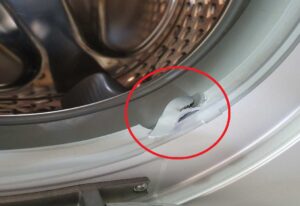
If the door doesn't close tightly, it's likely the latch lever is deformed. More specifically, the part has developed uneven surfaces that prevent the hatch from locking into the locking mechanism. This can be easily corrected: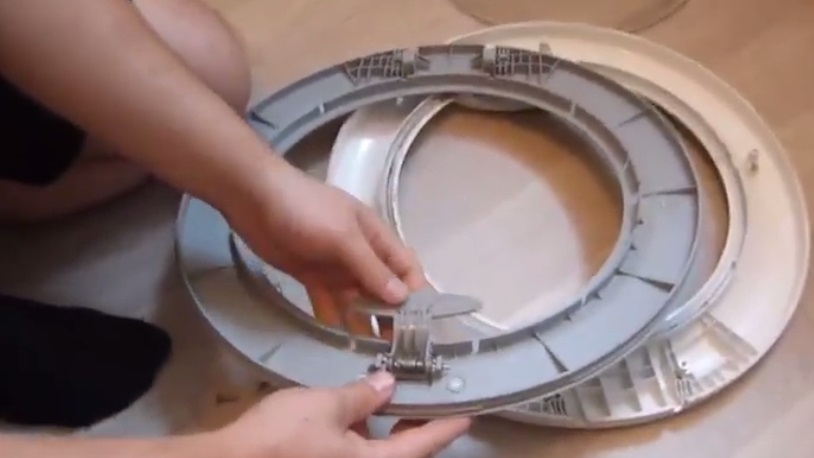
- remove the door using the algorithm described above;
- we turn the hatch with the latch towards us;
- take a file and file down all the existing nicks and uneven areas;
- we lubricate the surfaces with graphite lubricant for prevention;
- we return the door to its place.
Handle the hatch door with extreme care: do not hang wet items on it and do not allow children to ride on them.
When problems with closing the hatch are caused by sagging hinges or loose fasteners, the door hinges need to be adjusted. However, this is all determined by eye: tighten and tighten the fasteners until they are fully engaged in the grooves.
Fixing the glass problem
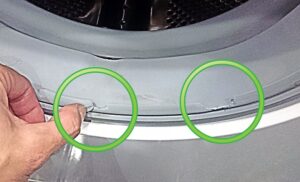
A cracked, broken, or shattered glass will prevent you from using your washing machine. To continue washing, you'll need to either replace it or securely seal it. Unfortunately, replacement isn't an option for all models. More often, users are forced to patch the cracks or go to the store for a new one. Fortunately, repairing cracks in glass is easy, as long as you follow the instructions.
- Use tape to stick a polyethylene film on the outside without any gaps or voids.
- Attach reinforcing tape to the damaged area from the inside.
- Prepare an epoxy resin solution. Mix the resin and hardener in a 6:4 ratio based on EDP glue until smooth. The mixture should have the consistency of thin sour cream. If it's thicker, heat it in a double boiler, stirring occasionally.
It is better to seal the cracks with an epoxy resin solution, since special sealants wash out over time and start leaking.
- Fill all cracks and crevices with the resulting resin solution.
- Wait 24 hours.
- Remove the polyethylene and clean up any uneven areas on the glass.
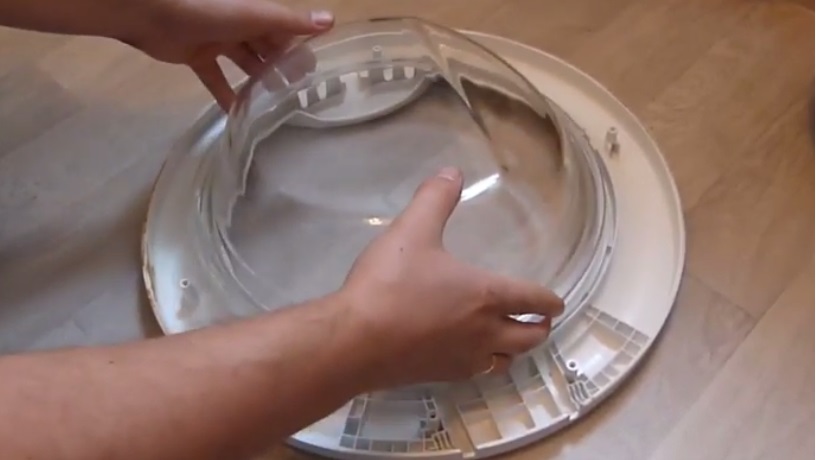
It's important to adhere to the timing and ingredient ratio when using the resin and hardener solution. Otherwise, the protection won't last as long as expected.
We repair the handle
Repairing or replacing a door handle is done differently. The removed hatch must be placed on a flat surface and all bolts around the perimeter must be unscrewed.Next, we cut the structure in half and remove the glass.
The next step is to begin repairing the support:
- we drill a hole of about 3.8-4 mm on the part;
- we cut the nail to the appropriate depth and length;
- heat up the filed nail and insert it into the hole;
- We wait a few minutes and check the integrity of the support.
Follow the operating rules of the washing machine and read the instructions before using it for the first time.
It's best to prevent problems with the door closing. To do this, simply operate the washing machine carefully, avoid jerking the handle too hard, and avoid slamming the drum when closing. Careless handling leads to premature wear, sagging, and breakage, which are easy to fix, but quite time-consuming.
Interesting:
Readers' comments
Headings
Washing machine repair




For buyers




For users


Dishwasher




Add a comment