
Removing the control panel on a washing machine
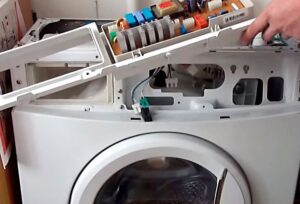 Repairing the control board yourself is too risky, and taking it to a service center for diagnostics is expensive and futile—the technician will only notice the problem and recommend a replacement. Therefore, it's cheaper to immediately remove the washing machine's control panel and install a new one. This is especially true if the appliance has been in use for a long time, and even a cursory inspection reveals that the controller is burned out. However, replacing the board is also a complex task, and the slightest mistake can lead to failure of the new component. For a successful installation, it's recommended to follow the instructions.
How to find and remove the panel?
The control panel takes up a fair amount of space on the washing machine, so finding it shouldn't be a problem. Typically, the controller is located behind the front control panel on front-loading machines, and on top-loading machines, it's located on top. The exact location of the module is indicated in the factory instructions. To remove the panel yourself, you first need to remove the top cover of the washing machine, and then free the module itself from its fasteners. The sequence is as follows:
- de-energize the machine;
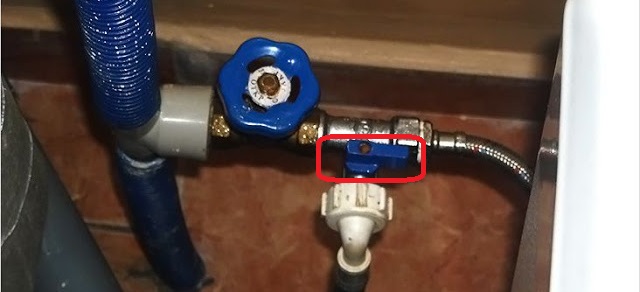
- disconnect the equipment from the water supply;
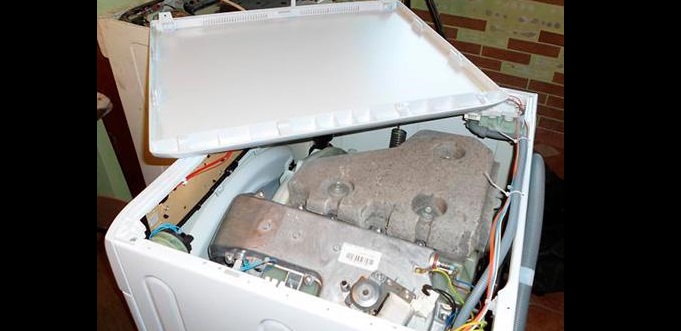
- unscrew the two screws holding the top cover (they are located on the back panel);
- slide the cover and, lifting it, press the locking latches;
- unhook the powder receptacle (pull it all the way and press the central button);
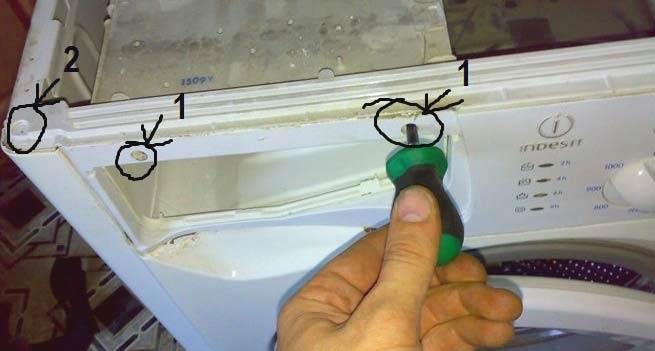
- loosen the bolts “hidden” behind the tray;
It is recommended to record your actions on video to avoid mistakes when reassembling the washing machine.
- unscrew the screws holding the dashboard around its perimeter (some models of washing machines have plastic latches instead);
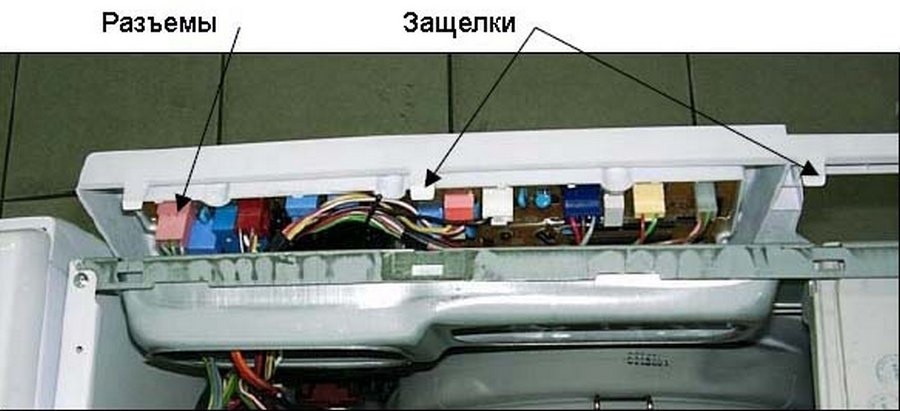
- detach the instrument panel from the body;
- take a photo of the location of the contacts on the block;
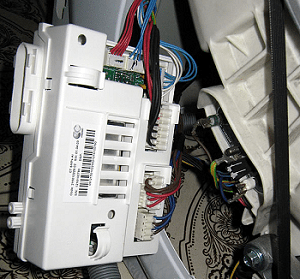
- disconnect the connected wiring;
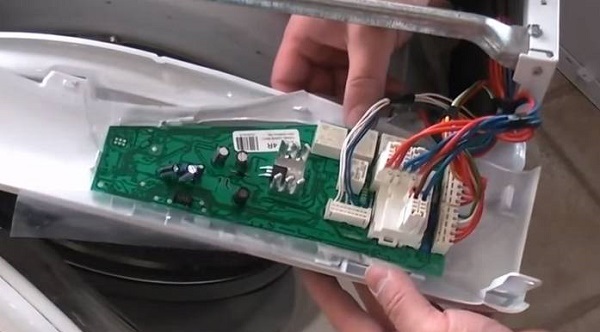
- unscrew the screws holding the control module;
- get the board.
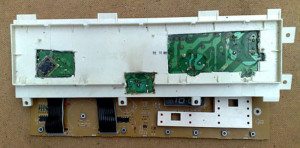
It's important to understand that the board should only be removed at home after the warranty period has expired. After removing the module, it's recommended to carefully inspect the contacts and microcircuits: if there's serious damage, it will be easily visible. For example, scorch marks, dark spots, rust, chips, and traces of burnt coils and capacitors will be visible on the surface.
The new board is installed in reverse order. The most difficult part is reconnecting the wires in the original order. Once the replacement is complete, test the machine by running an empty wash cycle.
Is it necessary to remove the panel?
Replacing the control board is easy. The challenge lies elsewhere: sometimes the problem lies elsewhere in the washing machine. For example, another system component, such as the door lock or the pump, may fail, creating the appearance of electronic damage. As a result, a new module doesn't fix the problem, wasting money, and the machine will still need repairs.
To avoid blaming the circuit board unnecessarily, it's essential to diagnose the problem. Ideally, any malfunction should be thoroughly checked, leaving the control module for last. Only if other components and mechanisms are found to be operational can the instrument panel be removed and the electronics inspected.
The second option is to suspect a problem with the control board based on characteristic symptoms. A washing machine with a faulty control board will dramatically change its behavior, revealing the electronic nature of the problem. All you need to do is recognize the signals and identify them.
- The washing machine does not spin, and after the rinse cycle is complete, the control panel freezes – it does not respond to user commands and does not display an error code.
- The LEDs on the dashboard are flashing erratically. Despite power being supplied to the circuit board, the program cannot be started—the machine doesn't respond to button presses.
- After starting a cycle, the machine fails to fill with water or immediately starts draining. Eventually, the machine freezes completely, and the only solution is to reboot the system. However, after the reboot, the machine washes normally.
- Regardless of the program type, the machine washes for 3-4 hours nonstop, without rinsing or spinning. The drain pump doesn't start, and the system eventually stalls.
- After plugging the machine into the power supply, it is not possible to set the washing mode: the system freezes and immediately turns off.
- The program starts, the screen displays information about the program, the timer starts counting down, but the washing machine remains silent. No water is added, the drum doesn't spin—nothing happens.
- The motor operates strangely: it abruptly changes speed when the program doesn't require it. The opposite behavior is also possible, with the drum rotating in one direction for a long time.
- Heating issues arise: the heating element sometimes overheats the water, sometimes leaves it cold. The thermistor readings and program settings are irrelevant in this case – everything happens chaotically.
Before replacing the control board, it is necessary to make sure it is faulty by conducting a comprehensive diagnosis of the washing machine.
It's important to understand that the symptoms listed above only hint at a possible module malfunction. However, similar failures can also be caused by malfunctions in other components and mechanisms of the washing machine. To confirm that the control board is faulty, it is recommended to first run the system's autotest, and then perform manual diagnostics of the machine.
The process for initiating the autotest varies depending on the brand and model of your washing machine. Simply carefully read the relevant section of the manual and follow the steps outlined therein. For example, on an Ardo washing machine, the autotest is activated as follows: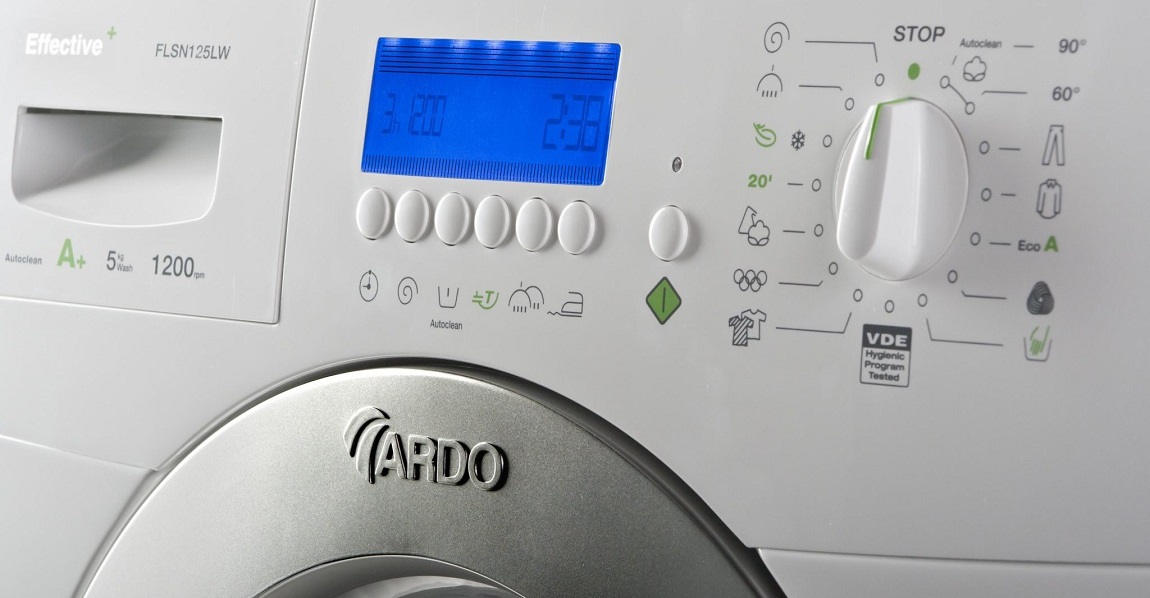
- plug in the washing machine;
- rotate the programmer to a strictly vertical position so that the arrow points downwards;
- set the temperature to zero;
- make sure the drum is empty (there is no water or things in it);
- close the hatch door;
- Press and hold all buttons on the washing machine’s dashboard at the same time (this will activate the autotest);
- wait until the system mode is completed;
- look at the display - it will show an error code (the combination decoding is given in the factory instructions).
Modern washing machines are equipped with a self-diagnostic system that can be activated automatically or manually via a special button on the control panel.
Not all washing machines have an autotest mode. Modern machines instead feature a built-in diagnostic system that runs continuously. If a malfunction occurs, self-diagnostics automatically records the failure and displays the corresponding error code on the display. It's a different matter if the machine is equipped with an asynchronous motor. Self-testing is impossible on such equipment—only a manual check performed by the user.
It's recommended to verify the autotest results during manual diagnostics. It's advisable to sequentially test all suspect components and system elements with a multimeter, and finally, the board itself. This sequential testing will take a considerable amount of time, but it will allow you to be 100% certain of the cause of the malfunction.
Interesting:


Readers' comments
Headings
Washing machine repair




For buyers




For users


Dishwasher




Add a comment