How to remove a bearing from an LG washing machine?
Removing the bearing from the drum of an LG washing machine requires almost complete disassembly. While most novice repairmen can access the drum, the rest is not so straightforward – the bearing assembly is quite difficult to remove. We recommend not experimenting with the machine, but rather following the instructions strictly.
Getting to the bearings
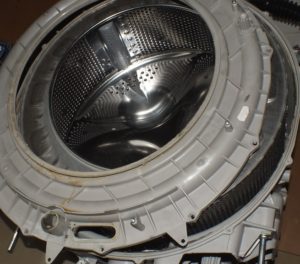
If the path to the tank is unimpeded, remove the drum from the housing and place it on a flat surface. First, separate the two halves by removing any screws or latches. After removing the "empty" part of the drum, place the other half with the pulley facing up.
If the bolts are rusted or there is a foreign deposit on the surface of the tank, then such areas should be treated with a product such as WD-40, left for 10-15 minutes and the remaining rust should be removed.
We unscrew the fastener that secures the drum pulley, remove the wheel, and replace the bolt. This "castling" will further protect the shaft and the tank surface from mechanical damage.
We insert a metal pin into the screwed-in bolt and carefully hit it with a hammer, slowly knocking out the shaft. It is necessary to act with extreme caution, as a strong impact will result in costly repairs.
Once the shaft and bushing are knocked out, carefully inspect them for integrity. Checking the rod for wear is easy: simply attach the bearing to it and unscrew it. If there is any play between the parts, the part needs to be replaced. If there is no play, you can proceed with removal.
We take out the damaged parts
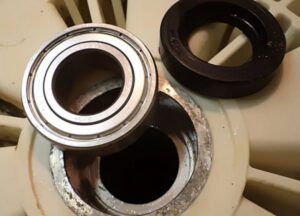
When repairing the bearing assembly, you'll need to not only remove the bearing from your LG washing machine but also replace the seals. Therefore, remove the aforementioned gasket from the back of the drum by hooking the rubber seal with a flat-head screwdriver. It's important to remember that these parts are only replaced in pairs, regardless of the degree of wear of the second seal.
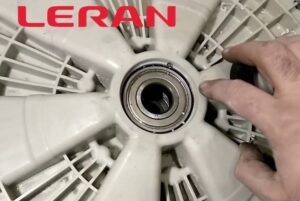
Next, remove the bearings themselves. New ones can be easily pushed in, but old and rusted ones will require considerable force. Immediately treat the surface with WD-40 and clean the bearing surface. Then, hold a metal pin to the edge of the ring and, constantly changing its position, use even blows to force the part out.
The pin must be constantly moved - to the other edge, crosswise, closer to the middle, otherwise the bearing will take longer to come out and not completely.
You don't have to spare the old bearing, and if the bearing core is damaged, you can remove it piece by piece using pliers, tweezers, or a pin. However, it's best to avoid the edges of the bearing seat. If the bore is deformed, the new ring will not fit tightly.
After removing the seals and bearings, do not ignore cleaning. All accumulated chips, rust, dirt and plaque in the seat must be treated with a cleaner. If the scale layer is very thick and doesn't budge with WD-40, sand the surface with fine sandpaper and sweep away the debris with a rag. It's not recommended to install the new bearing assembly until the hole is clean and dry.

 Removing the bearing from the drum of an LG washing machine requires almost complete disassembly. While most novice repairmen can access the drum, the rest is not so straightforward – the bearing assembly is quite difficult to remove. We recommend not experimenting with the machine, but rather following the instructions strictly.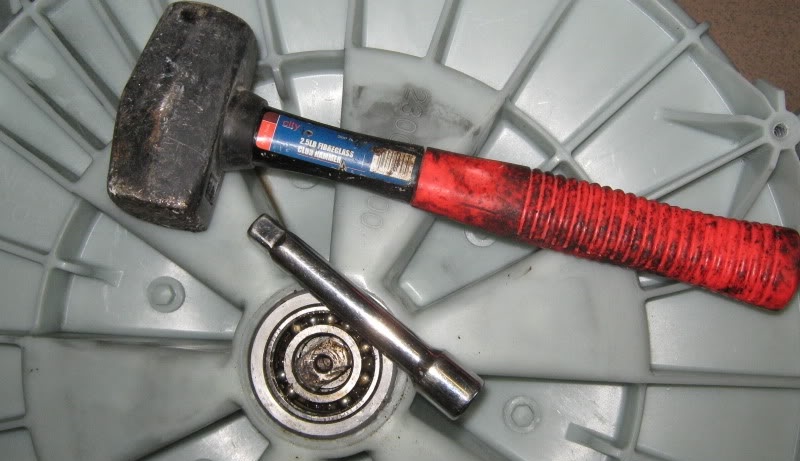














Add a comment