How to remove the counterweight on the springs in an Ariston washing machine?
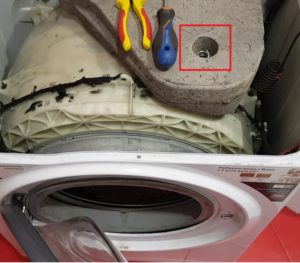
The Ariston washing machine is protected from shaking, tremors, and instability by large concrete blocks that counteract centrifugal force and hold it in place. These heavy components are called counterweights, and despite appearing sturdy and indestructible, they can still be problematic. Often, it's necessary to tighten the bolts holding the blocks in place, replace a worn concrete block with a whole one, or simply remove the spring-mounted counterweight during Ariston washing machine repair. How can this task be accomplished quickly?
Where to look for concrete block?
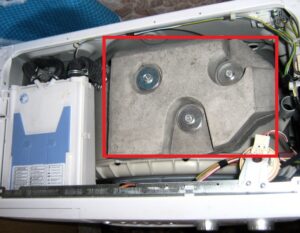
To replace the counterweight in an Ariston washing machine yourself, you need to know exactly where it's located. Locating the entire unit or its three parts isn't difficult. To do this, you'll need:
turn the automatic machine with the rear wall facing you;
detach the top cover;
remove the panel located at the back of the washing machine.
That's it. Now you can visually inspect the counterweight, which may have cracked, split, or become loose, which could lead to instability and serious malfunctions. Also, tug on the stones and check the fasteners for proper fit. It is advisable to perform this inspection once every six months for preventative purposes, in order to promptly detect faults and carry out repairs.
Features of removal
If you need to temporarily or completely remove the counterweight, you must first loosen the fasteners. In this washing machine, the fasteners are 2-3 wide bolts on each balance weight. Select a wrench or socket of the appropriate diameter and remove the bolts. Next, grasp the balance weight by its protrusions and carefully remove it from the washing machine.
Keep in mind that concrete blocks weigh between 5 and 15 kilograms, so be sure to have an assistant.
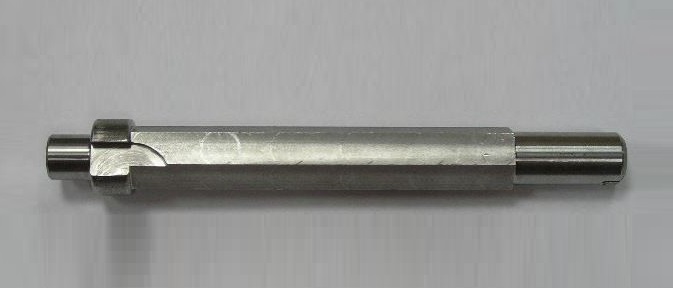
The Ariston washing machine is designed slightly differently than other machines. Its concrete balancer is secured with specific bolts that cannot be accessed with a standard tool. But don't despair—you can make one yourself. To do this, take a pipe with a diameter of 20-22 mm and a length of 20 cm or more. Cut a 5 cm deep hole in the middle of one end. Drill a 2 cm hole in the opposite end and insert a 4 x 16 mm bolt, securing it with a screw from the inside. This tool will make it easier to remove the balancer.
What to do with a broken block?
Diagnosing the counterweight is important, as damage can lead to serious problems and impact the safe operation of the washing machine. A damaged counterweight will not be able to dampen the vibrations of the drum during rotation and will cause instability, which can lead to machine failure. Therefore, if you notice any deviations from the normal operation of your washing machine, it's important to immediately begin diagnostics and subsequent repairs.
If the problem is with the retaining bolts, which have sagged and tightening them doesn't help, inspect the lock washers. They can become compressed and loose, which can also cause imbalance. Therefore, you should re-tighten them and tighten the bolts securely.
Important! Do not operate the washing machine if the balancing weight is cracked, particularly if a large piece has broken off. In this case, the entire weight must be replaced immediately. To do this, remove the weights, measure them, and select an identical weight.
Acquiring a new counterweight is easy: you can buy one online using a unique identifier, custom-make one yourself, or contact a home appliance repair service center. Locating the counterweight in your washing machine is easy. Inspecting and removing the spring-mounted counterweight is also straightforward. All you need is a wrench and sufficient strength to support the heavy load.

 The Ariston washing machine is protected from shaking, tremors, and instability by large concrete blocks that counteract centrifugal force and hold it in place. These heavy components are called counterweights, and despite appearing sturdy and indestructible, they can still be problematic. Often, it's necessary to tighten the bolts holding the blocks in place, replace a worn concrete block with a whole one, or simply remove the spring-mounted counterweight during Ariston washing machine repair. How can this task be accomplished quickly?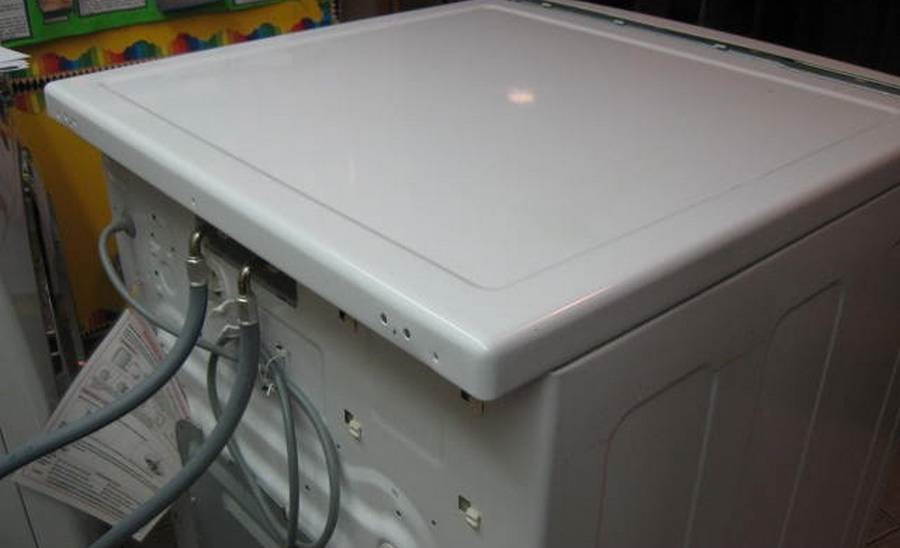



















Add a comment