Removing a washing machine's inlet hose doesn't require any special tricks. Simply shut off the water supply and unscrew the hose nut from the washing machine body and the tee. The drain hose isn't as easy to remove, as one end is secured inside the machine. This short article will help you remove the washing machine's drain hose without any difficulty.
How to dismantle a part?
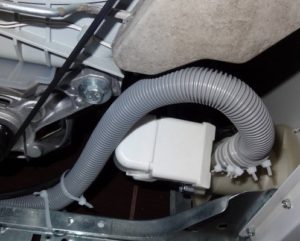
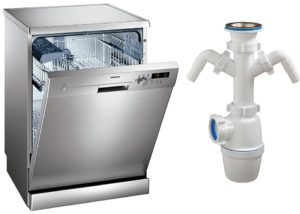
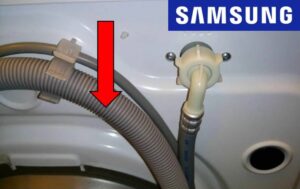
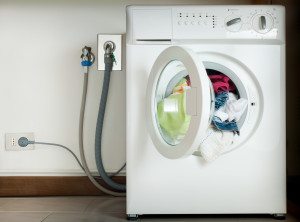
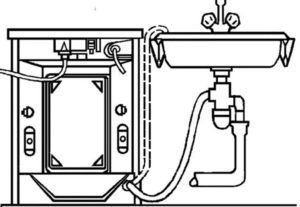
Always start by disconnecting the automatic machine from the power and water supply for safety. Next, pay attention to the drainage system. The drain hose is connected to the sewer pipe or trap on one end, and is secured to the snail pipe inside the machine with a clamp on the other. The drain pipe connects to the sewer through a special tee, to which the hose or trap is attached. The drain sleeve, in turn, is attached to this element with a nipple. Before disconnecting the drain hose from the machine, do the following:
disconnect the washing machine from the power supply;
turn off the water supply tap;
prepare dry rags in case any remaining water spills on the floor when removing the drain hose;
loosen the special hose clamp;
Remove any remaining water from the drain system. To do this, place a container of water underneath and unscrew the debris filter cap, which is located behind the front door of the appliance.
Disconnecting the drain hose from the drain line can be done easily and in just a few minutes. When removing the drain hose from the snail fitting, it's easier to access the pump by laying the washing machine on its side. For bottom-mounted washing machines, remove the bolts and temporarily remove the panel. If there's a leak detection sensor in the drain pan, disconnect its wiring and remove the mounting screw. Then, loosen the clamp securing the tube and begin removing the drain hose.
Before reinstalling the drain hose, clean the pump of any debris. During installation, tighten the hose clamp securely, but not too tightly. Then attach the other end of the drain hose to the siphon fitting or directly to the drain pipe. After installation, check the hose connections for leaks by connecting the machine and running the "Rinse" program.
Important! When installing the drain hose, ensure it is bent correctly along its entire length, without any kinks.
Why is it necessary to remove the hose?
During each wash, water is first collected through the machine's inlet system into the tank, and then after each stage (washing, rinsing) it is drained into the sewer system through the drain hose in its used form. To prevent a suddenly broken hose from causing a flood in the room during your next wash, it is necessary to monitor its condition. What should you pay attention to?
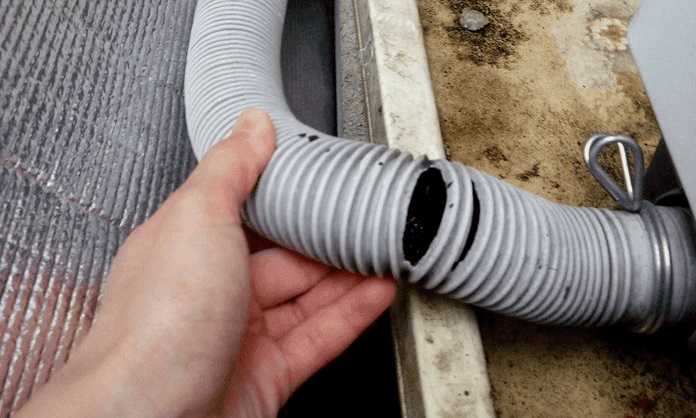
It's important to regularly inspect the drain hose for integrity. If kinks, deformations, cracks, or other damage are detected in the drain pipe, it's best to replace it immediately with a new drain hose. Temporarily isolating damaged areas often leads to undesirable consequences at the most inopportune moment.
It's essential to promptly clear any clogged drains. Wastewater from washing machines can carry not only numerous small particles that gradually accumulate, but also larger parts that have accidentally become loose. Any debris can be detrimental to the washing machine's performance, as it clogs the drain. Signs of a clog include: unpleasant odor, slow drain.
Sometimes a new washing machine comes with a drain hose that's too short. It's best not to attempt to extend it yourself, as artificially increasing the number of joints on the hose increases the risk of a water leak. In this case, you should immediately purchase a drain hose of the appropriate length and securely connect the washing machine to the sewer system.
When selecting a replacement drain hose, it's important to choose the correct hose length and the diameter of the tube seat. Drain hoses come in standard polypropylene (classic), telescopic (corrugated tube), and coiled (collapsible) varieties, consisting of modules, the required number of which is determined based on the room's area. It's always best to consult with a specialist before making your selection.

 Removing a washing machine's inlet hose doesn't require any special tricks. Simply shut off the water supply and unscrew the hose nut from the washing machine body and the tee. The drain hose isn't as easy to remove, as one end is secured inside the machine. This short article will help you remove the washing machine's drain hose without any difficulty.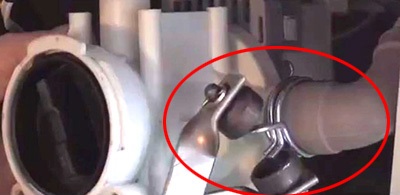















Add a comment