How to remove a heating element from a washing machine?
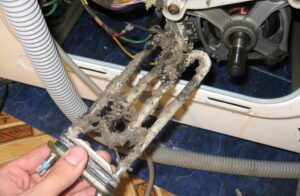
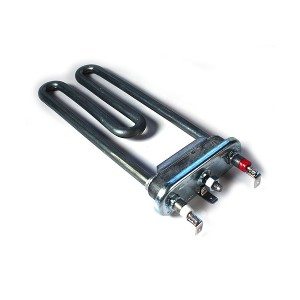
Every washing machine has a heating element—it's essential for heating the water entering the system. Accessing this component requires disassembling the housing. A common problem with heating elements is that they often burn out and need to be replaced every few years. This type of work doesn't require any specialized knowledge—even a novice can replace a heating element. Let's figure out how to remove a heating element from a washing machine and where to find it.
Heating element in the rear wall of the tank
To remove the heating element, you need to figure out which side of your machine it is on. Open the instructions for your washing machine – it shows the location of the main components and parts. The heating element is most often located at the rear. This is where you'll find it on LG, Indesit, Ariston, Ardo, Zanussi, Candy, and Atlant machines.
A front-facing heating element is also not uncommon. This applies to Bosch, Samsung, and Siemens washing machines. Let's look at the steps for removing the element in both situations. So, how do you remove the heating element if it's located in the rear wall of the tub? The procedure is as follows:
de-energize the washing machine;
turn off the tap that supplies water;
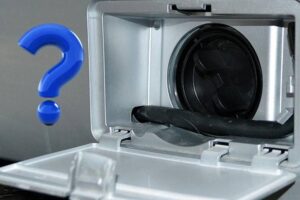
drain the remaining liquid from the system by unscrewing the plug of the debris filter;
unscrew the bolts holding the rear wall of the case;
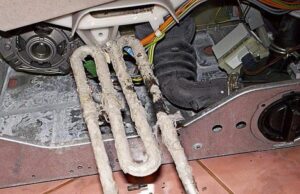
find the heating element – it is located under the tank;
take a photo of the wiring diagram to the tubular heater. This will help avoid mistakes during reassembly;
disconnect the wires from the heating element contacts;
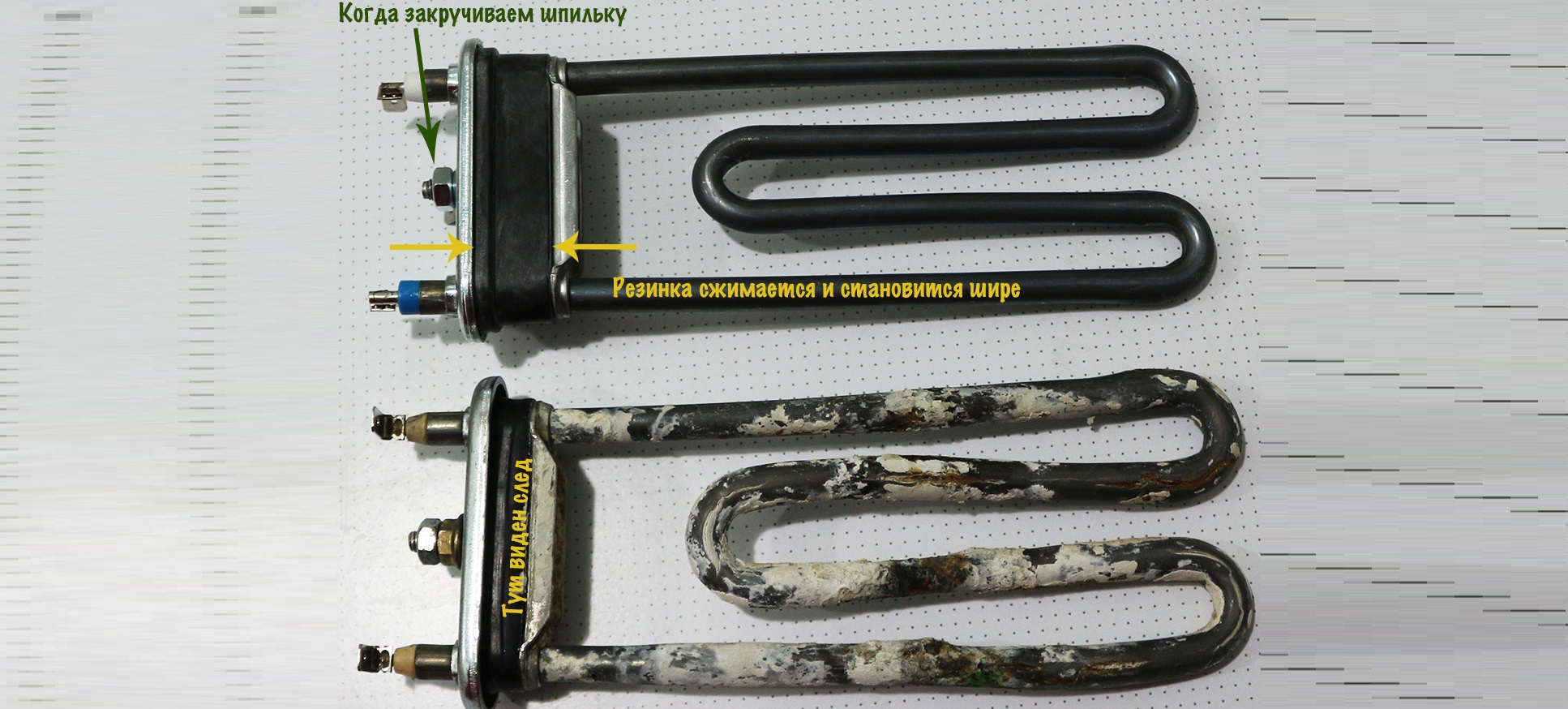
loosen the central nut, push the screw inward;
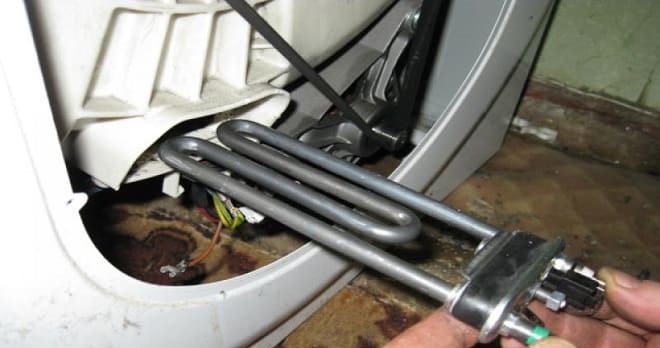
Pull the heating element toward you. If it doesn't come out, lubricate it with Fairy and use a screwdriver to pry up the rubber seal.
If you are not sure that the heating element is broken, pull very carefully so as not to break the contacts - it may not need to be replaced.
Once the tubular heater has been removed:
Clean the "nest." Remove any scale from the hole and scrape any limescale from the walls;
put a new element;
connect the thermostat to the heating element;
secure the part with a bolt and nut;
connect the wiring, observing the polarity;
put the back panel of the case back in place.
Next, run a test wash. Select a high-temperature program. If the machine heats the water without any problems, the repair is complete.
Heater in the front wall of the tank
Things are a bit more complicated when the heater is located in the front. In this case, you'll need to remove the front panel. Here's how:
unplug the machine, turn off the water supply tap;
remove the lower false panel (or open the technical hatch - this depends on the model of the washing machine) and drain the remaining water from the system by unscrewing the waste filter;
Unscrew the bolts holding the top panel of the case. Remove the cover;
remove the powder receptacle;
Remove the screws securing the control panel. They are hidden behind the detergent drawer and on the side of the dashboard;
carefully disconnect the control panel (without touching the wires) and place it on top of the machine;
Open the drum door and use a screwdriver to pry up the door seal clamp. Remove the clamp from the washing machine;
tuck the sealing cuff inside the drum;
disconnect the UBL wiring (after taking a photo of the diagram);
Unscrew the bolts holding the front panel of the case and remove it;
find the "tail" of the heater, take a photo of how the wires are connected;
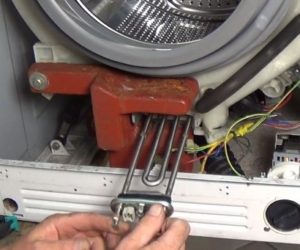
remove the wiring, loosen the nut and push the screw in;
Remove the heating element from its socket. If it's difficult to remove, use a thin screwdriver to help;
remove all debris from the hole and install a new heating element, connecting the contacts to it.
Reassembling the washing machine is done in reverse order. A test wash is also necessary. Run a high-temperature cycle and observe whether the machine begins to heat the water.
Why does the heating element break?
If your washing machine isn't heating water during the wash cycle (signs of this include condensation on the door glass when starting a high-temperature program or poorly washed items), it's likely time to replace the heating element. Rarely, the temperature sensor or control module is the cause. Heating element failure can be caused by:
long service life of the washing machine;
frequent launch of high-temperature programs;
too hard water.
To prevent damage to your tubular heater, it is important to follow a number of rules:
Do not run several cycles in a row with water heating above 60°C. The machine must be allowed to "rest" between washes;
descale the insides of your washing machine in a timely manner;
Install a water softening filter at the inlet of the machine.
The performance of the heating element is highly dependent on water quality. Therefore, to protect yourself from heating element failure, it's best to use special products that prevent scale buildup on the machine's metal parts.

 Every washing machine has a heating element—it's essential for heating the water entering the system. Accessing this component requires disassembling the housing. A common problem with heating elements is that they often burn out and need to be replaced every few years. This type of work doesn't require any specialized knowledge—even a novice can replace a heating element. Let's figure out how to remove a heating element from a washing machine and where to find it.
 to the tubular heater. This will help avoid mistakes during reassembly;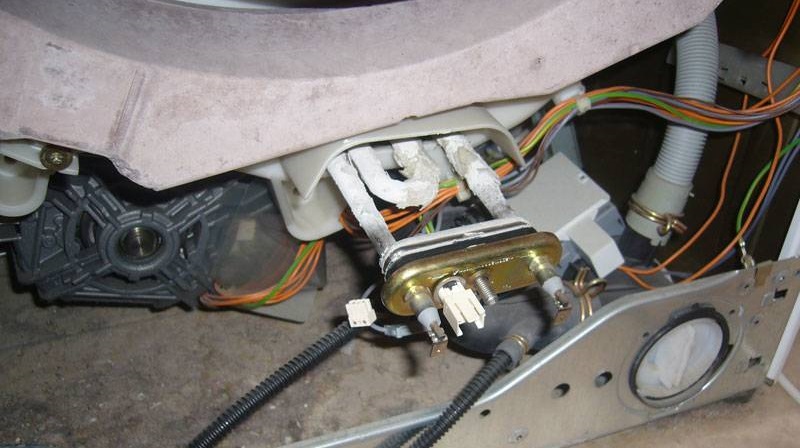















Add a comment