How to remove the temperature sensor in a washing machine?
If your washing machine has stopped heating water, the heating element or thermistor is likely faulty. You can replace these components yourself, without the help of a professional. We'll explain how to access the components, how to remove the temperature sensor from your washing machine, and any difficulties you might encounter along the way.
How to remove and how to check?
A novice mechanic may need to remove the temperature sensor to diagnose the element. Even more often, the thermistor needs to be removed from the heating element housing in order to transfer it to a new heater. Removing the part may be difficult, but with a little effort the goal will be achieved.
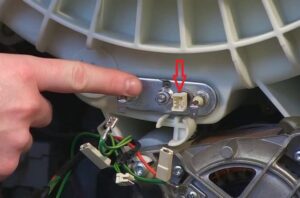
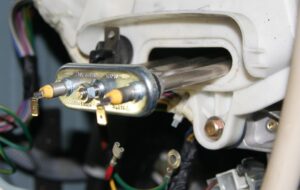
The temperature sensor is installed on the heating element. It measures the temperature of the water in the drum and transmits this information to the main control module. If the machine washes items in cold water with different cycle settings, both the heating element and the thermistor will need to be checked.
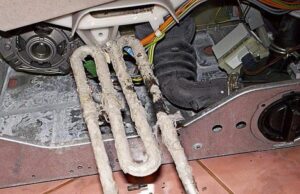
The heating element and temperature sensor are in most cases installed under the washing machine tank.
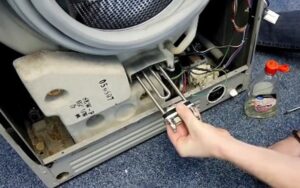
To remove the heating element together with the thermostat, you need to:
de-energize the washing machine by unplugging the power cord from the socket;
turn off the tap that supplies water;
remove the back panel of the case by unscrewing several bolts securing the wall;
Take a photo of the wiring diagram for the heating element and temperature sensor. This will help you avoid mistakes during reassembly;
remove the terminals from the elements;
loosen the central nut holding the heating element;
push the heating element screw inward and use gentle rocking movements to remove the heating element from its socket.
If you're confident the heating element is working properly and only need to remove the temperature sensor for diagnostics, you don't need to remove the tubular heater itself. Check the mounting hardware for the thermistor. The mounting method may vary depending on the washing machine model.
For example, in Samsung washing machines, the thermistor is secured with metal teeth. To remove the temperature sensor, unscrew the nut that holds it in place, push the plate and sealing rubber as far back as possible, insert a screwdriver into the resulting opening, and break off the teeth. Only then can the thermostat be removed.
On some machines, you won't have to break anything. Simply unplug the wiring, release the locking clip, and gently lift out the temperature sensor with a rocking motion. If scale buildup is preventing you from removing the thermostat, use a syringe to squirt a little dishwashing liquid into the gap.
To diagnose the temperature sensor you will need a multimeter.
The resistance of the thermistor is measured using a multimeter. You should switch the tester to ohmmeter mode and place the device probes against the contacts of the temperature sensor. Normal values at room temperature (20-23°C) are approximately 6 thousand ohms.
Next, immerse the sensor in warm water (50°C) and wait until it warms up. Then remove the thermistor and reattach the device's probes to its contacts. If the thermostat is working properly, the reading on the tester screen will drop to 1350 ohms. If the reading significantly deviates from the specified value, the element will need to be replaced; it cannot be repaired.
Removing the freon sensor
Owners of washing machines equipped with a freon-based thermostat will face a slightly more complex task. This will require removing not only the rear panel of the machine, but also the front panel containing the instrument panel. This will provide access to the external part of the thermostat. The next steps are as follows:
find the wiring, it is located at the back of the case;
carefully pull off the insulation;
Use a thin spike to pry up the rubber seal that envelops the copper tube and remove it;
gently press on the base of the heater so that it can be easily removed from the groove;
Remove the heating element with the temperature sensor through a special hole in the tank.
Most often, sensors of this type stop functioning due to damage to the freon tube. This causes a leak, and the thermostat cannot operate at full capacity. If a defect is detected, be sure to replace the part.
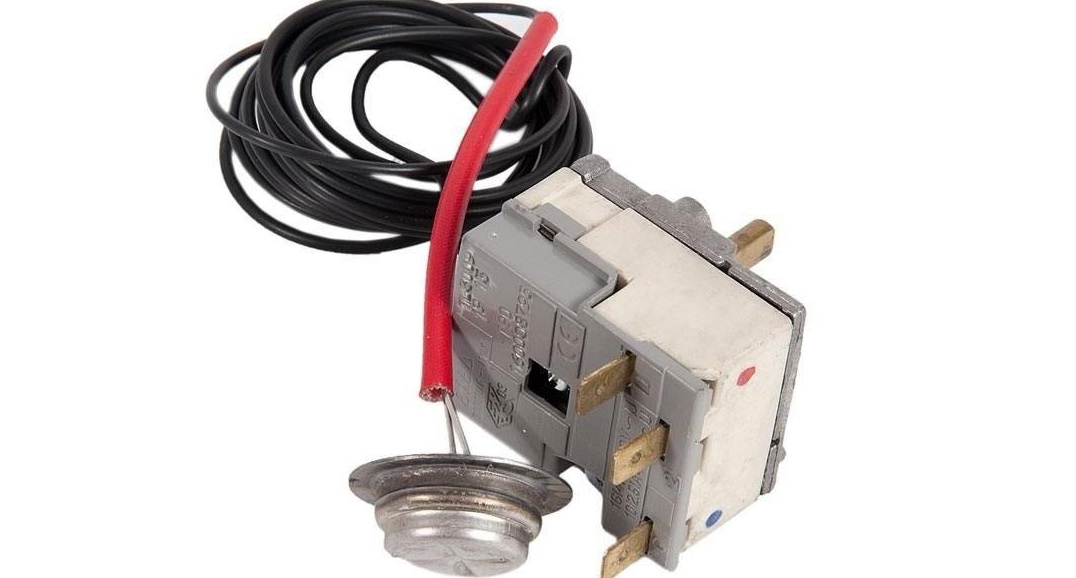
Removing an element with a bimetallic plate
The bimetallic sensor's location is no different from a standard one—it's hidden under the washing machine's drum. To access the component, you'll need to partially disassemble the machine's housing. Once you reach the component, disconnect the wiring, remove the thermistor, and test its resistance with a multimeter.
After measuring the value at room temperature, warm up the sensor and repeat the test. The reading on the device screen should decrease significantly. If there is no significant change in resistance, the element will need to be replaced. Most often, bimetallic temperature sensors stop working due to wear of the plate. The element cannot be repaired. You will need to find, purchase, and install a new part identical to the one you removed.

 If your washing machine has stopped heating water, the heating element or thermistor is likely faulty. You can replace these components yourself, without the help of a professional. We'll explain how to access the components, how to remove the temperature sensor from your washing machine, and any difficulties you might encounter along the way.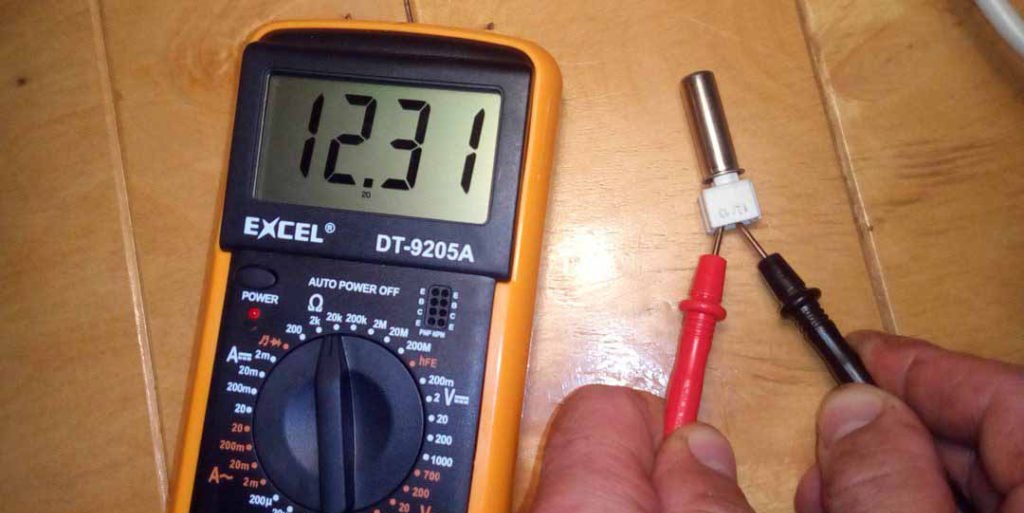
















Thanks for the information. Very useful article!