
Dishwasher salts
 When buying a dishwasher, it's important to understand not only how it works but also what detergents can be used. There are a plethora of household chemicals on store shelves, and TV ads can tempt people to buy expensive products. But before making such a purchase, it's best to understand what kind of dishwasher salt is needed, which of the commercially available options is affordable, and whether there are any alternatives.
Is salt really necessary?
Everyone knows that tap water is hard and needs to be filtered before drinking. But not everyone installs a water filter for their washing machine or dishwasher. At best, people use special water softeners suitable for household appliances. Dishwasher salt is one such product. Why salt?
Let's try to explain in simple terms how salt works and its effectiveness in combating water hardness. Water hardness is caused by the presence of calcium and magnesium ions, which precipitate as limescale when heated. If the water contains large amounts of iron ions, this limescale quickly hardens, coating the machine's heating element. Therefore, a special ion exchanger is built into the machine to combat water hardness.
The ion exchanger contains a resin containing sodium ions. This resin attracts magnesium and calcium ions from the water, causing it to become soft. However, over time, the sodium ions are washed out, and the ability to attract ions is lost. Therefore, salt is needed to replenish the sodium in the ion exchanger. That's why Dishwasher salt is called regenerating, which means it restores.
This shouldn't be just the salt we add to food, but a special, processed salt. Its composition is more complex than that of table salt.
Water hardness is detected by a special sensor inside the dishwasher or manually entered into the program. Depending on the water hardness level, the machine will use a certain amount of salt. Most importantly, salt not only softens the water but also extends the life of the dishwasher.
Types of Dishwasher Salt
There are many different types of dishwasher salt, or rather, manufacturers. Let's look at a few examples to see the advantages of different salts and whether they can be replaced.
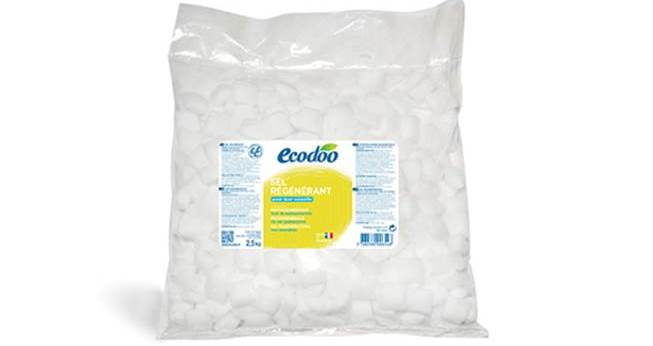
- Ecodoo is a regenerating dishwasher salt. This dye-free salt is suitable for a variety of dishwashers, and is free of fragrances, phosphates, and chlorine. It effectively removes limescale deposits and softens water. A 2.5 kg pack of this salt costs about $4.
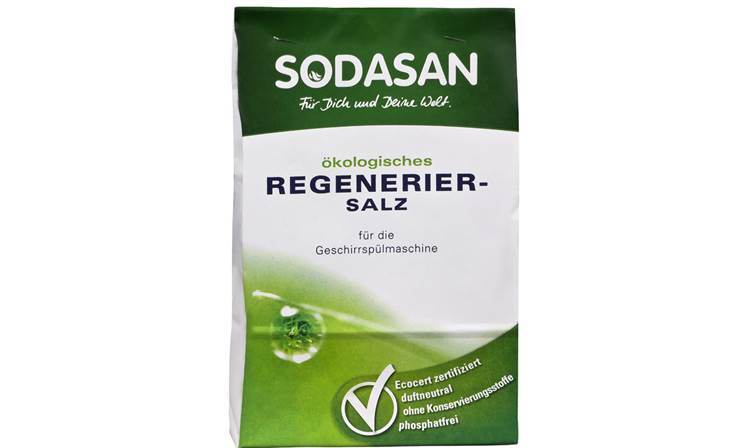
- SODASAN is a phosphate- and dye-free dishwasher salt. This highly purified salt is free of impurities. It effectively removes limescale and leaves no streaks on dishes. Price: 2 kg, about $4.
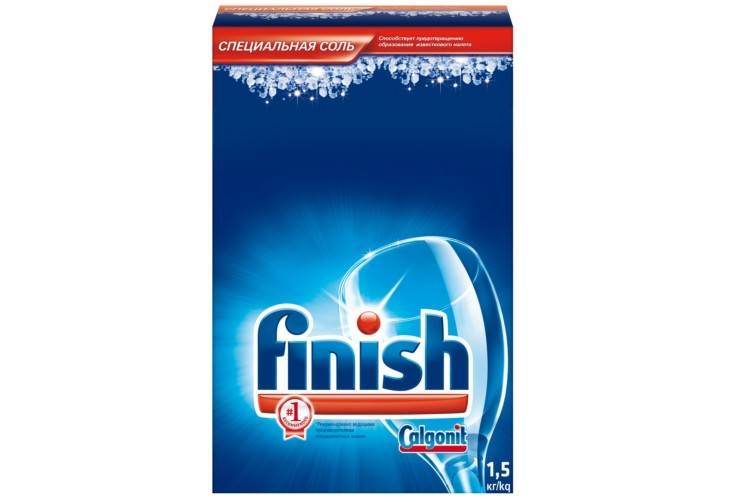
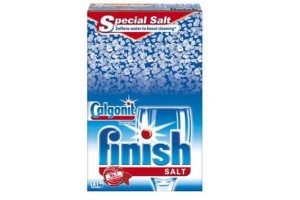
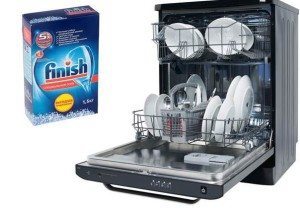
- Finish is a special salt produced domestically. It protects the heating element from scale and prevents limescale buildup. It contains no additives. A 1.5 kg pack costs approximately $2.
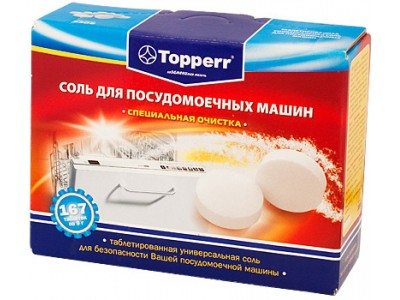
- Topperr is a dishwasher salt tablet. It softens water effectively, improving dishwashing results. Price for 1.5 kg is about $4.
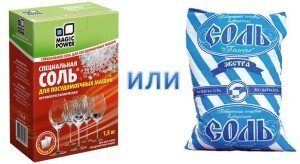
The list of companies that produce salts can be very long. The main conclusion that can be made is that the price of dishwasher salt does not vary significantly. Approximately 2-3 packs of salt are needed per year, which costs about $10. Therefore, some people wonder whether it's possible to replace this salt with regular table salt, such as "Extra," which costs about $0.30, thereby reducing costs.
If you're deciding to buy a dishwasher, you should know that you'll need to take care of it and buy the necessary detergents. It's like having a pet, like a cat, which you can feed Whiskas or milk and bread. Of course, it's up to you to decide whether to use special salt or table salt, but be aware that table salt may contain grains of sand and other impurities, which will adversely affect the operation of the machine. Furthermore, table salt is too fine and uneven, and its crystals can clump together.
Please note! Appliance repair specialists do not recommend replacing special dishwasher salt with anything else. Be careful when choosing to avoid buying table salt disguised as special salt.
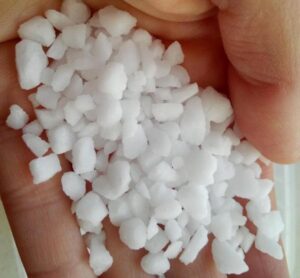
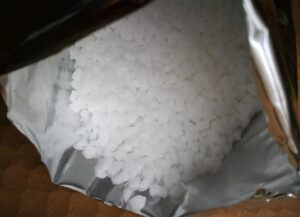
As for salt packaging, it's hard to say for sure whether tablets or granules are better. The advantage of tablets is that their dosage is already determined by the manufacturer and they last longer because they dissolve more slowly, so it's up to you to decide what you can afford. But It is impossible to operate the machine without special salt at allAnd don't confuse three-in-one detergent tablets with salt tablets; they are different products and are placed in different compartments of the dishwasher.
How much and where to pour?
The amount of salt you need to add to your dishwasher depends on the water hardness. The higher the water hardness, the more salt you'll need. Furthermore, Water hardness can vary seasonally, so it's best to buy a dishwasher with a sensor., which determines the hardness of the water and, depending on this, consumes the required amount of salt.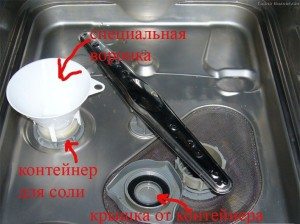
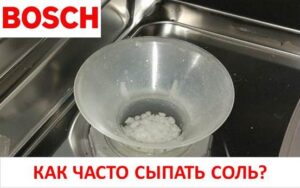
In dishwashers that require manual water hardness adjustment, you'll need to use an average value. The correct setting is described in the dishwasher's instructions. The amount of salt to add may be indicated on the packaging, so read all instructions carefully. It's best to add the salt before the wash cycle, moistening it slightly to help it dissolve. Some machines contain enough salt for several wash cycles, but it's important to check that the salt compartment is full, otherwise the machine will work with hard water.
The salt compartment is located at the very bottom of the dishwasher. If you're unsure, check the instructions for the appliance.
Therefore, dishwasher salt is essential for its proper operation and smooth functioning. When purchasing a dishwasher, be prepared to purchase all the necessary consumables; otherwise, you'll quickly have to repair or replace the appliance itself.
Interesting:
Readers' comments
Headings
Washing machine repair




For buyers




For users


Dishwasher




Add a comment