
What is the resistance of a washing machine heating element?
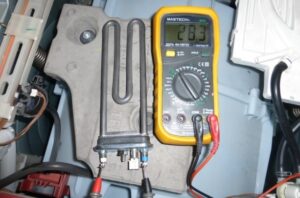 Properly diagnosing a washing machine's heating element is crucial, especially for a novice technician. A mistake will result in the working part being thrown away. To determine whether it's safe to use, you need to know the normal resistance of a working heating element and be able to measure it with a multimeter.
We determine the resistance of the heating element
Before removing the washing machine's heating element, you need to determine its resistance. To do this, use a multimeter. Normal resistance should be between 24.2 and 40 ohms. To calculate it, you need to square the voltage in the electrical network (220 volts), and then divide this value by the power of the device. As a rule, it is equal to 1800-2000 W.
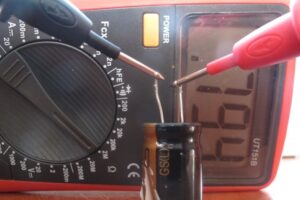
Before measuring the heating element's resistance, it's important to disconnect the washing machine from the power supply. You can then begin testing using a multimeter. If everything is done correctly, the result will appear on the measuring device's screen. It should be close to the value obtained during the preliminary calculation. If this condition is met, the heating element is functioning properly and can be used again.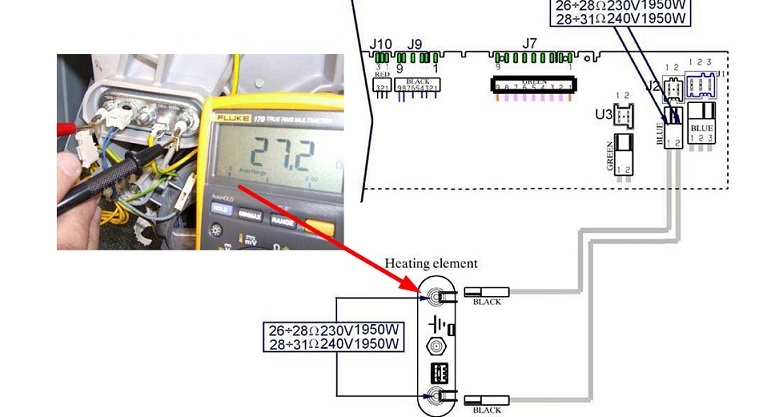
If the actual resistance is significantly lower than the standard, this indicates a faulty component. If the multimeter displays a "1," there is an open circuit within the heating element. A "0" indicates a short circuit.
Important! If the resistance measurement results are lower than the calculated value, 1 or 0, the part needs to be replaced.
How to check the part?
To assess the functionality of the heating element and measure the resistance, disconnect the appliance from the power supply. Then, disconnect the wires from the heating element. In many models, this part is located behind the front or back cover. By connecting a multimeter to the heating element, you can determine the resistance.
After completing the measurements, experienced technicians remember to carefully inspect the heating element. Sometimes defects are visible. These parts also need to be replaced.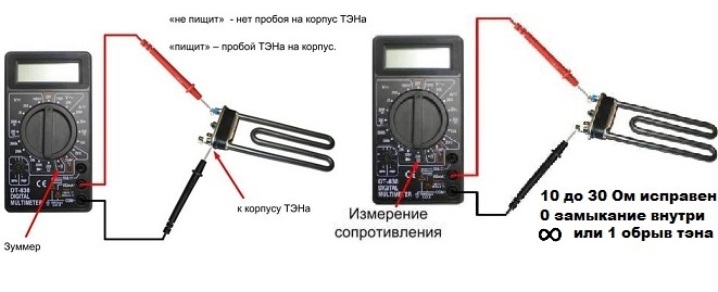
If you don't have a multimeter at hand
Sometimes you don't have a multimeter handy and can't determine the heating element's resistance. However, its performance can be assessed using various methods.
- Start the washing machine and watch the electric meter wheel spin. If it picks up speed, the heating element is most likely working properly.
- The element is removed from the housing. To do this, unscrew the nut in the middle, press on the protruding bolt, and carefully remove the element from the tank. Once removed, carefully inspect it. If the heating element has even the smallest cracks or dark spots, it's best to replace it.
Please note: When installing an old or new part, it is important to ensure that the connections are tight.
When installing a tested and working heating element or a new heating element on a washing machine, you need to accurately fit it into the mount, which is located at the bottom of the tank. If this is not done, the part will touch the drum during operation and will quickly fail.Experts recommend following preventative measures to extend the life of the heating element. To do this, run a standard wash cycle with the drum empty once every six months and add 1–2 tablespoons of citric acid to the detergent dispenser. This helps remove limescale that forms during machine operation.
Interesting:



1 reader comment
Add a comment
Headings
Washing machine repair




For buyers




For users


Dishwasher




Typically, the voltage rating on European heating elements is 230V, not 220V. Therefore, the resistance will be slightly different.