
Calgon composition for washing machines
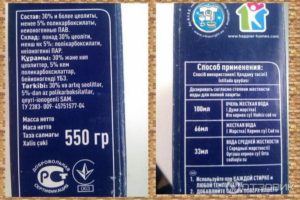 Everyone probably knows what Calgon does. TV commercials regularly advertise its effectiveness in fighting limescale and scale. But few people consider what exactly produces such miraculous results, what Calgon's ingredients are.
What does it consist of?
Contrary to expectations, the powder's composition is not all that complex. It contains only a few basic ingredients.
- Polyethylene glycol in proportion less than 5%.
- Microcrystalline cellulose in a proportion of 5 to 15%.
- Polycarboxylates make up from 15 to 30% of the total mass of the substance.
The remaining half of the product consists of ordinary sodium tripolyphosphates and... baking soda! Some of the names of the ingredients sound unfriendly, but don't worry. Calgon's composition is completely harmless to human health if used as directed and precautions are followed. For example, avoid getting the powder in your eyes or ingesting it. In the former case, rinse your eyes thoroughly with water. In the latter case, drink as much water as possible and seek medical attention.
The remaining precautions are familiar to every housewife: use a measuring spoon to avoid overdosing, store out of reach of children, and away from direct sunlight. Also, to avoid unpleasant situations, keep the powder away from all food products. Recommendations for using Calgon are included in the instructions; it should be added to the machine in the required quantities during washing.
Important! If you wash at temperatures below 60 degrees Celsius, do not use Calgon. It's best to use an alternative or run the machine through an empty cycle using citric acid.
What is it used for?
 Hard water contains numerous salt impurities, which gradually settle on the inside of the washing machine, creating layers of deposits. How can all this lead to failure? The heating element must generate more energy to function properly, and as a result, it operates under extreme stress and eventually fails.
It's worth noting that Calgon isn't cheap, but if a part breaks, replacing or repairing it will definitely cost a pretty penny. And considering that more than one part is likely to fail, regular water softening will be significantly cheaper, both in terms of money and hassle.
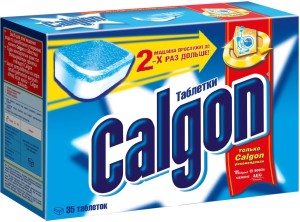
Calgon is available in three forms: tablets, powder, and gel. Depending on the package and weight, the price ranges from $3 to $8. Packages are sold in 550-gram, 1.1-kilogram, and 1.6-kilogram sizes. The contents, proportions, and effects of Calgon are identical in all forms, so choose the one that's most convenient or appealing to you. Either way, your device will be maintained in perfect condition. The shelf life is two years.
How to use?
Some manufacturers offer products on the market that maintain the cleanliness of not only washing machines but also other household appliances. This does not apply to Calgon; it should only be used in washing machines.
Important! Don't pour the detergent (if you're using powder) directly into the drum. This will significantly reduce its effectiveness. Instead, pour it into the tray along with your regular detergent, strictly according to the dosage instructions!
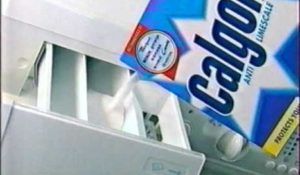 If you purchased Calgon in tablet form, one tablet is sufficient. Avoid using too much, as excessive amounts can negatively impact the surface of internal components. Here's how the manufacturer recommends using Calgon.
- Open the detergent drawer on the washer's panel. You're looking for the compartment, which is usually located in the middle.
- Add the required amount of washing powder and softener.
- Close the tray and start the wash.
Yes, everyone says Calgon works well when combined with laundry detergent. However, this doesn't mean it can be used alone for washing clothes. It won't have any effect; you'll just waste detergent and time. Calgon improves the internal condition of the machine and, as a result, its performance. But in any case, you can't do without laundry detergent.
Is it possible to do without this powder?
The answer is a resounding no! In addition to the problems mentioned above, limescale and scale significantly reduce washing efficiency. The machine simply can't handle the load, and things have to be rewashed or washed by hand.
Furthermore, if improperly maintained, scale particles penetrate the drum and settle on clothes. As a result, they become stiff, difficult to iron, and streaky, or even lose their luster and take on a dirty grayish tint. As you can see, Calgon is essential for washing machines; you can't do without this chemical, or at least its equivalent.
Interesting:

1 reader comment
Add a comment
Headings
Washing machine repair




For buyers




For users


Dishwasher




I've been washing clothes in an Atlant washing machine with Calgon for 13 years. I recently changed the bearings and opened the drum; it was practically completely clean. There was a little bit of residue on it. I almost always washed on the express wash cycle at 40 degrees. The author probably just made up the idea about 60 degrees, which means you can't wash at that temperature with Calgon.