
Composition of dishwasher tablets
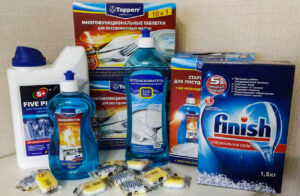
 Often, dishwasher users don't even consider the ingredients in the household cleaning products they regularly use to wash dishes. This isn't a critical mistake, but it's still much better to understand the chemical composition of these products, which could potentially ingest if they settle on dishes after a cycle. Knowing the ingredients in dishwasher tablets can help you determine both the potential harm these household cleaning products can cause to you and your family, and how effectively they will clean dirty dishes. Let's take a closer look at the ingredients in modern dishwasher tablets.
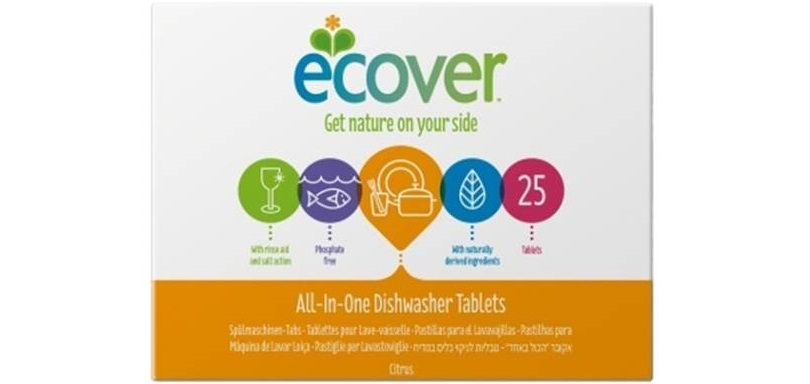
What do Ecover tablets consist of?
Let's start with the environmentally friendly Ecover tablets as an example. Experts assure us that these tablets contain no harmful substances, so they are completely safe to use on skin or in the human body. This doesn't mean they're safe to eat, but there's certainly no need to worry about chemical residue on dishes after use. What are the ingredients in this product?
- Sodium citrate, which has antibacterial properties, stimulates foaming and regulates pH. It's what makes tablets bubble so much in water. It can be found in everything from carbonated drinks to instant medications.
- Sodium percarbonate helps whiten dishes and remove heavy stains. To produce the substance on an industrial scale, specialists evaporate hydrogen peroxide with sodium carbonate until it forms a crystalline state.
- Sodium carbonate is essential for softening hard tap water. It also helps preserve the ion exchanger's capacity, which is further restored by specialized dishwasher salt. It can be found naturally in salt lakes, where it exists as a hydrate.
One of the main components of eco-friendly detergents, sodium carbonate, is mined primarily in the United States of America, where there are rich natural sources of trona.
- Sodium bicarbonate, or baking soda, is widely used in baking, where it helps bread, rolls, and other baked goods rise. This chemical is produced from natural salts by passing ammonia and carbon dioxide over a halite solution. Like sodium carbonate, baking soda is primarily produced in the United States.
- Sodium disilicate is added to form granules and bind the substance. This component is successfully extracted from minerals in the earth's crust. Sodium disilicate solution is often called liquid glass, from which the powder is evaporated.
- Sodium polyaspartate is needed in the composition to retain dirt.
- Ethylenediaminetetraacetic acid helps dissolve scale in the dishwasher.
- Isooctyl glucoside, essential in tablets for killing proteins and microbes, is a plant-derived element commonly used in mouthwashes along with other surfactants.
- D-glucitol (sorbitol) is a sweetener also extracted from higher plants and various algae.
- Methyl esters of rapeseed oil are found in rinses and help reduce the surface tension of water. This beneficial element is extracted from rapeseed.
- Glycerin, obtained from starch and other substances, is needed to increase viscosity, as well as for the production of various gels.
- Amylase and protease are included in detergents to break down proteins and carbohydrates. Both components are natural enzymes, primarily used in detergents.
- Subtilisin, another natural element necessary for the effective breakdown of fats.
- Limonene, the last component on the list, is needed as a natural fragrance so that dishes acquire a natural scent after washing.
This was a detailed description of the composition of a single type of eco-friendly dishwasher tablets. These tablets are a 4-in-1 cleaning solution that, in addition to dishwashing ingredients, also contains components for the gentle care of your "home helper." It's also worth considering that there are no glass-care ingredients, so products with this added benefit should be studied further.
What are the different tablets made of?
In the previous section, we examined in detail the ingredients of Ecover 4-in-1 tablets. Now, we'll take a closer look at the ingredients of other types of products, as well as those from other manufacturers, to get a complete picture of the current situation with these tablets.
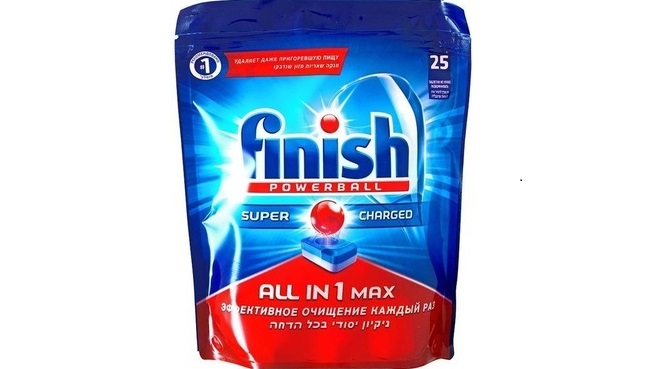
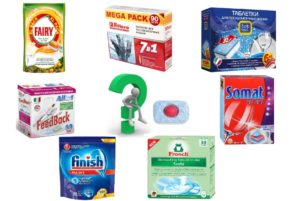
- Let's first look at the ingredients of a popular household cleaning product from the manufacturer Finish. This product is called "Finish All in 1 Max" and is the undisputed leader in the Russian dishwasher detergent market. Its composition is quite standard: 30 percent or more of the chemicals are phosphates, 5 percent or more, but less than 15 percent, is oxygen-containing bleach, and just under 5 percent are polycarboxylates, nonionic surfactants, phosphonates, enzymes, and fragrances, including linalool and hexyl cinnamal.
- The second point we'll discuss is a product from one of Finish's main competitors in Russia, Somat. These "All in 1" tablets contain the following ingredients: 5 to 15 percent acidic bleach, phosphonates, and polycarboxylates. Less than 5 percent of the tablet is made up of non-ionic surfactants, enzymes, and fragrance, including benzyl alcohol and limonene.
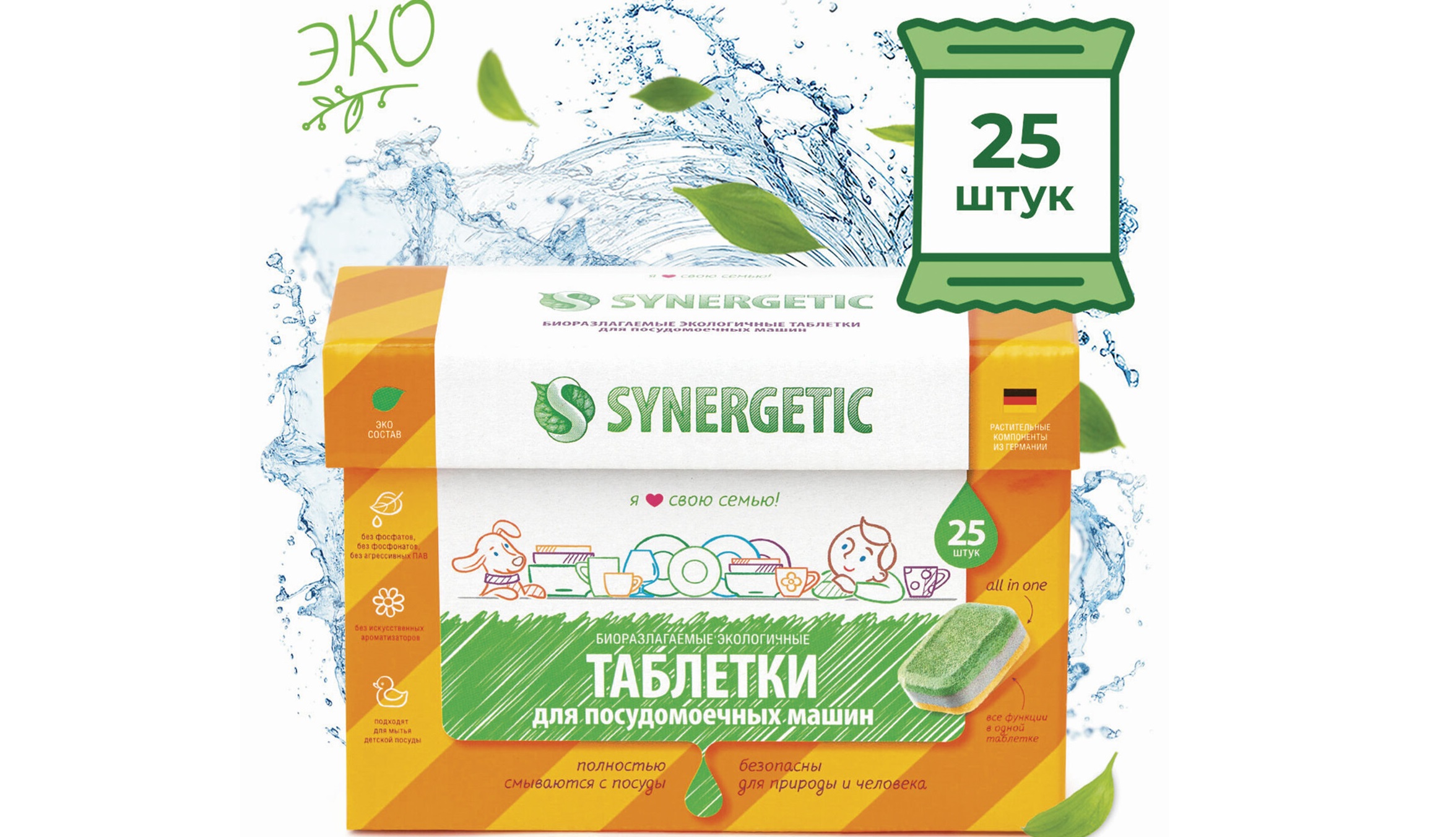
- Now let's examine the ingredients of dishwasher tablets from Synergetic, a company that places a special emphasis on ecology and the creation of clean, safe household cleaning products. Their classic biodegradable phosphate-free dishwasher tablets contain: over 30 percent sodium citrate, 15 to 30 percent sodium carbonate, 5 to 15 percent sodium percarbonate, up to 5 percent plant-derived H-tenside complex, sodium metasilicate, TAED, enzymes, sodium polycarboxylate, and less than 0.5 percent food coloring.
- Another product whose manufacturer positions itself as the creator of the safest and most environmentally friendly products is the "BIO-TOTAL 7-in-1" tablets from the BioMio brand. The detergent contains 15-30 percent oxygen bleaching agent, less than 5 percent polycarboxylates, non-ionic surfactants, natural fragrance from eucalyptus essential oil, enzymes and limonene.
- Finally, let's examine the description of the "All in 1" tablets from Clean&Fresh. This extremely popular detergent, winner of the TV show "Test Purchase," boasts the following ingredients: over 30 percent sodium tripolyphosphate, 15 to 30 percent sodium carbonate and sodium bicarbonate, 5 to 15 percent sodium silicate, polycarboxylates, nonionic surfactants, TAED, enzymes, phosphonates, and fragrance, as well as up to 5 percent dye.
As you can see from the list above, dishwasher tablets are generally made from the same ingredients, so there's no need to spend a lot of time searching for the safest and most harmless detergent. Today, all popular household chemicals are formulated to be as safe and environmentally friendly as possible, so users often don't need to worry about their ingredients.
Interesting:
Readers' comments
Headings
Washing machine repair




For buyers




For users


Dishwasher




Add a comment