
Finish Dishwasher Tablets Ingredients
 Choosing a dishwasher detergent is becoming more difficult every day due to the increasing number of options on store shelves, making it difficult to choose. However, many housewives don't even consider new options, continuing to buy classic Finish products. Meanwhile, the ingredients in Finish dishwasher tablets rarely differ from those of similar products, so why do consumers so actively purchase these household cleaning products? We'll explore this question in today's article, and also compare two of the most popular products from the aforementioned company that produces dishwasher tablets.
What components are Finish tablets made of?
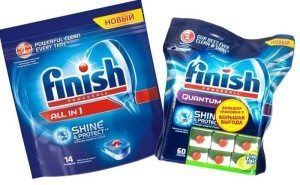
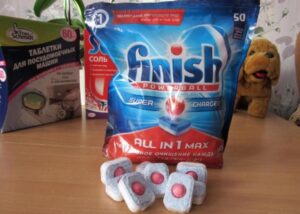
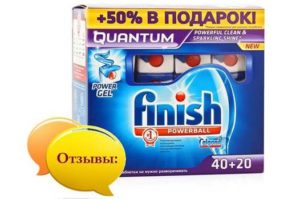
First, we'll take a closer look at the ingredients of two of Finish's most popular tablets: the special "Quantum" series, which is more expensive than many of its counterparts, and the classic "All in 1." What are the ingredients in these household products?
- Sodium carbonate is a component of both types of detergents, while "All in 1" also contains sodium bicarbonate. Both elements are alkaline agents that effectively remove grease from dishes and also slightly soften hard tap water.
Despite the presence of components capable of combating water hardness, tablets still cannot independently cope with hard tap water the way special dishwasher salt does, so you should not abandon salt granules if you have water quality problems in your city.
- Sodium percarbonate is present in both types of tablets, helping to remove such "colored" stains as coffee, tea, juice, and other stains.

- Sodium citrate is included exclusively in Quantum tablets. It significantly softens the water in the wash chamber, regulates pH levels, and improves foaming properties.
- "All in 1" uses polyglycol ether as a nonionic surfactant, which is essential for enhancing surface wetting and effective stain removal. "Quantum" has a longer list of surfactants: ethoxylated alcohols with a C12-C14 chain, ethylene propylene oxide copolymer, and oxyethylated fatty amine.
- TAED is the same for both tablet types—it's a bleach activator that initiates the decomposition of sodium percarbonate at low temperatures, releasing oxygen. TAED is essential in tablets, as without it, oxygen will only be released at temperatures above 50 degrees Celsius.
- Both All in 1 and Quantum contain amylase and protease. These enzyme complexes improve the removal of fatty and carbohydrate stains from cutlery.

- Polymethylsiloxane polyhydrate is included in the Quantum series. It acts as an antifoaming agent to combat excessive foaming.
- Tolyltriazole is another element that is only found in expensive tablets like Quantum. This is a corrosion inhibitor that, due to its highly alkaline composition, is able to prevent corrosion not only on cutlery, but also on the internal components of the dishwasher.
- Finish uses magnesium sulfate and sodium as inert fillers in its All in 1 product, and sodium sulfate, calcium carbonate, and calcium and zinc stearate in the second type.
- Another complexing agent in both products is trisodium dicarboxymethyl alanine.
- Finally, it is worth noting the preservative benzotriazole, which is included in both the All in 1 detergent and Quantum.
We've covered the twelve main types of ingredients found in Finish detergents. Now all that's left is to figure out which of the two most popular tablet types is better and why.
Why does Quantum clean better than All in 1?
Quantum is considered significantly better than All in 1, as it cleans dirty dishes more effectively and improves overall dishwasher performance. Of course, this isn't because it's slightly more expensive than Finish's classic tablets, but because it's more expensive, it's better. It's because of the improved formula of the more expensive household cleaning product.
A closer look at the composition of the detergents reveals that the premium tablet series contains significantly more surfactants and an antifoaming agent, which is absent from similar products from the same company. The high surfactant content causes excessive foaming during the wash cycle, so an antifoaming agent was added to the tablets to reduce foaming in the wash chamber.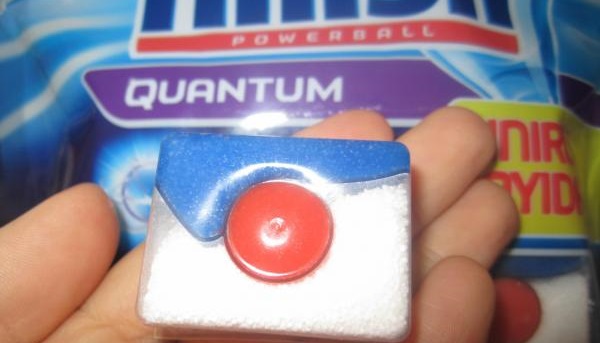
It is also worth noting the increased percarbonate content in the Quantum series tablets, which has a positive effect on the quality of dishwashing. The same can be said about sodium citrate, which increases the effectiveness of removing stains from cutlery and helps soften poor-quality tap water. Due to all of the above, a more expensive detergent will clean dishes with any type of dirt better.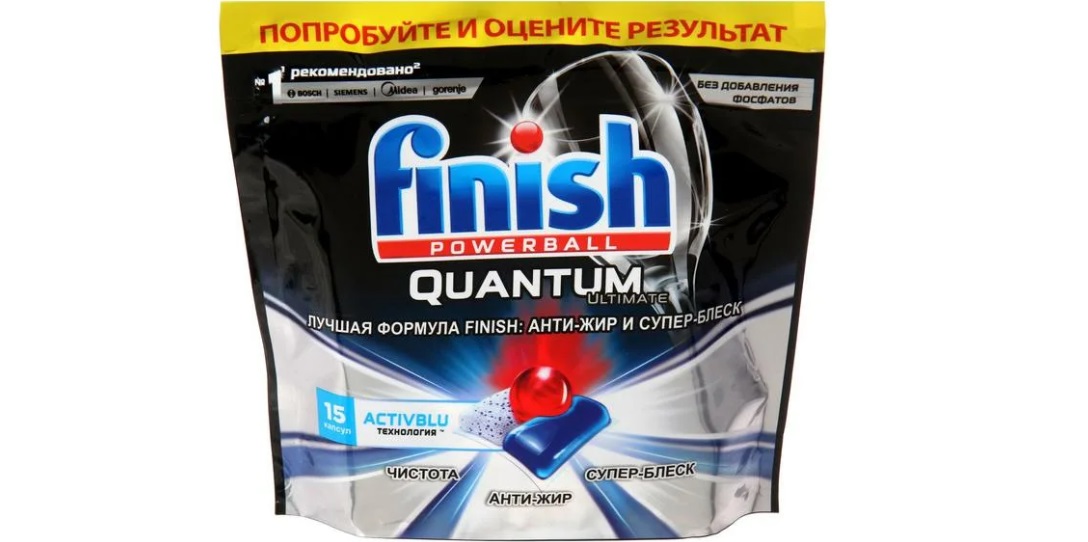
Finally, don't forget tolyltriazole, a corrosion inhibitor that positively impacts dishwasher performance and is not found in cheaper dishwasher tablets. Therefore, chemicals like Quantum are preferable for the user in all respects, except for the increased price.
In terms of health safety, both Finish lines are generally eco-friendly products created by a reliable European manufacturer with an impeccable reputation. Finish tablets are worth the price, as they are much more eco-friendly and safer than most similar capsules from other manufacturers.
Of course, they can still be harmful to health if used without gloves or if accidentally splashed into eyes or mouth, but this is true of any other dishwasher tablets. The key is that the safe composition of Finish tablets can only cause harm over a very long period of time, as the amounts of TAED and benzotriazole added to the tablets are minimal, not sufficient to pose a risk of harm.
Interesting:
Readers' comments
Headings
Washing machine repair




For buyers




For users


Dishwasher




Add a comment