
How to hide a washing machine in the kitchen?
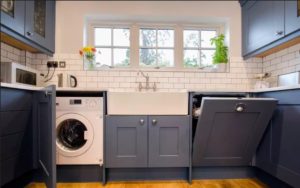 The issue of washing machine placement is a pressing issue for those with small bathrooms. Some bathrooms are so cramped that there's simply no room for the appliance. While installing a washing machine in the hallway is an option, this approach typically poses challenges when connecting the unit to utilities. Therefore, the kitchen area often becomes the most attractive location for a washing machine. We'll discuss how to avoid ruining the overall look of the interior and cleverly hide a washing machine in the kitchen below.
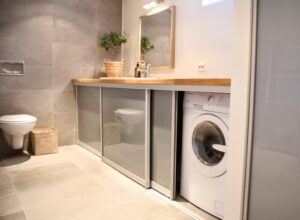
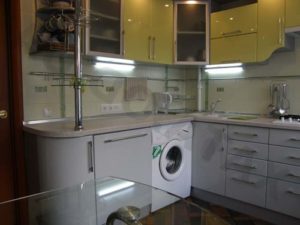
Let's put it under the tabletop
The first thing that comes to mind is the idea of integrating an automatic washing machine into the kitchen cabinetry. Concealing the appliance this way has both advantages and disadvantages. The advantages include:
- functional use of free space in the room;
- The machine will be unobtrusive. All hoses and wires will be hidden in the furniture, and only the modern front panel will be visible to household members.
You can hide the washing machine behind the front of your kitchen cabinets, so you'll only remember it's there when you do your next load of laundry, and the appliance will be completely hidden from view.
The main drawback of installing an under-counter appliance is that all the hoses, wires, and drain connections are located deep inside the unit. Accessing them in the event of an emergency, leak, or repair is quite difficult.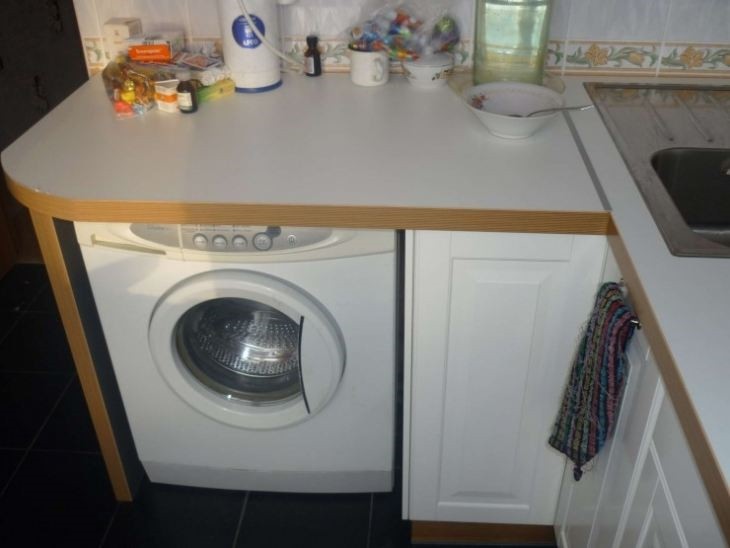
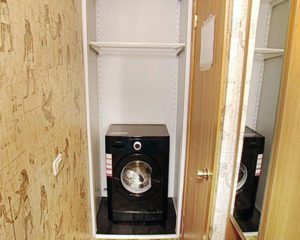
We'll place it in a special cabinet.
A cabinet made specifically for a washing machine offers a distinct advantage over the space under the countertop. When placed in a separate cabinet, the washing machine will be provided with a space that is strictly adjusted to the dimensions of the appliance, with verified gaps on all sides of the body.The cabinet will also provide excellent thermal insulation and absorb the noise emitted by the machine during operation. Operating the machine in this position will be significantly more comfortable for the user.
The downside of installing a washing machine in a special cabinet is that the cabinet's dimensions must strictly match the dimensions of your "home helper." If the machine breaks down, you'll have to buy a model with similar dimensions or order a new cabinet. If your machine is standard size, you can ignore this drawback.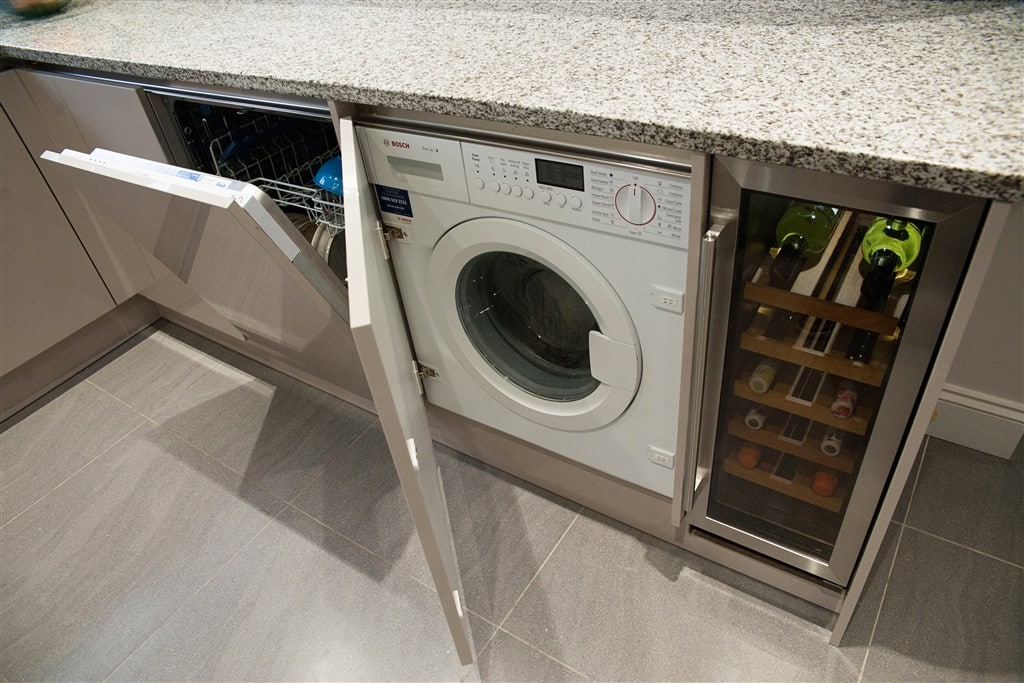
Some installation features
Before installing an under-counter automatic washing machine, be sure to compare the dimensions of the available niche with the appliance's dimensions. Sometimes even an extra centimeter can make it difficult to conceal the machine within the kitchen cabinetry. Therefore, it's important to consider the intricacies of installing a washing machine in advance, preferably before purchasing the machine or kitchen cabinetry. If the machine doesn't fit in the designated space, it's best to build a special cabinet for it.
When installing under a countertop, there's no need to cover the washing machine's panel with a front panel. Modern appliances are quite stylish, so an open front panel won't detract from the overall décor.
When purchasing a washing machine, pay particular attention to its height. Standard machines are often a couple of centimeters taller than the countertop. If you're ordering custom-made kitchen furniture, consider the dimensions of the washing machine to avoid potential installation issues.
In some cases, you can try raising the kitchen countertop by 1-2 cm. If this isn't possible, consider washing machines with a removable top cover; this will ensure the appliance fits perfectly into the niche.
Concealing a washing machine in the kitchen isn't difficult, especially if you consider the layout of the appliances and furniture during the renovation and furnishing phase.
Interesting:
Readers' comments
Headings
Washing machine repair




For buyers




For users


Dishwasher




Add a comment