
How to hide a dryer
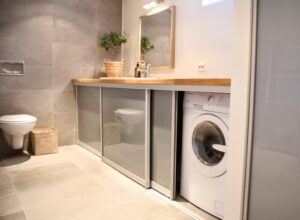 Not every family has the luxury of a laundry room. So, many wonder where to place and how to hide the dryer so it's out of sight. In reality, there are quite a few options.
Today, dryers are installed not only in the bathroom or kitchen, but also in the living room, bedroom, and on the balcony. Modern dryers don't need to be connected to a sewer line, which greatly simplifies the process. The only downside is that the appliance requires a dedicated outlet, but this isn't usually a problem.
There will be space in the closet
If you're stuck for ideas, you can look at design projects online. There are many interesting options for hiding a dryer. A simple way is to place the dryer in a cabinet. However, this solution isn't exactly the most successful.
Why is it not recommended to hide a dryer in a closet? During operation, the machine gives off a lot of heat, which will be concentrated in one place without escaping. What will this lead to?
Lack of ventilation will damage both the dryer and everything around it, including your clothes and the cabinet itself. Overheating the dryer increases the risk of fire. Therefore, this placement option is unsafe.
A few more disadvantages of placing a dryer in a closet: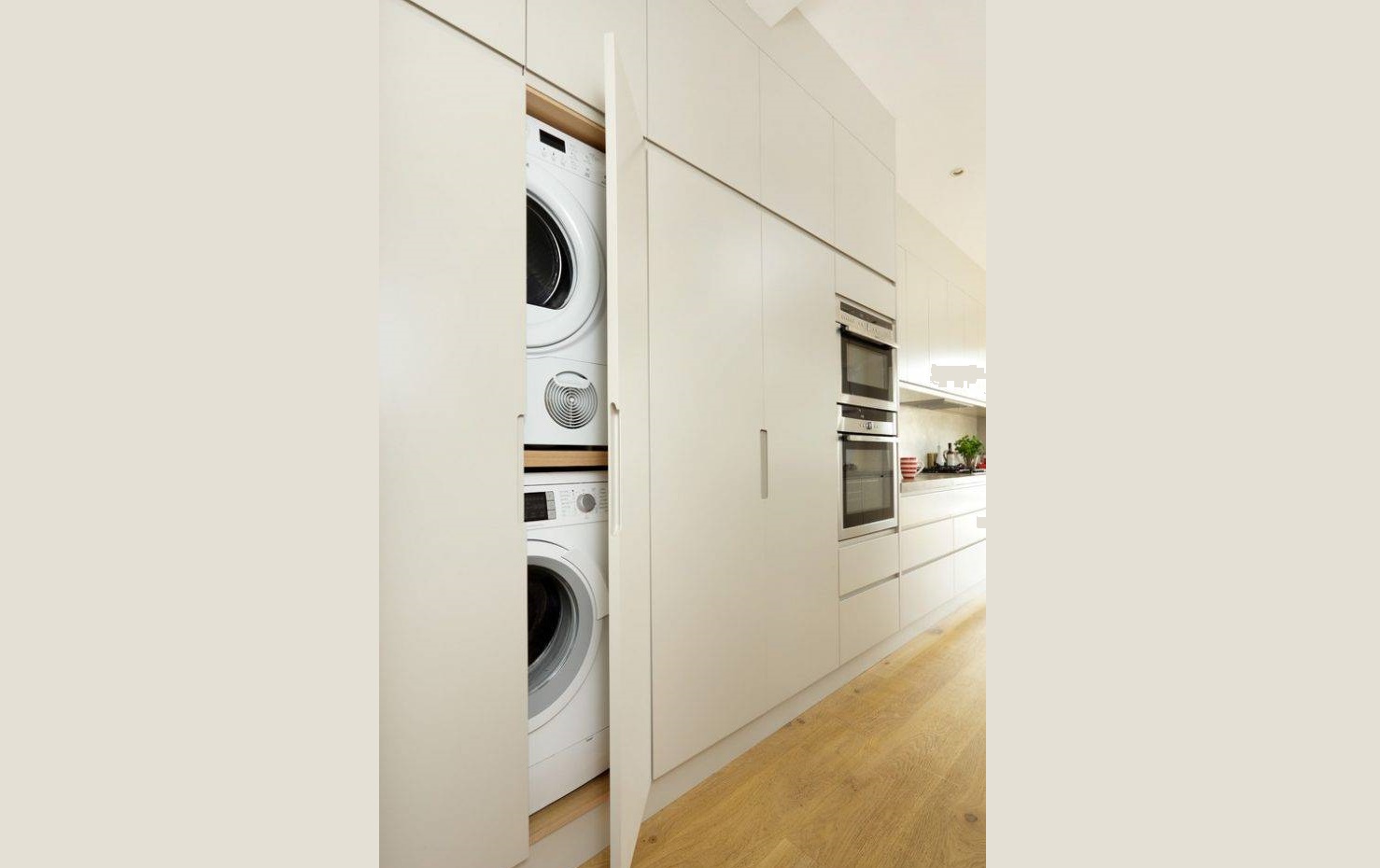
- Condensation may form on the walls of the furniture, which will create conditions for mold and mildew to develop and lead to premature wear of the machine and the cabinet itself;
- the noise level will increase when the dryer is installed in a small, confined space;
- There will be no natural ventilation, the holes in the body will become clogged faster, and the drying quality will deteriorate significantly.
When installing a washing machine in a cabinet, it is important to ensure forced ventilation - this will prevent the risk of fire, damage to the appliance itself, and the appearance of mold and mildew in the furniture.
If there's no other option but to place the washing machine in a closet, then you need to consider installing adequate ventilation. A forced-draft exhaust system is essential. This will ensure that excess heat and moisture are properly removed from the furniture.
You can also open the cabinet doors while the dryer is running. After the cycle is complete, ventilate the space for another 30-40 minutes before closing the door. If you're comfortable with these recommendations, you can hide the machine this way.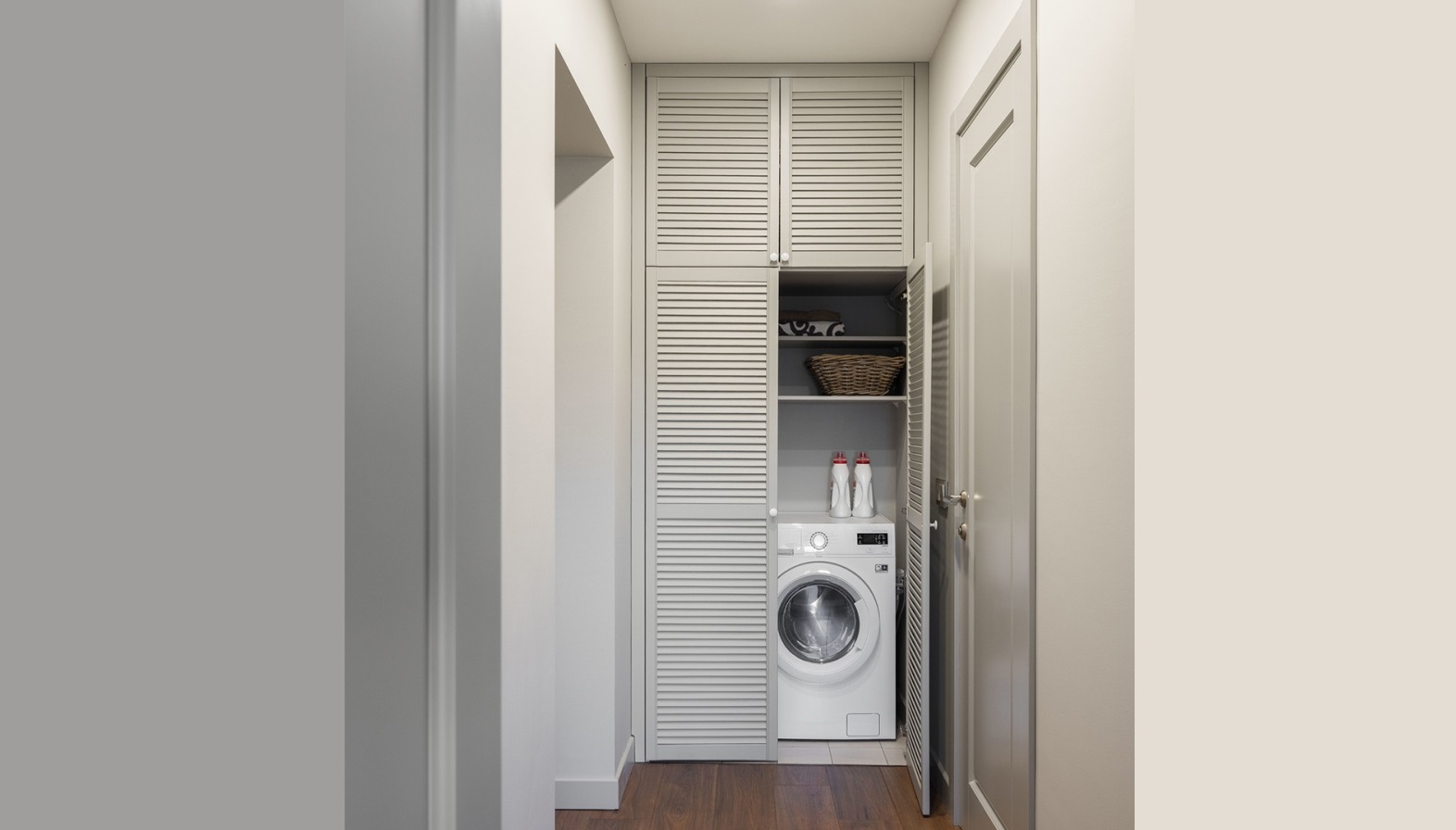
When installing a dryer in a cabinet, it's important not to place the appliance too close to the cabinet walls. Leave some space on each side; the more the better. A minimum of 15 centimeters is recommended. This is necessary to allow for unimpeded air flow. The easiest way to accommodate this is with custom-made cabinetry.
There are better ways to place a dryer. It's best to place it in the bathroom, kitchen, toilet, or balcony. Hiding the appliance in a cabinet can create problems related to both the safety and lifespan of the appliance itself, as well as the comfort of your home.
We will place the equipment in the bathroom
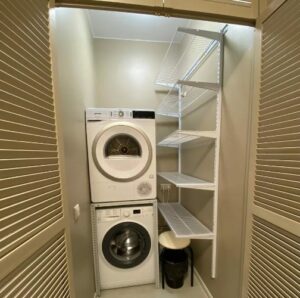
The optimal location for a dryer is considered to be in the bathroom. If space is limited, the dryer can be placed in a column with the washing machine. This is a very practical solution. Firstly, this design saves space. Secondly, it makes cleaning more convenient—the appliance is close by, meaning moving laundry from drum to drum is easier and faster.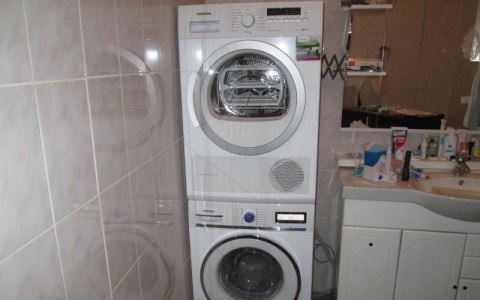
When installing such a structure, a number of nuances should be taken into account:
- the dryer is always placed on top, as it is lighter and does not shake during operation;
- It is important to securely fix the machine so that it does not fall during operation (it is better to use special connecting elements);
- It is advisable to assemble a column from a washing machine and a dryer from the same manufacturer.
If space allows, you can create a separate alcove in the room to hide the dryer, washing machine, detergents, and laundry basket. There are many interior layout options for this type of space; ideas can be found online.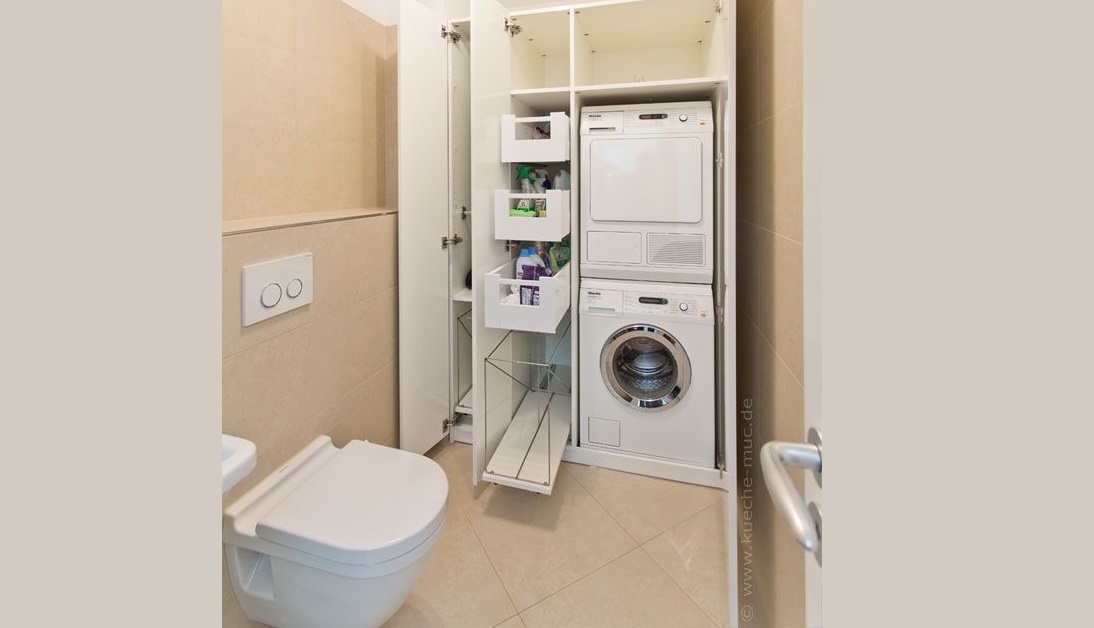
What's the advantage of this dryer placement? Bathrooms and toilets typically already have forced-air ventilation. Air will circulate freely. Unlike installing a dryer in a closet, you won't have to worry about high humidity or fire hazards.
It's also convenient that the washing machine and dryer will be located close by. You won't have to run from room to room with wet laundry. Household members won't hear the noise from the machines as much, as they'll be hidden in the bathroom.
Another solution for hiding a dryer is under the bathroom sink. If the sink isn't high enough, you can raise it. Bathrooms often have countertops, so you can tuck a dryer under there, too.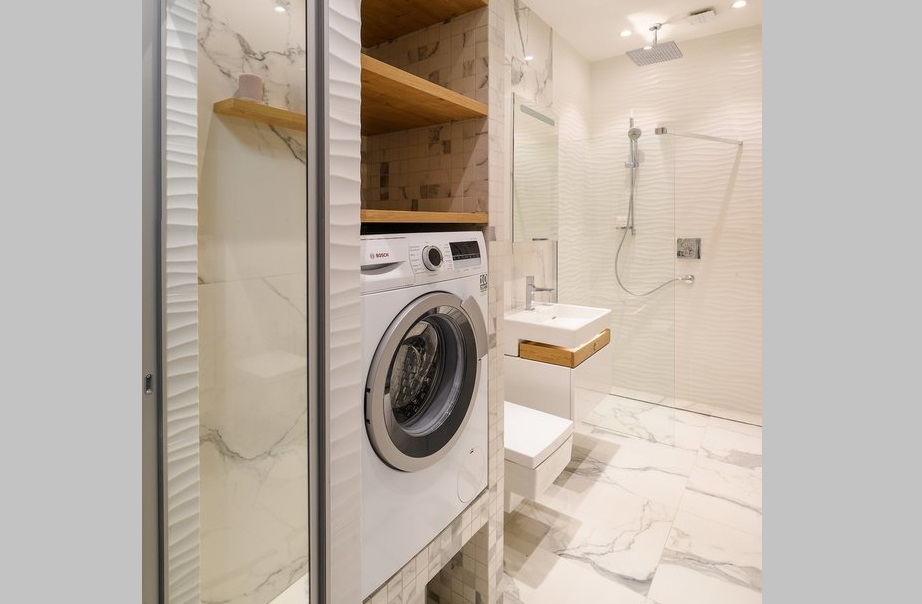
If the bathroom and toilet are separate, the washing machine can be placed in one room and the dryer in another. This is, of course, provided the bathroom space allows for a sufficiently large appliance.
There are virtually no disadvantages to this placement option. The only drawback is that when the appliance is placed directly next to plumbing fixtures, it is often exposed to water. This increases the risk of the casing rusting more quickly. Therefore, the dryer should be placed away from faucets.
Drying rack in the kitchen, living room, bedroom
Another place to hide a dryer is the kitchen. Many people place washing machines and dryers in the kitchen area, covering the appliance body with a front panel. The room usually has an exhaust hood and a window, so there are no problems with air circulation.
There are built-in dryers available for sale, specifically designed for installation in kitchen units.
The downside is that built-in dryers are mostly offered by expensive brands. For example, Bosch and Miele offer such models. Simpler dryers won't fit into a kitchen cabinet.
However, there is another solution, especially when the kitchen cabinetry is custom-made. People buy a standard dryer and order a separate cabinet for it, designed to match the rest of the cabinetry. The machine is then concealed within this cabinet. It's important to place this cabinet close to a window or range hood to prevent the hot air generated by the dryer from accumulating in a niche or room.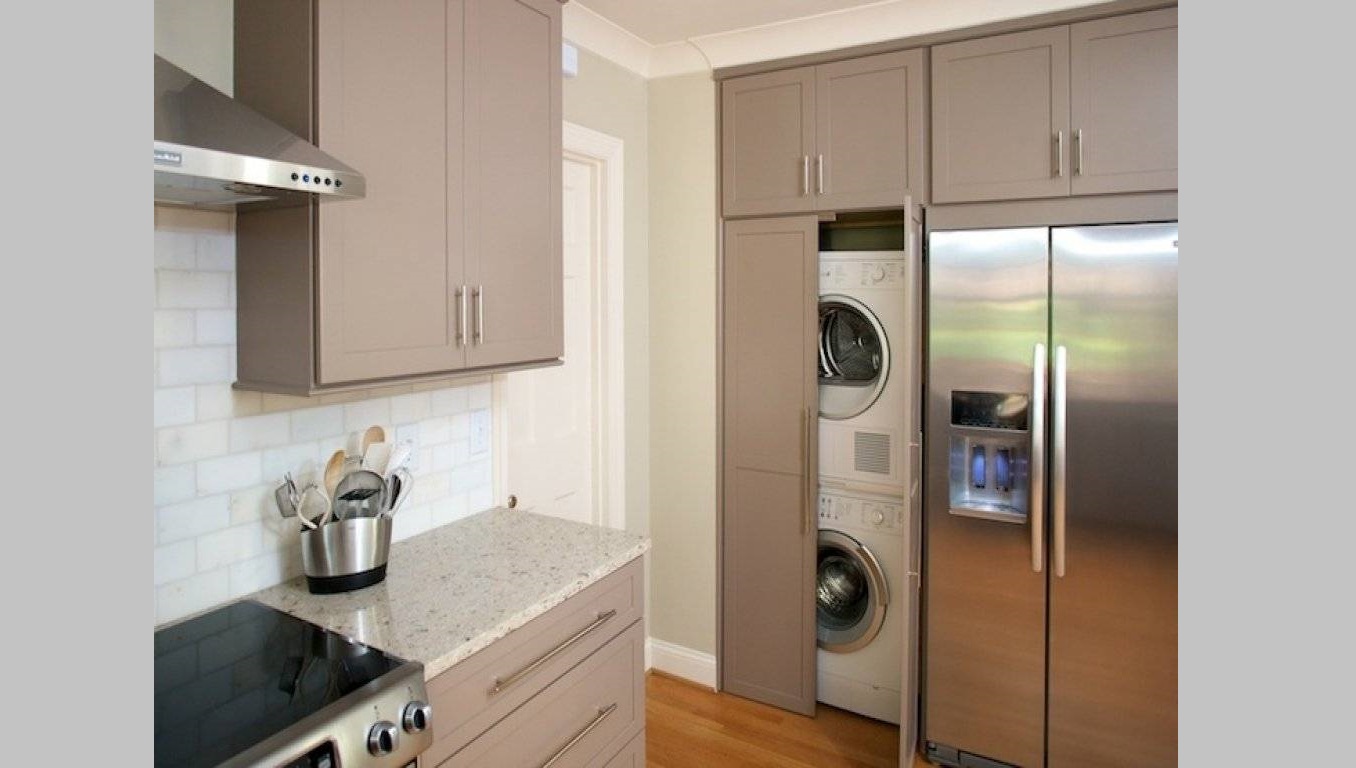
Sometimes a dryer is placed in the living room, bedroom, or hallway. Here, too, the appliance can be accented with a niche or other furniture. Here, it's important to remember: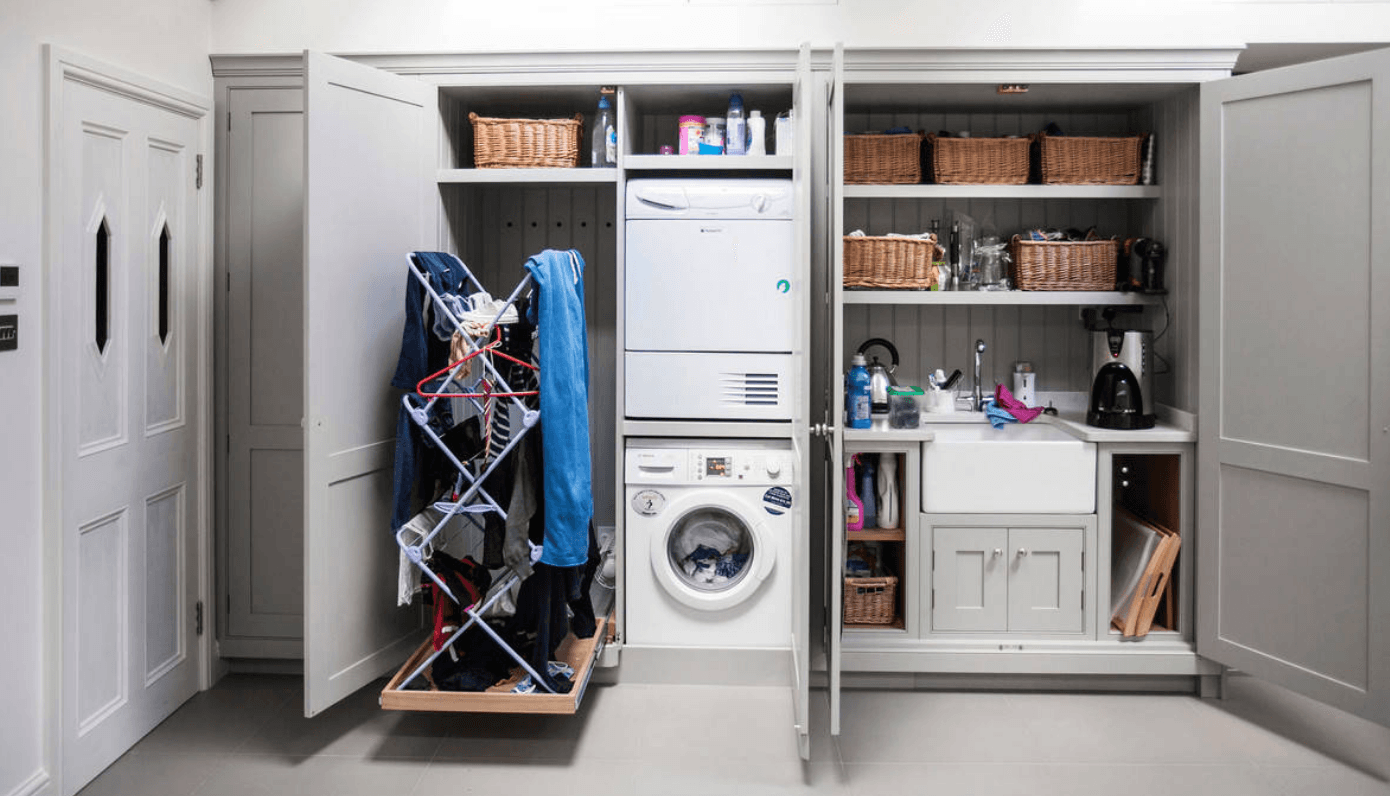
- the machine will make noise when operating (which may disturb the rest of family members);
- The device will release heat and moisture during drying, so effective air removal is necessary.
A good option is to hide the dryer on the balcony. This solution is ideal if there's no room for it in the entire apartment. Important points to keep in mind: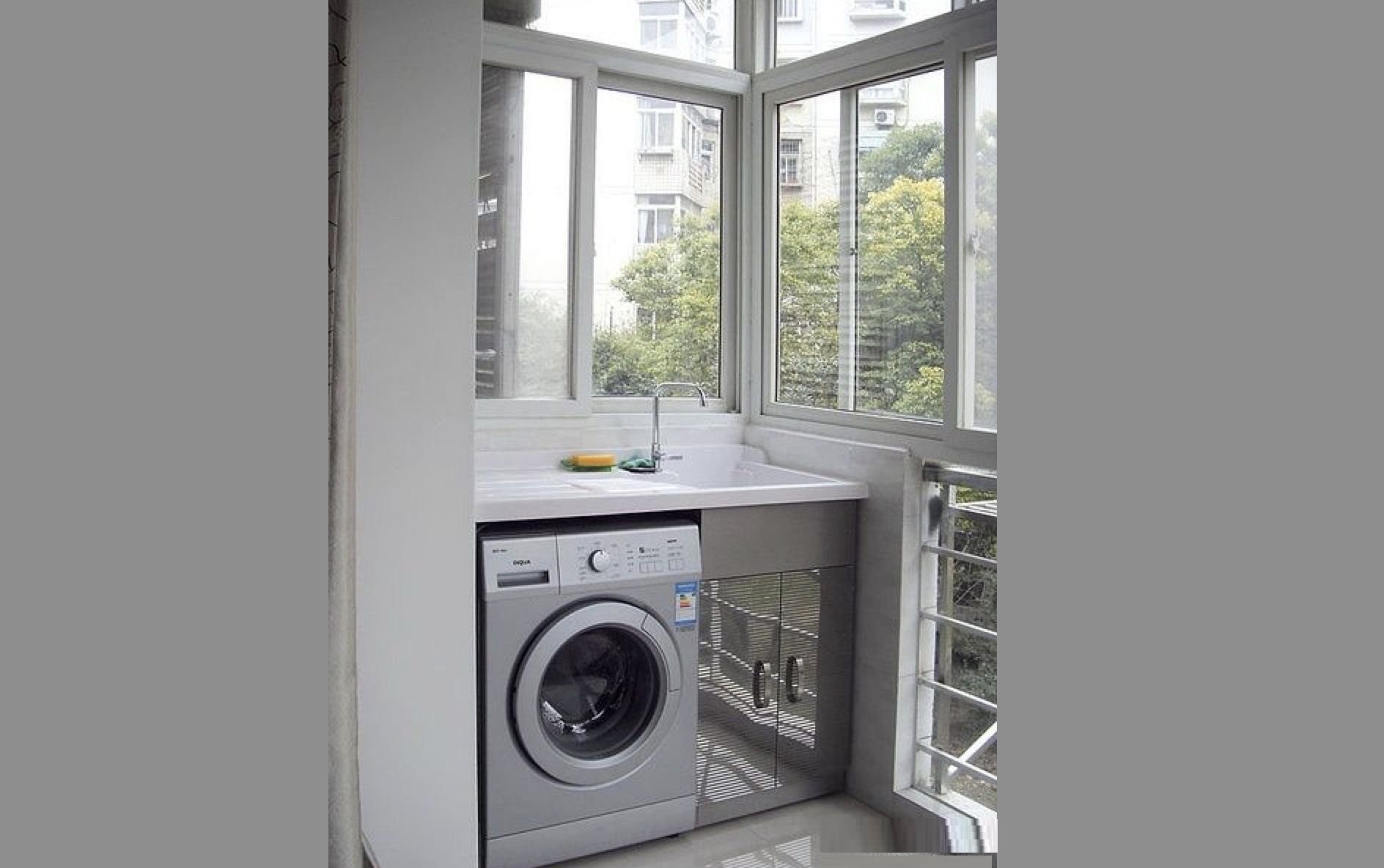
- the balcony must be glazed and heated (a tumble dryer can be used at temperatures from +5 to +35 degrees);
- It is important to protect the equipment from direct sunlight (the risk of machine failure increases with frequent overheating);
- It is necessary to provide a separate grounded socket for the dryer (the device cannot be connected through an extension cord).
There are actually many options for placing a tumble dryer in an apartment. A huge advantage is that it doesn't need to be connected to a sewer system, meaning you're not tied to a drain location. The only important thing to remember is the need for effective ventilation to prevent the unit from overheating and ensure effective drying.
Interesting:
Readers' comments
Headings
Washing machine repair




For buyers




For users


Dishwasher




Add a comment