What should I do if the Aquastop in my dishwasher is activated?
Almost everyone knows what the Aquastop system in a dishwasher does: to prevent flooding if something goes wrong. However, when the system does activate, many people become confused and paralyzed. To prevent this from happening, let's look at what to do if the Aquastop system in a dishwasher activates.
Actions when Aquastop is triggered
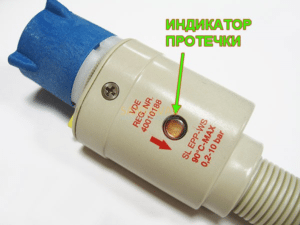
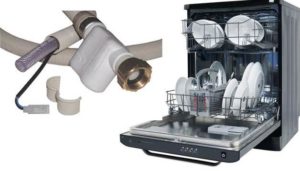
You can find out how your machine signals Aquastop activation in your operating instructions. In most cases, the signal appears as an error code on the display and a color change on the special indicator on the dishwasher hose (it turns red).
Aquastop sensors can vary. If you have a simple mechanical device, it can be reactivated by loosening the spring and pushing the valve membrane inward. However, some sensors are designed to be reused after Aquastop has been triggered, and the element must be replaced along with the hose. Ultimately, it all depends on the sensor type.
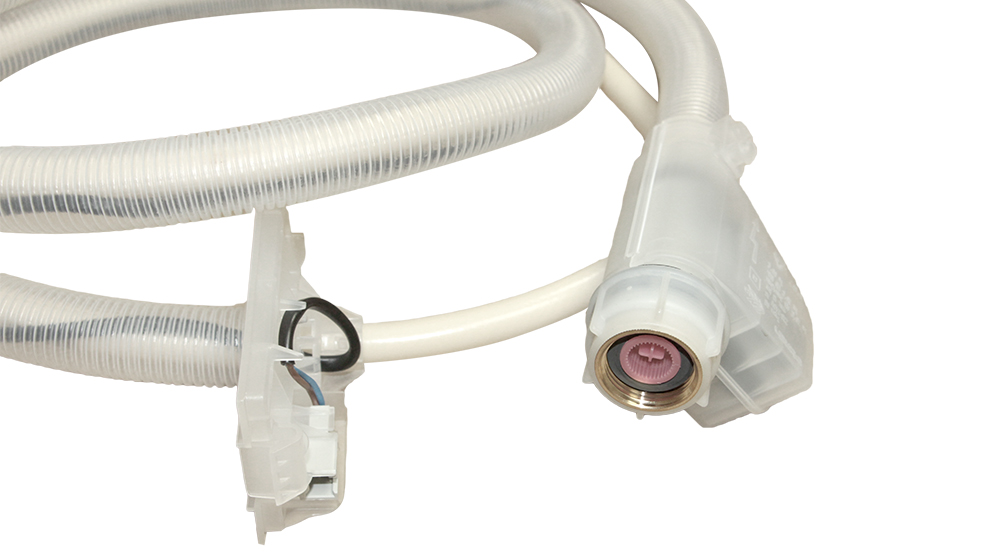
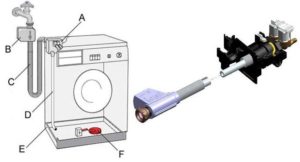
Replacing or installing an aquastop hose is very easy. Simply turn off the water, unscrew one hose, and screw the other one in its place. If your dishwasher is equipped with an electromagnetic system, you will also need to connect a wire with an electrical connector to the leakage sensor. The wire comes out of the base of the protective device, and the groove for it is next to the PMM fill valve.
What should you do if the system has activated due to water in the dishwasher's drip tray? Determining the source of the leak on your own will be extremely difficult, so call a professional. They will disassemble the dishwasher and determine the cause.
Types of leak sensors
As mentioned, the ability to rehabilitate an Aquastop sensor and restore it to working order depends on its type. There are three main types of sensors:
simple mechanical part;
electromagnetic component;
mechanical absorbent part.
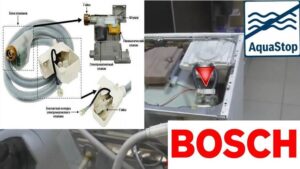
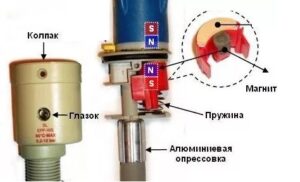
Simple mechanical valves are becoming less common on dishwashers. These days, they can only be found on some inexpensive Bosch machines. This system consists of a spring and a valve mounted on the hose. The spring is “programmed” to a certain level of water pressure. As soon as the pressure is exceeded, the spring is activated, and the valve immediately blocks the hose. If the pressure level is normal, everything operates as normal.
Important! The downside of this system is that it only detects major faults. Small leaks and drips, which can also lead to serious consequences, go unnoticed.
The electromagnetic Aquastop is more advanced and reliable. The electromagnetic device is located at the bottom of the dishwasher. It's there, in the tray, that water begins to drain if a malfunction occurs (from the hose, into the protective sleeve, and then into the tray). The device located there immediately detects the danger, and a valve (or valves, if there are two) at the base of the hose shuts off the water drawn by the dishwasher from the water supply. As mentioned in the article, if the Aquastop at the bottom of the dishwasher is activated, a technician should be called.
The absorbent leak protection system consists of a spring, a piston with a valve, and absorbent material in a container. This technology works as follows:
if any leak occurs, even the smallest one, water from the hose immediately moves into the protective casing;
When moisture hits the absorbent, it immediately causes it to expand and increase in volume;
The absorbent exerts pressure on the spring, which is triggered and blocks the hose valve.
Caution! The main drawback of this protection system is its disposability. After swelling, the absorbent hardens within a short period of time, and the valve can no longer be returned to its original position. This means that the valve, like the hose itself, cannot be reused.
Absorbent Aquastops may also lack springs or pistons, but these are technical details that do not significantly change the operation of the absorbent system.

 Almost everyone knows what the Aquastop system in a dishwasher does: to prevent flooding if something goes wrong. However, when the system does activate, many people become confused and paralyzed. To prevent this from happening, let's look at what to do if the Aquastop system in a dishwasher activates.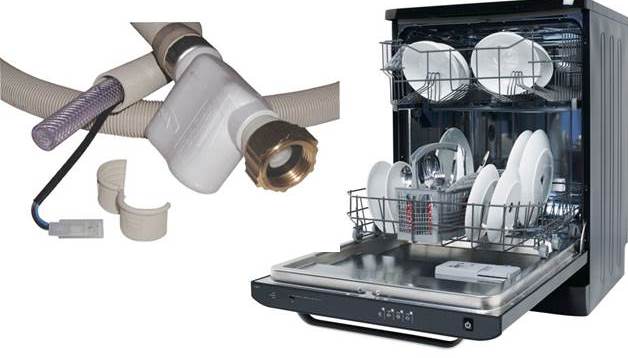














Add a comment