
The Aquastop on my Bosch washing machine has been activated.
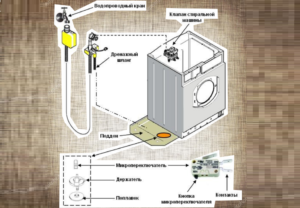 Modern machines have leak protection, which detects damage to hoses, the tank, and fittings and immediately stops the cycle. This is convenient and safe, but sometimes expensive: after activating this feature, you have to call a technician to repair the sensor. Of course, you want to avoid unnecessary expenses and learn how to fix the problem yourself.
Let's figure out what to do if your Bosch washing machine's AquaStop is activated. We'll explain the causes, troubleshooting steps, and how to deactivate the sensor.
Why was Aquastop activated?
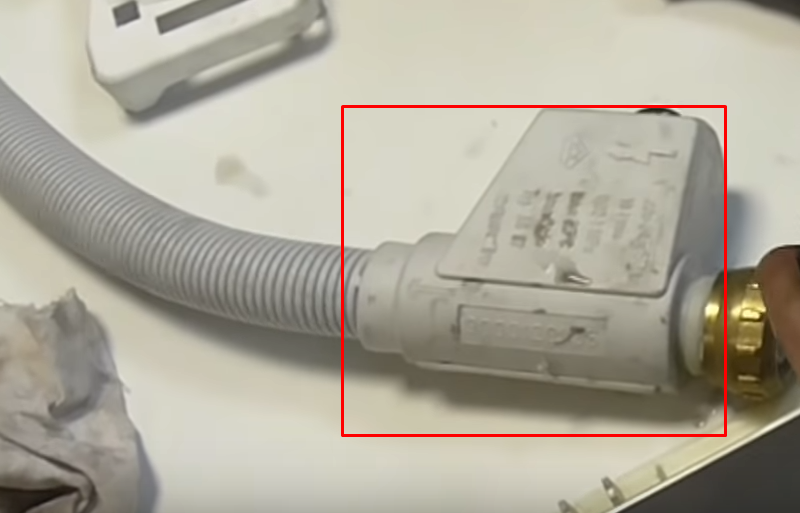
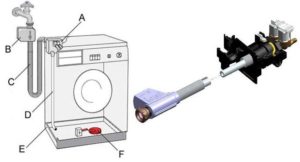
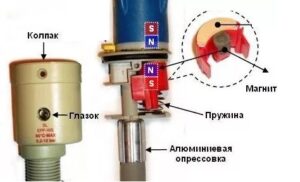
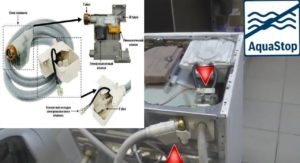
Aquastop is a system that protects your washing machine from leaks. The mechanism consists of two elements: a box with an electromagnetic valve in the inlet hose and a sensor with a float on the machine tray. So, when the corrugated pipe leaks, water gets onto the bottom of the unit, which starts a “chain reaction”:
- water fills the tray;
- the float rises;
- the sensor is triggered;
- a leak signal is transmitted to the valve;
- the valve blocks the intake of water through the inlet hose;
- the wash stops;
- The washing machine stops working.
If the washing machine tray fills with water, Aquastop, a leak protection system, will be activated.

Aquastop rarely trips without a reason. Typically, the emergency shutdown occurs for a specific reason. For example, water can accumulate in the tray in the following situations:
- breakage or damage to the inlet or drain hose;
- loose clamps on pipes;
- presence of cracks in the tank;
- foreign object stuck in the detergent drawer;
- the seal has come away from the joint;
- damage to the hatch cuff.
If the Aquastop on the inlet hose has been triggered, the problem isn't always visible. Often, the inner layer of the corrugated hose ruptures, allowing water to get between the rubber layers. The sensor detects the leak and triggers a signal. In this case, the options are limited: gluing the hose back into place is impossible—the only option is to replace it with a new, undamaged one.
Will it be possible to fix it?
When Aquastop is activated, you need to respond appropriately. There are two options: fix the problem yourself or call a specialist. The first option is more time-consuming but less expensive. If you have the desire and energy, you can try to solve the problem yourself.
We act according to the following scheme:
- stop the started cycle;
- drain the water from the drum through a special program or a waste filter;
- disconnect the washing machine from the power supply;
- empty the machine's tray by tilting the body forward;
- find out the cause of the leak and fix it.
The last step is the longest. To identify the source of the flood, it's necessary to check all the system's weak points sequentially. The diagnosis begins with the simplest: the hoses. We carefully inspect the inlet hose for cracks and leaks. Then, we check all the connections for leaks, followed by the pump, the volute, and the drain hose.
Diagnostics continue at the hatch seal. The rubber seal needs to be carefully inspected for cracks and wear. Next, the powder receptacle is checked. If the leak is still not detected, you will have to disassemble the machine completely. It may be necessary to replace the leaking seal or treat the surface of the tank with sealant.
If Aquastop has been activated and the washing machine's tray is completely dry, the problem isn't a leak, but rather the system itself. You'll need to inspect the sensor, the wiring, and the contacts for integrity and secure connections. If there are no visible problems, loose wires, or signs of burnout, the unit will need to be replaced.
A triggered Aquastop requires immediate action. You should call a technician or investigate the cause of the leak yourself. Even a novice can handle the latter.
Interesting:
Readers' comments
Headings
Washing machine repair




For buyers




For users


Dishwasher




Add a comment