
Service life of an LG washing machine
 Experts consider LG washing machines to be of average reliability. They last longer than budget-friendly Candy or Indesit models, but are inferior to premium Miele or Bosch appliances. Let's find out how long an LG washing machine lasts. Will it last an average of 10 years, or will it break down sooner?
Will an LG washing machine last 10 years?
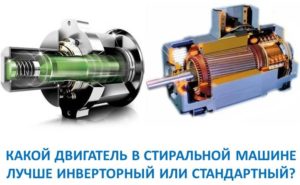
When choosing a washing machine in a store, customers see a "10-year" sticker on all LG appliances. This label is impressive, seeming to imply that the manufacturer guarantees at least ten years of trouble-free operation. In reality, this information on the label merely indicates the longevity of the inverter motor the washing machine is equipped with.
LG provides a ten-year warranty on the inverter motor.
The general warranty period for the machine itself is one year. This means the manufacturer will repair all malfunctions not caused by the user free of charge for 12 months. To do this, please contact the service center.
Nevertheless, experts highly rate the performance characteristics of automatic machines from the South Korean brand. Most models LG machines operate without failure for 12-15 years, some washing machines last about 8-10 years. This speaks to the reliability of the equipment from this manufacturer.
To extend the life of your LG direct-drive washing machine, follow the manufacturer's recommendations, avoid overloading it, and perform regular maintenance. We'll explain how to properly care for your "home helper" and how often washing machine maintenance is necessary.
How to care for LG SM
Proper and timely maintenance will significantly extend the life of your LG direct-drive washing machine. The simplest rule is not to overload the washing machine. It's also important to understand that different washing modes allow different amounts of laundry to be loaded into the drum. While the "Cotton" program allows for a maximum of 6 kg of laundry, the "Wool" program typically allows for a maximum of 2 kg.
The second rule is to leave the washing machine slightly open after use to allow air to drain. This includes not only opening the door but also pulling out the detergent drawer. It's best to wipe the drum walls and seal dry.
Every 2-3 months, your washing machine requires a more thorough service. Follow these steps:
- de-energize the washing machine;
- disconnect the machine from the water supply and sewerage system;
- remove the powder container, rinse it in warm water, and if there are deposits on the walls of the tray, clean them off with a brush;
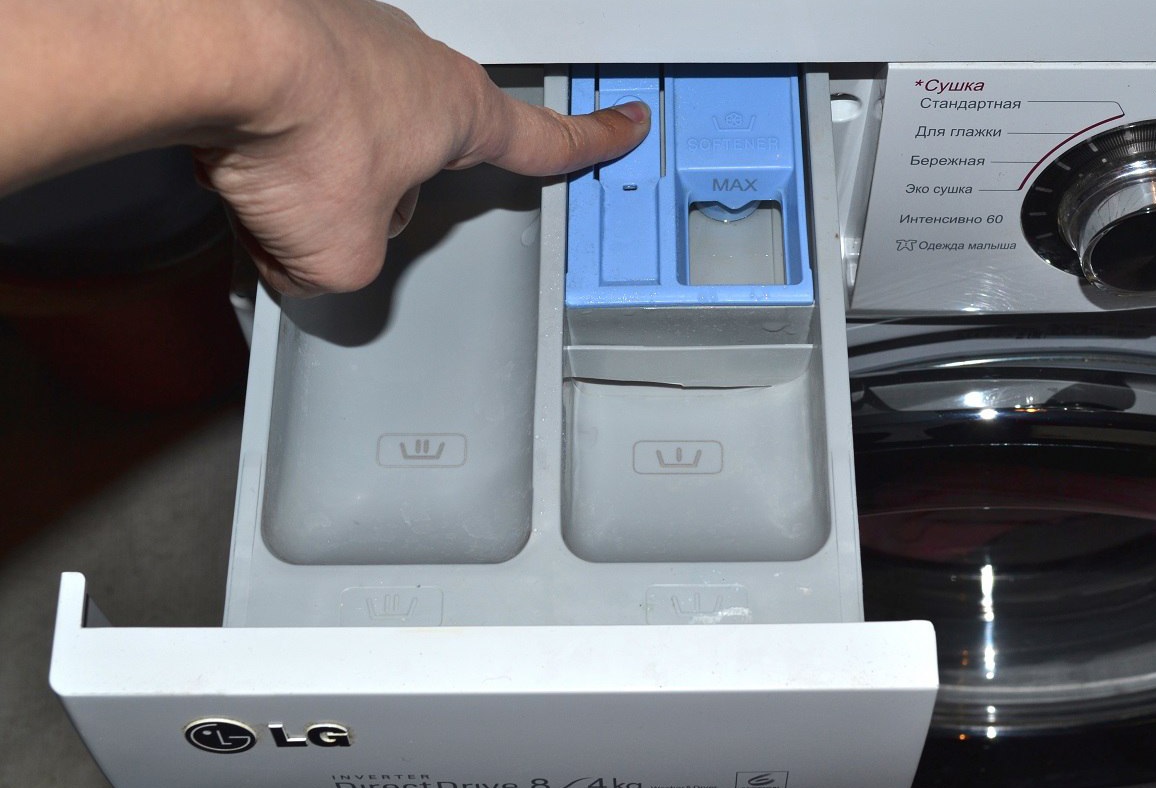
- wipe the inside of the powder container;
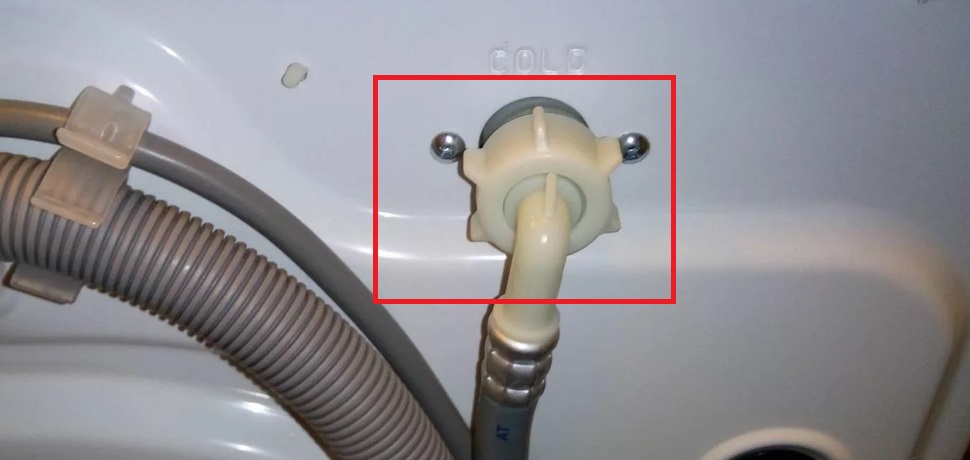
- detach the inlet hose from the device body, remove the filter mesh, rinse the elements under running warm water, and put them back in place;
- Clean the washing machine's dust filter, which is located behind the lower false panel or the access door. Water will leak when you remove the coil, so cover the floor around the washing machine with rags.
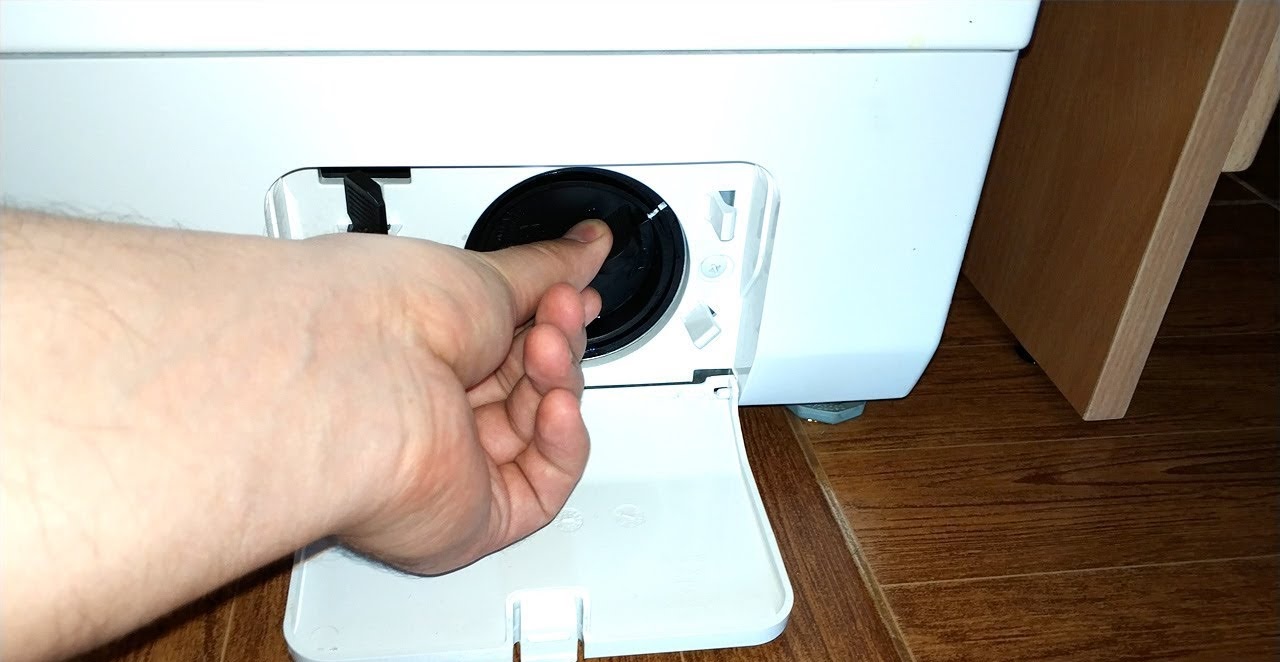
- wipe the walls of the hole formed after removing the debris filter;
- clean the drum seal; if there are cracks or mold on it, it is better to replace the seal;
- Disconnect the drain hose from the washing machine. It is also recommended to rinse it under running water.
Once you've finished cleaning, spin the washing machine drum. It should rotate freely, with a slight tension. There should be no knocking or grinding sounds. If there is any unusual noise, a more thorough diagnosis of the washing machine's system will be required.
All of the above steps are easy to perform at home. No special skills are required. The main thing is to follow safety precautions.
The machine started working somehow wrong.
At some point, users may notice some abnormalities in the operation of their LG washing machine. For example, the machine may begin humming, knocking, or making a loud noise during the spin cycle. This may require an in-depth diagnostic. It will be necessary to check the counterweights, assess the condition of the shock absorbers and bearing assembly.
The algorithm of actions during in-depth diagnostics will be as follows:
- unplug the power cord from the socket;
- close the shut-off valve, disconnect the drain and fill hoses from the washing machine body;
- Move the machine to the center of the room to have access to all sides of the case;
- prepare a screwdriver and a dry cloth;
- remove the top cover of the washing machine by unscrewing the two bolts that secure it;
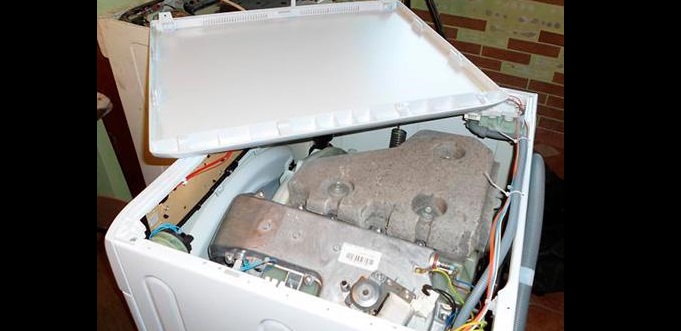
- remove the rear panel by removing the fasteners;
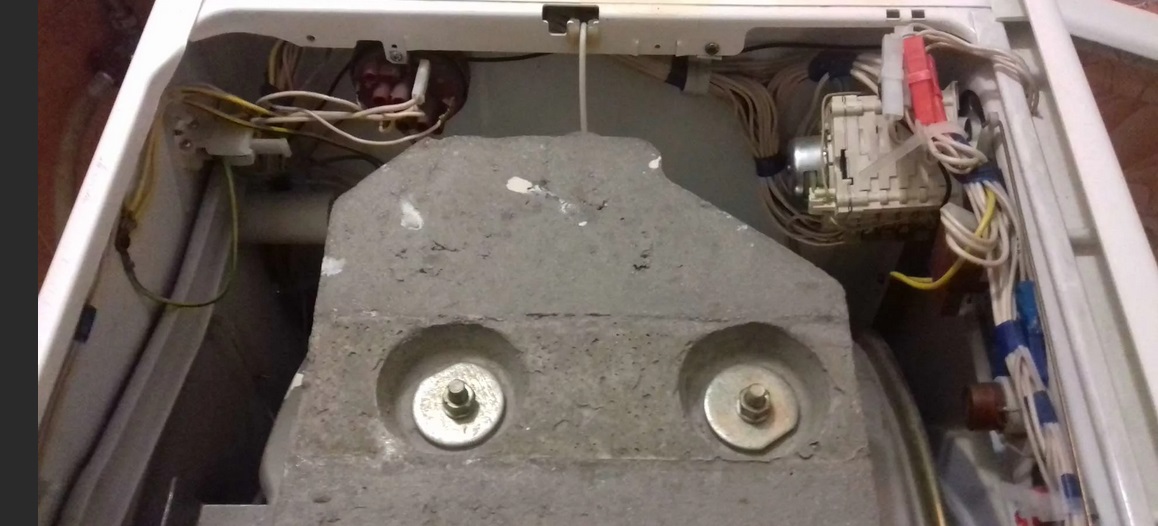
- Locate the counterweights and inspect the concrete blocks. Their fasteners may have become loose and will need to be tightened. If there are cracks in the stones, the weights will need to be replaced;
- Inspect the back surface of the washing machine tank. If rusty stains are visible on the plastic, the seal may be damaged. The seal will need to be replaced.
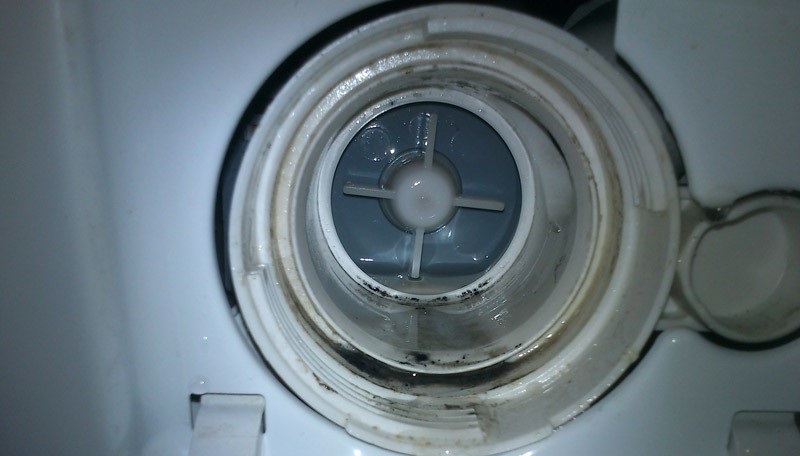
- Unscrew the debris filter. Shine a flashlight into the hole to check for threads or hair tangled around the pump impeller;
- Check the dampers—the springs should be firm. As a preventative measure, it's best to treat the shock absorbers with graphite grease;
- Clean the tubular heater. To do this, disconnect the wires from the heating element, loosen the central nut, and remove the element from the washing machine. Limescale and limescale deposits can be removed by soaking the part in a vinegar solution;
- Inspect all small sensors of the washing machine, including each wire. If a defect is found, replace the part;
- Check the drain pipe and the hoses leading from the detergent drawer to the tank – they should be dry and intact.
Before disconnecting the wiring from the parts, take a photo of the connection diagram to avoid mistakes during subsequent assembly.
Bearing failure is indicated by obvious symptoms, such as drum play, grinding, and rattling during washing. Replacing the parts requires disassembling the washing machine's drum. This is a fairly labor-intensive process, so it's best to consult a professional.
Interesting:



1 reader comment
Add a comment
Headings
Washing machine repair




For buyers




For users


Dishwasher




Can my washing machine be repaired if it's knocking, rattling, and whistling loudly? Is it worth it?