
Dishwasher Stabilizer Review
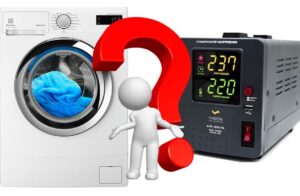
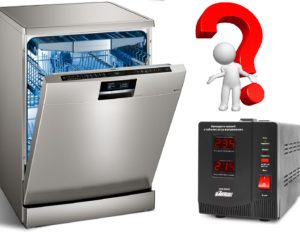 Why do I need a voltage stabilizer for my dishwasher? Few home appliance users ask this question, but their number increases dramatically after a significant power surge in a neighborhood or even a town. When expensive appliances start breaking down en masse, you inevitably start thinking about effective protection. A good voltage stabilizer can protect your dishwasher during a sudden surge or, conversely, a drop in power, but how do you choose the right one?
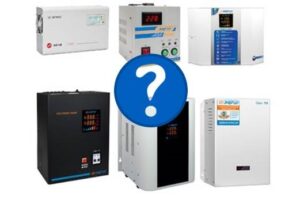
What types of stabilizers are there?
When faced with choosing a dishwasher stabilizer, people immediately head to online retailers and start searching for a device within their budget, without really considering its technical suitability. We suggest first briefly reviewing the different types of stabilizers and their technical specifications, and then, using this information to make an informed choice.
- Stabilizing devices based on a group of coils.
- Ferroresonant stabilizing devices.
- Stepped stabilizing devices.
- Electromechanical stabilizers.
Without going into technical details, we should note that we only need to pay attention to two types of stabilizers: coil-based and stepped. Ferroresonant stabilizing devices are too expensive and it is extremely unprofitable to purchase them for household electrical networks. Moreover, it is quite difficult to find a ferroresonant stabilizer on the market intended for home use, so you can forget about them right away.
Electromechanical stabilizers, on the other hand, are very common. Moreover, their price is quite reasonable, which will certainly appeal to many consumers. However, there's one catch: these stabilizers last a maximum of five years, and often fail after just three. So, purchasing such a device isn't cost-effective.
Important! Electromechanical voltage stabilizers provide very high-quality voltage regulation in the electrical network. Their error margins are very small.
How to calculate device parameters?
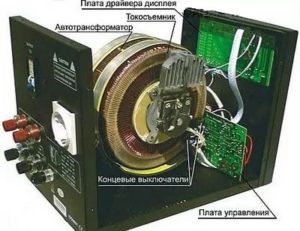 When purchasing a dishwasher stabilizer, you should consider connecting other appliances to it in addition to the dishwasher. Buying a separate stabilizer for each appliance is too expensive, and it's unnecessary. Since we'll be placing the stabilizer in the kitchen near the dishwasher, we can also connect the refrigerator and washing machine to it.
Other household appliances also need protection, but you'll need to prioritize them. The more appliances you connect, the more powerful and reliable the stabilizer will be. And the more powerful the stabilizer, the more expensive it will be.
Before purchasing a voltage stabilizer, determine whether your home or apartment has a single-phase or three-phase electrical network. Most likely, you have a single-phase network, which means you need a voltage stabilizer designed for a single-phase network. Next, calculate the total power of all connected electrical appliances, especially the dishwasher. Here's how to do it.
- We look at the dishwasher's passport and find information about its power there.
- We do the same with the rest of the connected devices and write down the numbers on a piece of paper.
- Add up the numbers and then add another 20% to the resulting value. This will be the minimum power of the stabilizer you need to purchase.
It is essential to take the power reserve into account, since the composition of the devices may change over time, and then the stabilizer will operate at its limit, which is undesirable.
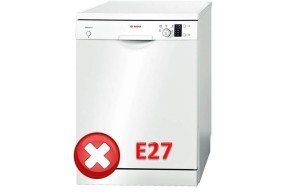
Some dishwasher users ask how to tell if their electrical system is stable or unstable. The most interesting thing is that the dishwasher itself can tell you. In particular, Bosch dishwasher error code E27, which indicates a power surge. If this happens to you, don't delay; install a dishwasher stabilizer.
What do manufacturers offer?
There's a huge variety of household stabilizers on the market today. The sheer number of options is overwhelming. Choosing a particular manufacturer, let alone a specific stabilizer model, can be difficult. To make your choice easier, we've prepared a review of the best stabilizers.
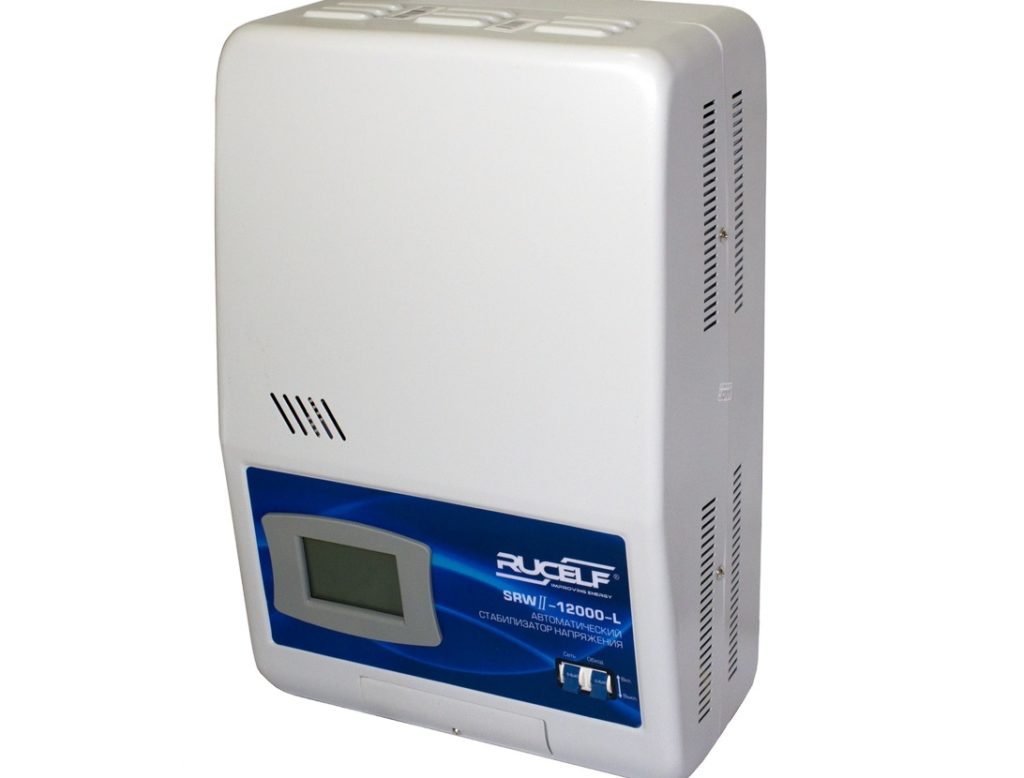
- The RUCELF SRW II-12000-L is a relay-type voltage stabilizer with microprocessor control and an informative display. It offers a respectable power rating of 10 kW. It operates in the 110 to 270 V range, with an error of no more than 8%. This stabilizer can be used to connect not only a dishwasher, but also most household appliances. Well, at least it's enough to power a dishwasher, a refrigerator, a washer and dryer, a microwave, a toaster, a slow cooker, and a TV all at once. Price: $280.
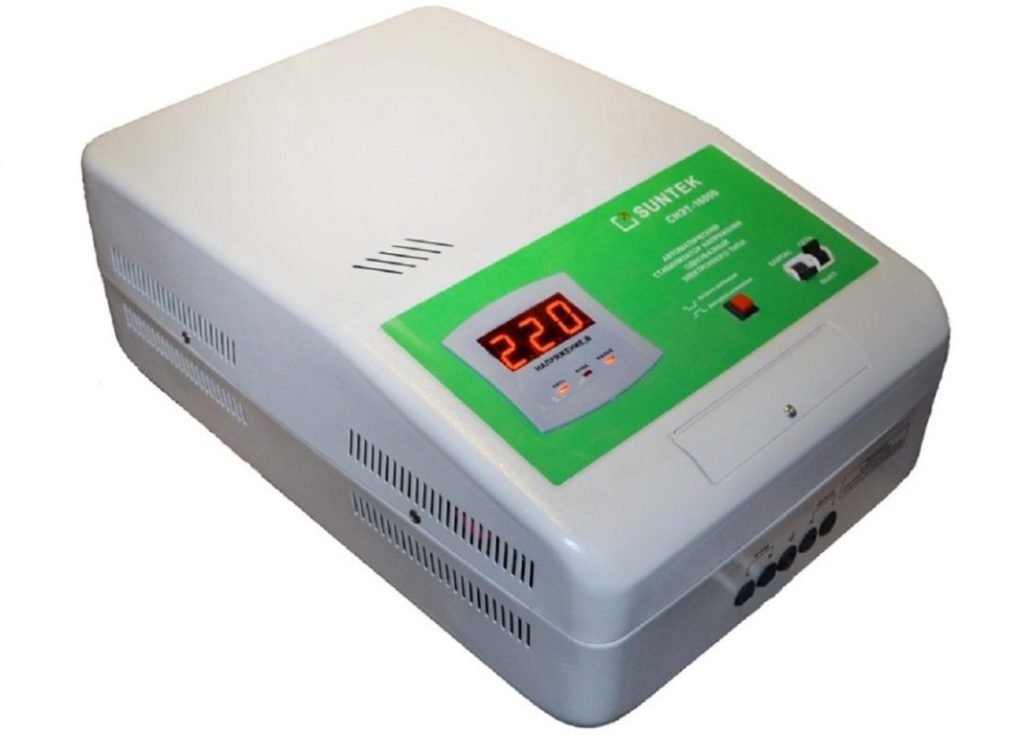
- Suntek SK2 RL11000. Another relay stabilizer that can even be wall-mounted. It has a compact housing and a simple display. The maximum power rating is 11 kW. Its operating range is 120 to 285 V, but it maintains full power starting at 140 V. It also features short-circuit, overload, and lightning protection. The average price is $220.
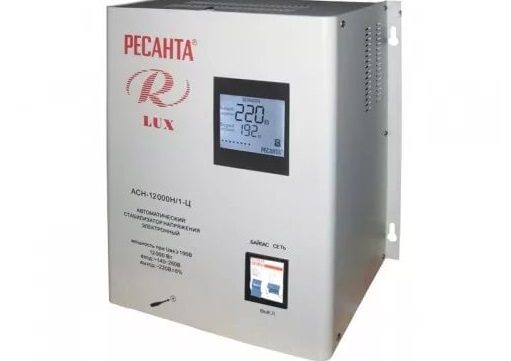
- Resanta ASN 12000 H/1-C Lux. This relay stabilizer has a power output of 12 kW. It is very reliable, durable, and stable in operation. Unlike the models described above, it has forced cooling, which is a good thing, but its case is quite large, so it's not suitable for wall mounting. The stabilizer operates perfectly within the 140-260 V range. The device also features an informative display, overheat protection, and a bypass function. Price: $250.
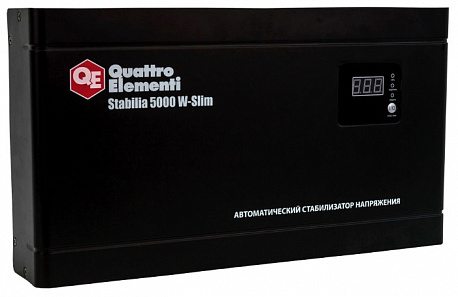
- QUATTRO ELEMENTI Stabilia 5000 W-Slim 640-544. This wall-mounted relay stabilizer is extremely reliable and compact. It has a power output of 5 kW and an operating range of 140 to 270 V. Its advantages include microprocessor control, a slim, easily cooled housing, soft-start technology, high control accuracy, a long service life, and short-circuit protection. The average price is $128.
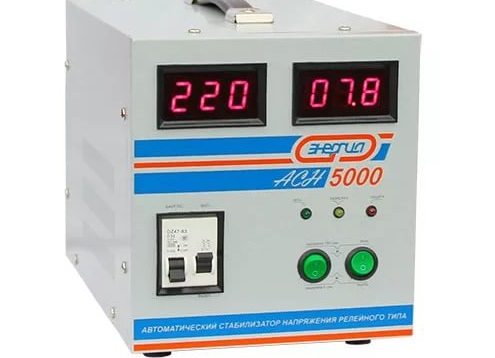
- The Energy ASN-5000 E0101-0114 is one of the most popular stabilizers among consumers. It is also one of the most reliable and proven. Its robust housing, dual display, and forced-air cooling ensure long-lasting and stable operation. Its voltage regulation range is from 120 to 280 V. It has intelligent overload protection, an arc absorption system, overload and short circuit fuses, and an adjustable start-up delay. Power 4 kW, cost $125.
In conclusion, a dishwasher stabilizer is an absolute must-have if you're constantly experiencing power outages. A stabilizer effectively regulates the power, saving your dishwasher and other appliances from inevitable breakdowns and you from financial losses. So, don't skimp on protection—it will pay off handsomely. Good luck!
Interesting:
2 reader comments
Add a comment
Headings
Washing machine repair




For buyers




For users


Dishwasher




Why talk about stabilizers from 4 to 11 kV if you need 1.5 kV?
What if a washing machine, dishwasher, etc. requires a separate circuit breaker and corresponding outlet?