
Can I place a washing machine next to a heating radiator?
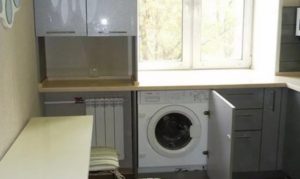 Modern washing machines can be used quite intensively and in a variety of conditions. However, even the usual placement in the bathroom can pose a risk of corrosion and other problems. What if we consider other options, such as placing the washing machine next to a radiator? Isn't this placement dangerous for the appliance?
The nuances of installation next to a radiator
To answer this question, you need to consider how close the washing machine is to the radiator. If you decide to place it right next to the radiator, it's definitely not a good idea. The intense vibrations during the spin cycle will reverberate through the system, causing a clanking sound that won't please your neighbors.
In addition, there must be free space between the battery and the washing machine to ensure normal air circulation. If the radiator is completely covered by a washing machine, you should avoid such a proximityIt would be better to look for another, more suitable place.
The optimal placement for the washing machine is to the right or left of the heating element.
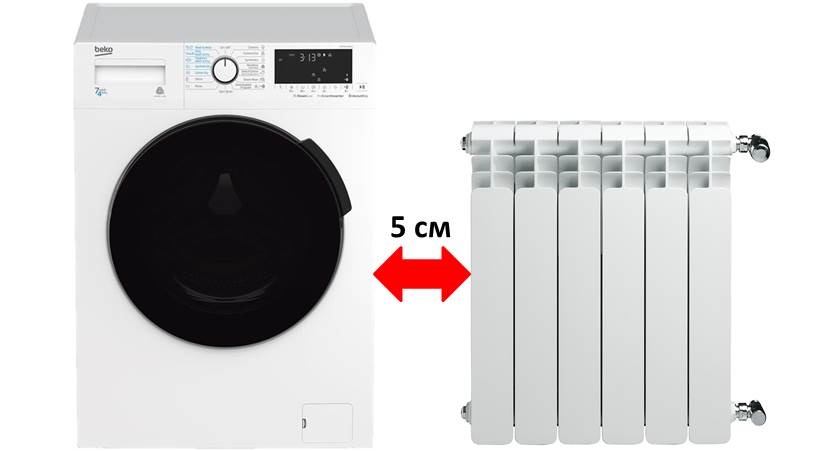
There should be at least 5 cm between the radiator and the side wall of the washing machine. Never place the washing machine in front of a radiator. Additionally, we recommend using a protective screen, which will also enhance your interior design and provide additional insulation for the appliance.
Another reason why it's not advisable to install a washing machine near a radiator is to avoid anything obstructing the door's opening. Some washing machines are top-loading, and placing them right next to a radiator will prevent the door from opening. For machines with a standard door, this isn't as critical.
If you follow these recommendations, your washing machine is perfectly capable of withstanding hot air, especially if the radiator is covered. It's not like a refrigerator, which can be damaged by constant contact with the radiator. However, the washing machine shouldn't impede heat circulation or interfere with access to the radiator. If a leak occurs, you need to quickly get to the site and fix it. But how can you do that if the washing machine is in the way?
Can it be placed next to a stove?
Washing machines are often placed in the kitchen these days. When every inch of space counts, the only place to put one may be next to the stove. While this might seem like a no-brainer, problems can arise over time:
- Strong vibration during spinning may cause the plate to break;
- The vibrations of the washing machine will cause food to splash;
- The washing machine may block the ventilation holes, which leads to breakdown.
Even if constant vibration during washing doesn't bother you, a stovetop isn't designed to withstand such loads. A washing machine is designed with these characteristics in mind, so strong vibrations won't harm it. The same can't be said for a stovetop, which can easily be damaged by vibrations.
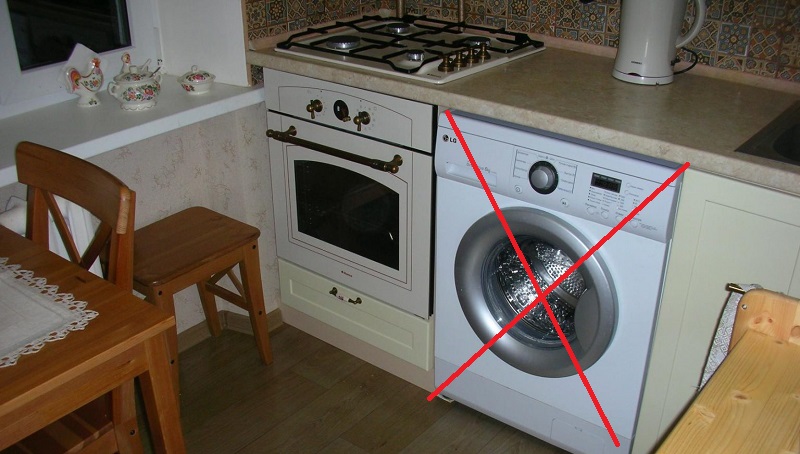
Besides, imagine that you are cooking dinner, and at the same time the washing machine starts spinning the laundry. In the best case, the contents of the pan will end up on the hob; in the worst case, it will splash onto the washing machine and everything around. You'll have to scrub greasy stains off the stove and washing machine, and get rid of the smell. Are all these problems worth the dubious convenience of a washing machine in the kitchen? You wouldn't wait for the machine to finish washing to make soup, would you?
Your stove may have special ventilation holes. If you block them with a washing machine, your appliance will soon become unusable. A lack of proper air circulation is critical to its proper functioning. However, you can avoid such problems by installing your washing machine at least a few centimeters away from the stove.
Interesting:
Readers' comments
Headings
Washing machine repair




For buyers




For users


Dishwasher




Add a comment