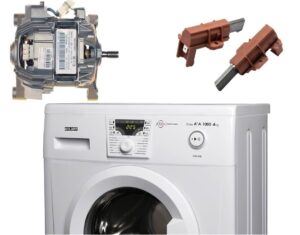
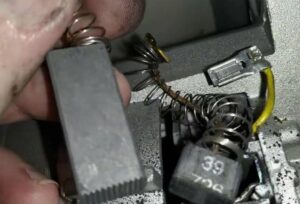
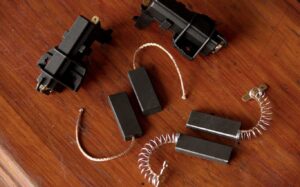
Every washing machine's commutator motor is equipped with electric brushes. These are two graphite rods with springs. They are necessary to direct electrical energy to the rotor. When the parts wear down, contact is broken, and the motor loses power or stops working. What should you do if the brushes in your washing machine are worn out? How can you tell when the tips need replacing? We'll show you how to reinstall the graphite rods yourself.
What happens when brushes wear out?
If you use the automatic machine a couple of times a week, the need to replace the graphite tips will arise 7-8 years after purchasing the equipment. With active, almost daily use of the washing machine, the electric brushes can wear out in 3-5 years. The "Home Assistant" will automatically notify the owner if the brushes are worn and the motor is not operating at full power. Signs of worn brushes may include the following:
the washing machine freezes during the cycle, although the power cord of the machine is not pinched or damaged, and there are no power outages;
a hum and grinding sound is heard during the rotation of the drum;
the machine does not spin the laundry well (which is not surprising, since the engine speed decreases);
the machine smells like something is burning when it's running;
The washing machine display shows an error code indicating a problem with the electric motor.
You may notice only one of the signs of wear listed above. Sometimes they occur together. In any case, you'll need to check the condition of the brushes.
You can replace the brushes of the collector motor yourself, without resorting to the help of a specialist.
To access the brushes, you'll need to partially disassemble the machine's body. Specifically, remove the top cover and the back panel. This is a relatively easy job, so replacing the brushes shouldn't be a problem.
How many tools are needed?
Replacing the graphite rods requires a minimal set of tools. First, purchase new components based on the model and serial number of your washing machine. Even if only one brush is worn out, they must be changed in pairs. In addition, the following will be useful for repairs:
screwdrivers: Phillips and slotted;
pencil or marker;
TORX key (size – 8 mm).
Before carrying out repairs, be sure to prepare. Be sure to unplug the washing machine and turn off the water supply valve. Then, disconnect the drain hose from the machine.
The final preparation step is draining the remaining water from the system. To do this, line the floor under the machine with rags, place a small container under the dust filter, and unscrew it. All the liquid in the pipes will drain out of the hole into the basin. Now all that's left to do is move the machine away from the wall and begin replacing the brushes.
We do the replacement ourselves
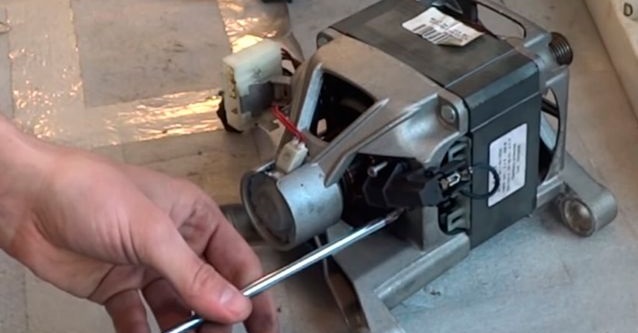
Since the brushes are located in the commutator motor, you'll first need to access the motor. Remove the top panel of the washing machine by unscrewing the two bolts holding it in place. Next, remove the rear panel of the housing, also by removing the screws holding it in place. The electric motor is immediately visible; it's located under the drum. The rest of the procedure is as follows:
remove the drive belt from the pulleys;
Take a photo of the wiring diagram for the motor;
reset the contacts connected to the engine;
remove the two bolts that hold the motor in the housing;
remove the engine from the machine;
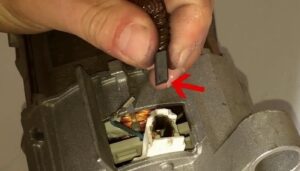
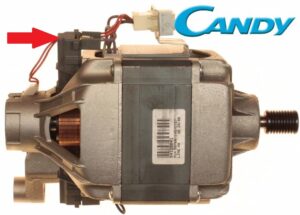
Find the electric brushes - they are located on the sides of the engine;
Remove the brushes one by one by unfastening the wire, moving the contact down and stretching the spring.
The new components are installed in place of the removed ones, with the tip inserted into the socket. The spring is then compressed and returned to its original position. The brush is covered with a contact, and a wire is attached to it.
After replacing the brushes, the commutator is reinstalled. The motor is securely bolted into the housing. The previously removed wires are then reconnected.
When connecting the wiring, refer to the photo you took – this will help you avoid mistakes.
Once all the contacts are connected to the motor, you can move on to the drive belt. Stretch the rubber band first over the motor pulley, then over the drum "wheel." Then, reassemble the housing—replace the back panel and top cover.
Finally, all that's left to do is move the machine to the wall, connect it to the power supply, and run a test wash. During the first few cycles after replacing the brushes, the machine may make a slight noise. After the brushes have settled in, the unusual sound will disappear.

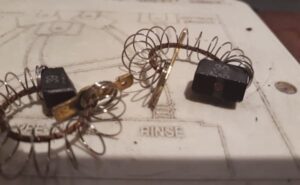 Every washing machine's commutator motor is equipped with electric brushes. These are two graphite rods with springs. They are necessary to direct electrical energy to the rotor. When the parts wear down, contact is broken, and the motor loses power or stops working. What should you do if the brushes in your washing machine are worn out? How can you tell when the tips need replacing? We'll show you how to reinstall the graphite rods yourself.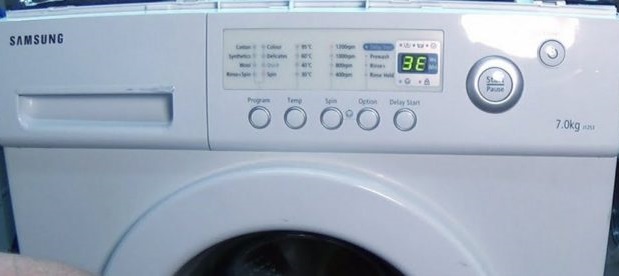














Add a comment