
Bosch stackable washer and dryer
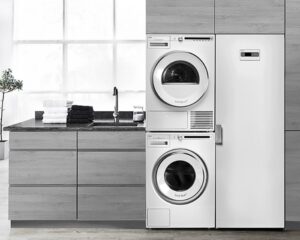
 Placing appliances in small spaces can be challenging, especially when installing multiple units at once. To make things easier for consumers, designers and manufacturers have come up with a solution: saving space by stacking them. You can stack a dryer on top of a washing machine to save a few square meters. We suggest learning how to properly install a Bosch washer and dryer in a stack. We'll cover all the details, mounting methods, and other useful information.
How is the equipment fixed?
Installing a tumble dryer on top of a washing machine is a modern solution for small spaces. You can practice this method of organizing space in any room: in the kitchen, in the bathroom, in the laundry room, in the pantry and in the hallway. The main thing is to calculate the load on the lower link in advance and securely fasten the equipment. Otherwise, vibration from one machine will adversely affect the performance of the other.
There are several ways to attach cars to each other:
- install the dryer on the washing machine using the specially provided mount that comes with the dryer;
- secure the dryer above the washing machine using wall mounting rails;
- Place both the dryer and the washing machine in a niche or frame made of plasterboard (other similar materials can also be used).
It is prohibited to place equipment in a column without securing it!
Simply stacking one machine on top of another is not allowed—the top "tier" must be securely fastened. It's also important not to mix up the appliances, as the top tier cannot be used for a washing machine. This is because a dryer weighs less than a washing machine and its frame is not designed to support the 50-80 kg load of the machine. Violating this rule will have dire consequences.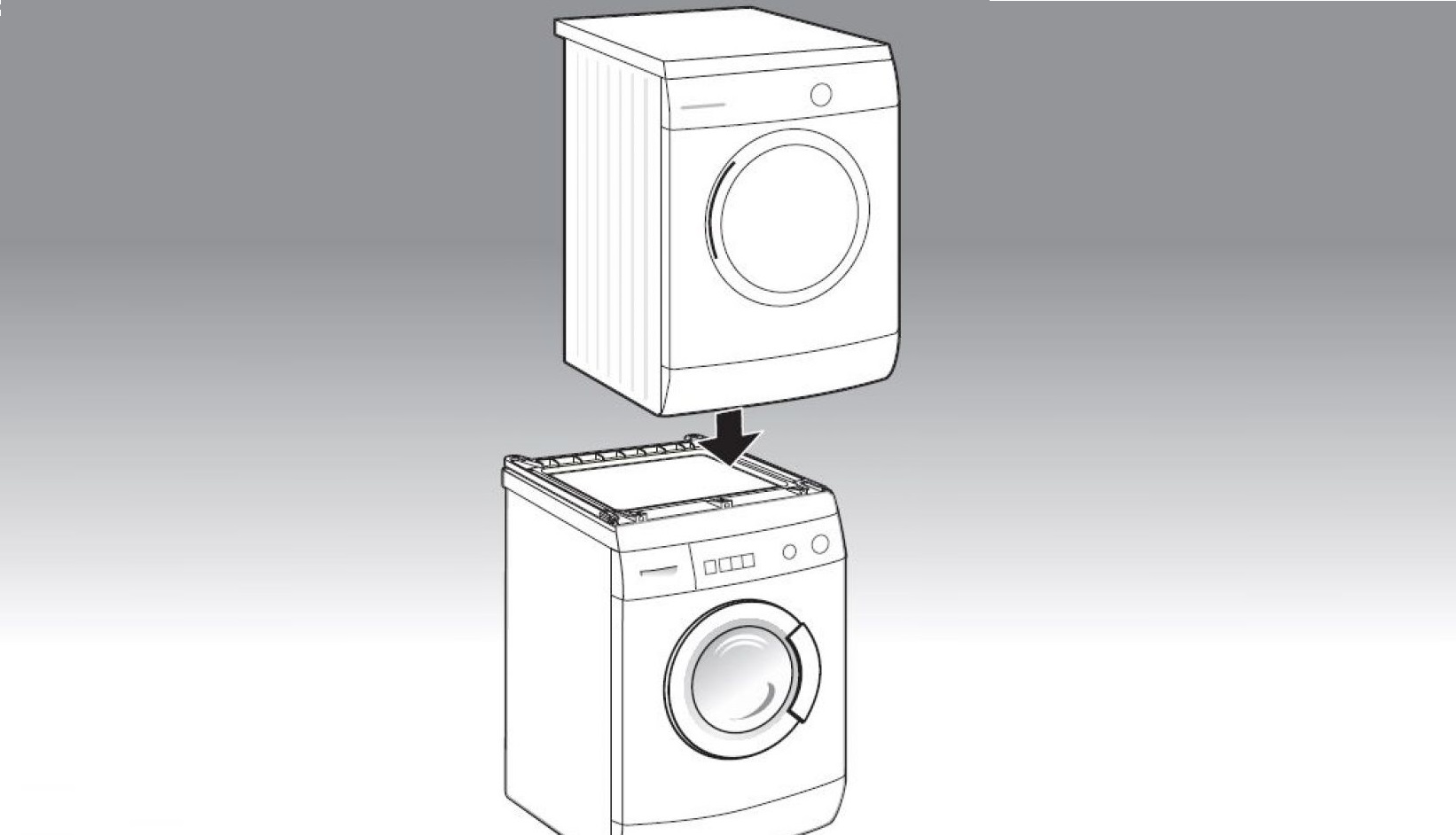
We take into account the subtleties
When selecting Bosch machines for a column, it's important to consider several nuances. Neglecting them can lead to operational difficulties, including equipment failure. To avoid making a mistake, it's best to remember all recommendations regarding machine dimensions, site preparation, and utility connections.
- Dimensions. The units should be proportionate in width and depth. Ideally, appliances should be purchased in pairs. If a washing machine has already been purchased, a dryer should be selected strictly according to the existing dimensions or slightly smaller.
- Mounting. Choose any convenient method, but be sure to calculate the load and prepare the fasteners in advance. If you plan to install the machines in a niche, you'll need to hire a professional to purchase drywall, metal profiles, screws, putty, and other necessary materials. Alternatively, you could opt for a custom-made cabinet.
- Utilities. When choosing a location for a column, first consider its proximity to a sewer and water supply system and the availability of dedicated electrical outlets.

Much depends on the type of dryer you choose, so it's a good idea to research the specifics of individual models before purchasing. For example, exhaust-type dryers require a ventilation connection or a window connection. Condensation dryers collect moisture in a separate compartment that is emptied by the user. If you don't want to deal with the latter, you can set up an automatic dryer. drain into the sewer.
The washer and dryer in the column must have identical dimensions.
The main rule of the column is to use the machines one at a time. Washing and drying simultaneously is prohibited, as it violates safety regulations. It's best to take your time and run the machines separately. This will extend the life of the units by several years.
Description of the process
You can organize the column yourself. The first step is to check that the surface chosen for the equipment is level. Ideally, the machines are placed on a concrete or tiled floor that will not sag under the weight of the units. It's important that the surface is non-slip. The washing machine is leveled using a spirit level.
Most often, the dryer is placed directly on the washing machine using special stand-type fasteners. The stand is placed on anti-vibration rubber pads and secured with bolts. The dryer is lifted and positioned so that the feet fit into the designated slots. Finally, the outer slots are closed with plugs, after which a test wash is run.
Interesting:
Readers' comments
Headings
Washing machine repair




For buyers




For users


Dishwasher




Add a comment