Why does my washing machine hum or whistle when washing?
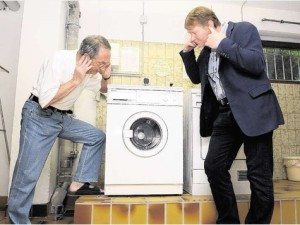
Even when in good working order, an automatic washing machine will emit some humming and whistling sounds, especially during intensive use, and this is completely normal. However, there are times when the humming and whistling noise is so loud that it becomes annoying. In this situation, a serious malfunction may be at play. In any case, this is a reason to take the problem seriously and begin investigating the cause of the unpleasant noise. This article will discuss the causes of these noises emitted by washing machines, as well as ways to eliminate them.
Main causes of malfunction
Why does my washing machine spark, crackle, rattle, and make a host of other noises it shouldn't? There could be many reasons, and it's not always the moving parts that need to be addressed first, but let's take things one step at a time. Experienced automatic washing machine repair specialists have identified several of the most likely and common causes of humming and whistling sounds from your "home helper." Let's take a look at them.
Defective cuff of the washing machine hatch.
The sound is caused by a foreign object that has entered the washing machine and is touching its moving parts during operation.
The sound is caused by a defect in the moving parts of the washing machine (pulley, bearings, belt).
The sound is caused by freely swinging counterweights.
Please note! When troubleshooting, work from the simple to the complex. Don't rush into disassembling the tank and fixing the bearings; first, check the easier-to-reach components; they may be the cause of the unpleasant noise.
Defective hatch cuff
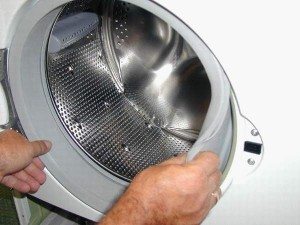
This may seem like a strange reason to some, as if the seal could be connected to the washing machine's whistling and grinding noise. In fact, there's a direct connection! The seal is a large rubber gasket located around the door of the washing machine. Its purpose is to prevent water from leaking out of the drum. Under normal conditions, there's a small gap between the seal and the edges of the rotating drum, preventing them from touching, but this can sometimes be the case.
In cheap models of washing machines, the cuff may be installed haphazardly or may not fit well at all. The edges of the cuff go right into the drum, catching its edges, or even worse, the cuff does not fit properly into the groove, which prevents the hatch from closing. In this case, if the machine is new, it's best to take it to a service center for warranty repair. If that's not possible, you can try to fix the problem yourself.
If the edges of the cuff catch on the edges of the drum, you can do the following.
Open the hatch cover and inspect the cuff more closely.
Rotate the drum manually to the right and left and see which part of the cuff catches the edge of the drum.
If the snagging edge is small, insert fine sandpaper into the gap between the cuff's edges and run the machine on spin mode. The rapidly spinning drum will remove the protruding elastic, eliminating the problem.
If the clinging edge of the cuff is more than 0.5 cm thick, then removing it is dangerous; it is better to replace the cuff with a new, more suitable one.
Important! Don't trim the cuff with a knife. You won't be able to cut the rubber precisely this way, but you can easily damage the seal of the washing machine door!
Unpleasant sounds are caused by a foreign object
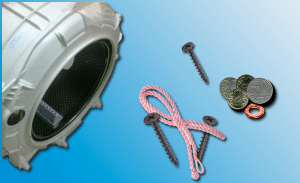
Much has been said by experts about the need to check pockets before putting items in the washing machine. However, the same Experts continue to remove nails, paper clips, coins, bra underwires, pins, coins, and other small items from various "household helpers." Seemingly harmless items can easily send your washing machine straight to the landfill.
For example, if bra underwire If a bone gets into the washing machine, or more precisely, the washing machine tub, it can get stuck in the heating element, leaning sideways and catching on the edges of the rotating drum, causing a grinding and whistling sound. What are the risks? It can cause many problems. For example, a bone can break off part of the heating element or puncture the tub—in short, it's a very unpleasant situation.
How do you solve the problem if a foreign object has already entered the washing machine? Everything will depend on what the object is and where exactly it's lodged. In any case, our task is to check every possible location and locate the offending obstruction. What do we do?
We check the gap between the cuff and the edges of the drum; perhaps a foreign object is stuck there, causing the grinding noise.
Carefully inspect the drum walls with a flashlight; perhaps through the perforated surface you will be able to see a foreign object lying in the tank.
We open the back wall of the washing machine, remove the heating element, and through the resulting hole we remove all foreign objects from the tank.
If you can't access the tank through the heating element, you can try accessing it through the drain hose. Lay the machine on its side, remove the bottom cover, loosen the clamps on the drain hose, and remove it. Reach into the tank and remove any foreign objects.
Please note! Sometimes the heating element can be quite difficult to remove from the tank. In this case, firmly grasp the base of its contacts and pull it out using a rocking motion.
The bearings, pulley, belt or counterweight are worn out.
If a washing machine has been in use for several years, or even decades, it's much more difficult to determine why it whistles, hums, and makes other unusual noises. After all, all its parts are already significantly worn out, and any one of them could be the cause of the malfunction.
Our motto is "don't stop in the face of difficulties," so we will meticulously and methodically search for the cause of the malfunction in your old automatic washing machine. We'll proceed in order, first examining the parts that are easier to reach. Then we'll move on to those that are more difficult to reach. Let's start with the drive belt and pulley.
We remove the back wall of the washing machine by unscrewing several bolts.
In front of us there will be a large wheel - this is the pulley.
We check the pulley for defects; if no defects are found, we move on to the belt.
The belt is just put on the pulley, it needs to be inspected very carefully; any nicks or simply severe wear are a reason to replace this element.
If the belt and pulley are fine and don't need replacing, let's move on to checking the counterweight. In many cases, it's a loose counterweight that's causing the unpleasant noise. How do you get to it?
Open the top cover of the washing machine
Under the lid we will see a large concrete block, bolted to the washing machine with large bolts - this is the counterweight.
Inspect the counterweight for wear. Look at the mounting holes. If they are clearly wider than the heads of the bolts that secure the counterweight to the machine, the counterweight needs to be replaced.
Important! To be absolutely sure the counterweight is worn out, rock it by hand. If you feel it wobbling, it definitely needs to be replaced.
The worst case scenario is when the cause of the unpleasant sounds lies in a broken bearing in the washing machine. Replacing a broken bearing yourself is very difficult. It requires a series of complex steps, which in some cases can only be performed by professionals. Contact a professional, and they'll handle the job quickly and professionally.
So, the only way to answer the question of why your washing machine is rattling, humming, and whistling is to check everything in order, as we've described above. Follow the steps methodically, following the advice of professionals, and you'll succeed!

 Even when in good working order, an automatic washing machine will emit some humming and whistling sounds, especially during intensive use, and this is completely normal. However, there are times when the humming and whistling noise is so loud that it becomes annoying. In this situation, a serious malfunction may be at play. In any case, this is a reason to take the problem seriously and begin investigating the cause of the unpleasant noise. This article will discuss the causes of these noises emitted by washing machines, as well as ways to eliminate them.
 This may seem like a strange reason to some, as if the seal could be connected to the washing machine's whistling and grinding noise. In fact, there's a direct connection! The seal is a large rubber gasket located around the door of the washing machine. Its purpose is to prevent water from leaking out of the drum. Under normal conditions, there's a small gap between the seal and the edges of the rotating drum, preventing them from touching, but this can sometimes be the case.
 For example, if bra underwire If a bone gets into the washing machine, or more precisely, the washing machine tub, it can get stuck in the heating element, leaning sideways and catching on the edges of the rotating drum, causing a grinding and whistling sound. What are the risks? It can cause many problems. For example, a bone can break off part of the heating element or puncture the tub—in short, it's a very unpleasant situation.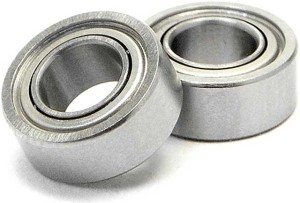















Quite instructive.
Very thorough.
Very informative.