
Installing a Washing Machine Under the Sink – Tips
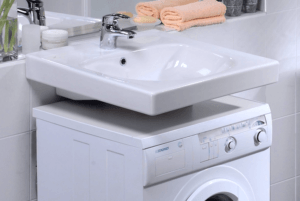
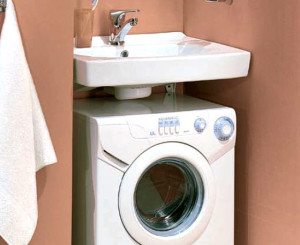 Homeowners often want to use the space above the washing machine. A sink is a good option. It's practical and, if chosen and installed correctly, can perform its intended function quite well. Here, we'll explore the pros and cons of this design, how to achieve a harmonious appearance, and other important details.
Pros and cons of this arrangement
Those who want to ensure the installation of a sink over a washing machine goes well will appreciate learning about all the potential inconveniences and other disadvantages of this plumbing arrangement. That's why we decided to discuss this issue first.
Cons
Disadvantages of this position of the sink.
Installing a sink over a washing machine can be a bit of a hassle.
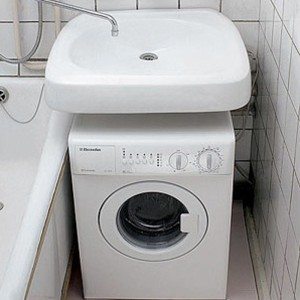 This unpleasant process begins with the selection and purchase of a special trap, different from the standard one. The usual trap options are most likely unsuitable for our purpose.
Finding it may require visiting more than one or two plumbing stores. And if the drain trap you bought suddenly breaks, you'll have to search for it all over again. However, this time it will be easier, since you already know where to look.
This isn't a particularly significant drawback. And with a little ingenuity, you might be able to avoid the long round of door-to-door visits. If you're able to explain what you need over the phone, you can easily find the numbers for plumbing stores in your city online.
You can use search engines for this, such as Yandex or Google. You can also use programs that contain the addresses and phone numbers of the necessary retail locations, such as DulGis (2GIS). You can also look at various trap options in online plumbing stores.
The next disadvantage is the possibility of clogging of pipes.
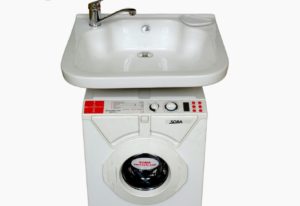
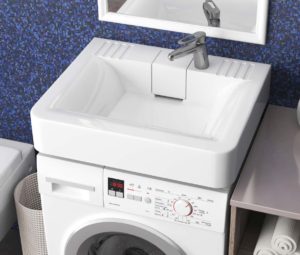
It is said that the likelihood of clogging increases somewhat when using unusual sinks. For example, lily-shaped sinks. This is due to their unique design. These sinks feature a drain that slopes backward, rather than downward like a standard sink. This allows for easy placement of the washing machine under the sink and ensures it sits as close to the wall as possible. However, according to some sources, this type of drain is more likely to clog.
Another disadvantage is the possible inconvenience.
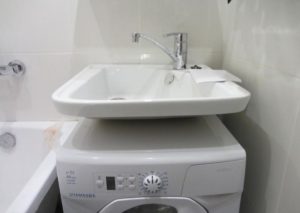
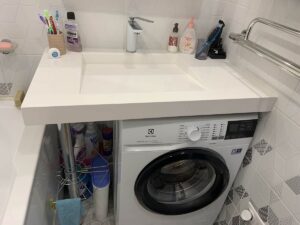
A washing machine may protrude slightly beyond the sink if it's larger. Protruding corners will look unsightly. It's also quite possible to bump into such a corner while simply washing your hands. There's also the potential for some problems using the machine if the surroundings make it difficult to access.
Pros
The advantages of a washbasin located above the washing machine.
The very first and probably most important advantage is the saving of free space.
Naturally, if you place the sink on top of the washing machine, rather than next to it, you free up space. Which is quite significant in a typical apartment with a small bathroom. On the other hand, the space under the sink is often wasted. Here, we'll kill two birds with one stone. We'll position the washing machine well and take up the space under the sink.
In some bathrooms, the empty space under the sink is filled with a cabinet. This is quite convenient. And if you don't want to install a washing machine underneath, you can buy a special vanity with a cabinet underneath or build one yourself. There are many different types of sinks on the market today, and if you choose wisely, you can decorate your bathroom or kitchen and make it more interesting or unique.
Below you can watch a video review, as well as recommendations from a user who installed the machine under the sink:
Water lily shells
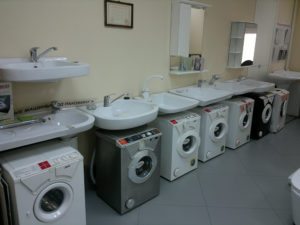
Some people think that lily-top sink designs are monotonous and boring. But, as we've already mentioned, the modern market offers a wide variety of options. You'll always find the perfect one for you. When describing the various shapes, we'll generally be limited to the following:
- Semicircular,
- Rectangular or square,
- Shells of other, more unusual shapes.
Also, some options may have a small tabletop, which is usually located on the right or left.
Additionally, some models have a special hole for the faucet. Not all models have these holes. But this isn't a problem, as the faucet is often mounted on the wall. Incidentally, if there's no hole for the faucet, the drain hole can be located closer to the wall. This allows us to push the washing machine further away, saving even more space.
Now let's discuss the drain. It varies. For example, some sinks drain downwards. Others drain to the back first, then downwards. The latter option is more prone to clogging, so it's best avoided. The former is more convenient because it takes up less space.
Correct installation
When installing the sink, keep in mind that it's important to keep the washing machine cord as protected from moisture as possible. This will prevent water ingress and short circuits. Therefore, it's a good idea to choose a sink that's slightly larger than the top of your appliance.
The sink also comes with mounting hardware. If you're purchasing a Russian-made sanitary ware product, the mounting hardware will most likely be brackets. Imported porcelain typically requires different mounting hardware. If for some reason your sink doesn't come with mounting hardware, you can purchase it at specialty stores. We've added a video with a detailed explanation and demonstration of the entire DIY sink installation process. Watch:
Choosing the right machine
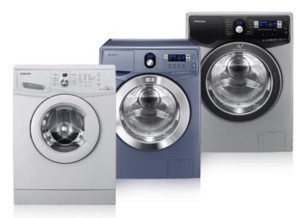 Perhaps one of the most important criteria when choosing an under-sink washing machine is its capacity, especially the height of the appliance. We recommend not purchasing a machine taller than 70 cm. If you follow our advice, you and your family will be able to comfortably use the sink, as it won't be positioned too high.
The selection of machines of this height is limited. Appliance stores carry fewer of them than standard-sized machines. If for some reason you're not satisfied with the models available there, you can search for other options online. It's very easy and doesn't require any travel; these stores typically deliver your purchases to your home.
It's also worth mentioning that smaller washing machines are typically limited to a smaller load capacity at a time. Typically, this capacity doesn't exceed three and a half kilograms.
Interesting:
Readers' comments
Headings
Washing machine repair




For buyers




For users


Dishwasher




Add a comment