
What is a semi-automatic washing machine?
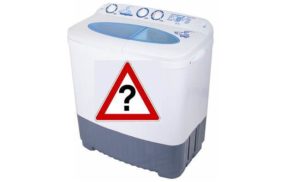 When reading brief descriptions of various washing machines sold in stores, you might notice that some models of these "home helpers" are labeled "semi-automatic," while others are labeled "automatic." This inevitably raises the question: what's the difference between a semi-automatic and an automatic machine? Where is the technical and functional line separating these two types of washing machines, and what kinds of semi-automatic washing machines are there? Let's find out together.
Similarities and differences
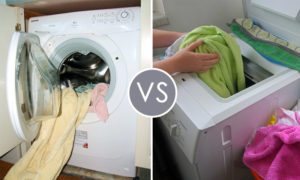
A semi-automatic washing machine is a type of household appliance designed for laundry care in which the washing process is carried out with active human intervention. This short and concise definition answers many questions, and to uncover these answers, let's compare automatic and semi-automatic washing machines. Let's start with the differences.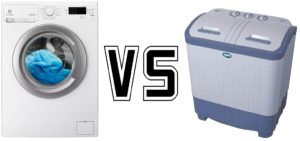
- A semi-automatic washing machine requires human presence when performing various operations (topping up water, transferring laundry from the washing tank to the centrifuge, etc.). The automatic machine completes the entire washing cycle without human intervention.
- A semi-automatic machine requires no utilities, only electricity. An automatic machine, in addition to electricity, requires water and sewerage.
- A semi-automatic washing machine is easy to carry and transport, weighing an average of 20 kg. Some models weigh 7-10 kg. Due to their heavy counterweights, an automatic washing machine weighs a considerable 80 kg or more, not to mention its dimensions.
- An automatic washing machine is much more complex than a semi-automatic machine; it has an order of magnitude more different parts, which means it breaks down more often.
- A semi-automatic washing machine is significantly cheaper than its automatic counterpart.
The price difference is huge. Semi-automatic washing machines can be purchased for $60, while automatic washing machines cost an average of $400.
- An automatic washing machine has a multitude of programs and useful features that allow you to not only gently wash your laundry but also dry it. A semi-automatic washing machine can't boast such features.
- A semi-automatic washing machine can be used practically anywhere, whether in the field, at a dacha, or on a long camping trip. If you have a diesel or gasoline generator or a power grid, no problem – you can wash even a mountain of laundry.
- An automatic washing machine has an incomparably more stylish design than a semi-automatic washing machine. An automatic machine can be easily left in plain sight, whether in the bathroom or in the kitchen. A semi-automatic "home assistant" is only fit for a pantry.
As you can see, there are many differences in both appearance and functionality. You could say these are two completely different types of appliances, but there are some similarities. Firstly, both types of washing machines are designed for washing. They are mostly capable of washing, rinsing, and spinning clothes. Secondly, both automatic and semi-automatic machines use detergents, albeit with different compositions and properties.
Please note! A semi-automatic washing machine can wash clothes even with the cheapest and lowest-quality hand-washing detergent. An automatic machine won't withstand this.
Varieties
Many people write and talk about the different types of automatic washing machines, so we won't go into them separately. However, it's worth discussing the different types of semi-automatic machines. What types of semi-automatic washing machines are there?
- Activator - the laundry in such machines rotates due to an activator installed at the bottom of the washing tank.
- Drum - these semi-automatic machines are less common; like automatic washing machines, they have a rotating metal drum into which you place dirty laundry.
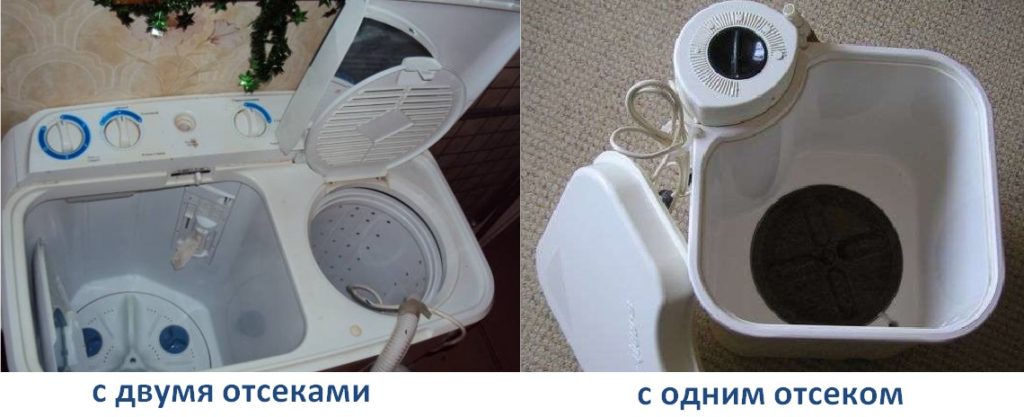
- Single-compartment – the simplest washing machines that do not have a centrifuge compartment and do not perform spinning.
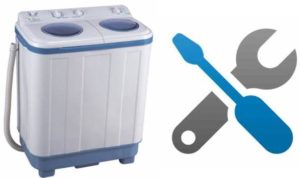
- With two compartments - such machines have a compartment for washing and rinsing clothes, as well as a compartment for spinning.
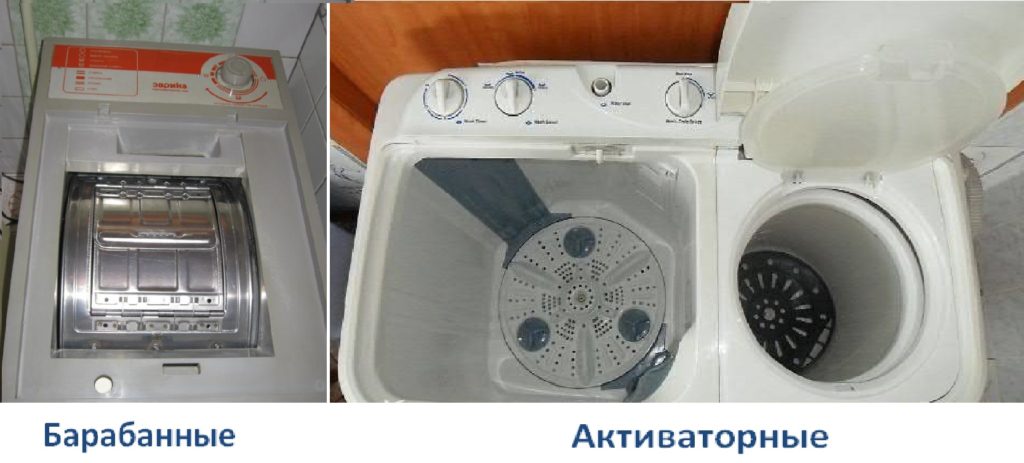
Activator-operated semiautomatic machines are extremely common. 93% of all semiautomatic machines have activators. Why is this? The main reason is that the activator mechanism is the simplest, cheapest and most reliable, and it also allows for a reduction in the weight and dimensions of the equipment – the advantages are obvious. Drum semi-automatic washing machines are much more bulky, less capacious and much heavier.
Semi-automatic machines with two compartments are larger and heavier than those with one compartment, but they do offer spinning capabilities. They also perform quite well, so homeowners often choose two-compartment machines, while single-compartment machines are primarily used for summer cottages. For more information on the different types of semi-automatic washing machines, as well as their distinctive features, read the article. Review of semi-automatic washing machines.
Review
Now let's take a quick look at semi-automatic washing machine models. There are quite a few companies that produce them, so we'll keep the description as brief as possible.
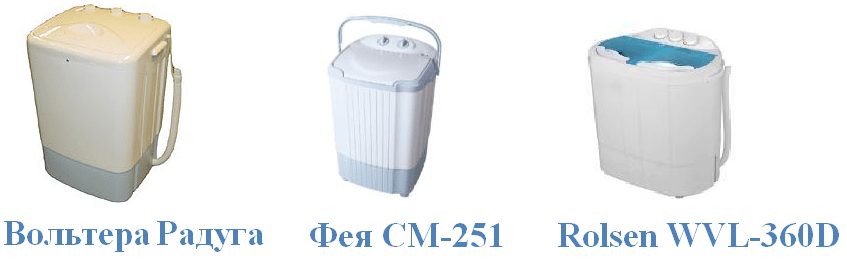
- Voltera Raduga. A simple Russian-made activator washing machine with a 2 kg capacity. It's perfect for a summer house, weighing only 4.5 kg. It features two wash modes.
- The Fairy SM-251 is an affordable and easy-to-use single-compartment washing machine with a 2.5 kg load capacity. It's virtually identical to the previous model, except that the Fairy has a convenient carrying handle, making it easy to carry like a plastic bucket.
- Rolsen WVL-360D. Semi-automatic, dual-compartment activator washing machine. The wash compartment holds 3.6 kg of laundry, and the spin compartment holds 1.5 kg of laundry. It is noteworthy that the spin cycle in this machine is carried out at a speed of about 1300 rpm, and the residual moisture content of the laundry is only 51%. The machine is simple, reliable and works perfectly.
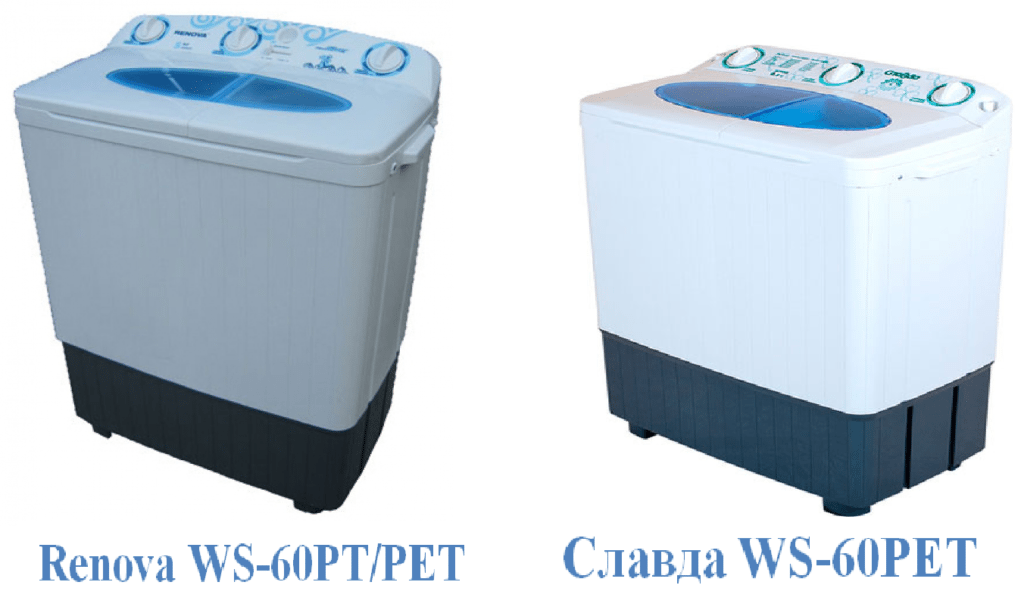
- Renova WS-60PT/PET. Another member of the semi-automatic, two-compartment washing machine family. These machines are unremarkable in appearance, but how much laundry do you think they hold? A whopping 6 kg for washing and 2.5 kg for spinning, with the spin cycle running at 1350 rpm. This "miracle of technology" has been running flawlessly for years, thanks to its very simple design.
- Slavda WS-60PET. This machine has similar features to the aforementioned model. It features a spacious drum with an activator and a 6 kg load capacity. It also has a spacious and convenient centrifuge that can spin 2.5 kg of laundry at 1350 rpm. The Slavda's unique feature is its built-in imbalance control and lint filter, and it also has an A+ energy rating.
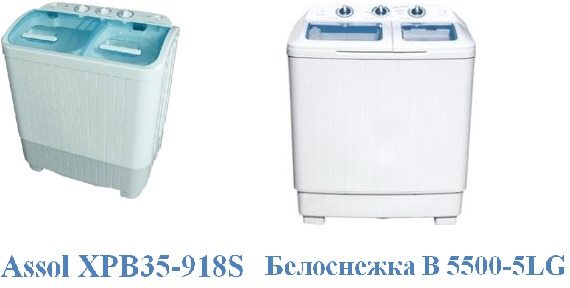
- Assol XPB35-918S. A relatively compact two-compartment activator washing machine. This is one of the few portable models of semi-automatic machines that can not only wash but also spin clothes. Load capacity: 3.5 kg wash, 2.5 kg spin. Two washing programs available, top loading.
- The Snow White B 5500-5LG is a fairly functional dual-drain machine with a 5.5 kg capacity. What's notable about this model isn't the capacity of the wash drum, but rather its centrifuge capacity – 5 kg of laundry. We haven't tested the spin efficiency of this amount of laundry and couldn't find any test data. It's highly likely that this information is bogus.
To summarize, a semi-automatic washing machine's main characteristic is right there in its name. Being semi-automatic means it can only perform some operations without human intervention, with the rest requiring the owner's intervention. However, this isn't always a disadvantage; in some situations, semi-automatic washing machines can be very useful, as they work in situations where automatic washing machines won't even start.
Interesting:

Readers' comments
Headings
Washing machine repair




For buyers




For users


Dishwasher




Add a comment