
Washing machine tears laundry – causes and repairs
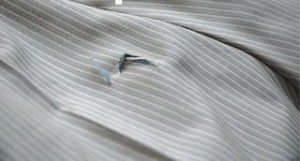 An automatic washing machine is an essential part of the modern home. Most people simply can't imagine life without this "home helper"—it washes, rinses, spins, and in some cases even dries laundry, leaving us free to do our own thing. But what if the washing machine, instead of caring for your laundry, tears it? Let's figure out the cause of this mess together.
Causes of the malfunction
A washing machine, no matter the manufacturer or model, should handle laundry with relative care and certainly shouldn't tear it openly during washing. If this happens, it's a malfunction that needs to be addressed. Where do you begin? As always when dealing with malfunctions, you need to begin by determining the cause. In this case, the causes are as follows.
- Items in the drum tear each other if they have zippers, buttons, boning, and other sharp parts.
- The inside of the drum of the front-loading washing machine has some barely noticeable damage that causes snags or tears in the laundry.
- On the inner surface of the door of a top-loading washing machine there are protruding elements that can tear the laundry (springs, sharp plastic chips, etc.).
- The laundry is torn due to the displacement of the washing machine drum.
- The laundry is torn due to an overly aggressive washing cycle, which is not suitable for delicate fabrics.
Please note! Washing machines can also tear clothes if the user uses overly harsh detergents. The chemicals weaken the fabric, and the machine "kills" it.
Things tear small hard objects
Any good housewife knows that before loading laundry into the washing machine, it's important to ensure all metal and other sharp parts are hidden. The easiest way to do this is to turn such items inside out, but there are times when this isn't possible. If turning an item inside out isn't an option, place it in a laundry bag; otherwise, even the most seemingly innocuous item (a button, rhinestone, pull tab, or zipper) can cause serious damage to other items.
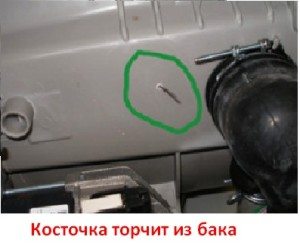 In addition, you need to carefully check your pockets and take out all objects from there, even small debris like sunflower seed husks. Any screw, paper clip, or pin accidentally dropped into the washing machine drum during a wash cycle can cause dozens of holes in your laundry. It's even worse if these items later fall into the washing machine's tub. For example, bra underwire If it gets into the machine, it can easily puncture the tank, causing you additional problems.
Small, hard, and sharp objects can get stuck in the washing machine for a very long time. It could be that a small screw gets stuck somewhere between the seal and the drum, tearing the laundry with every wash. What should you do in this case?
There is only one solution here: very carefully inspect the drum from the inside for foreign objects, not forgetting to inspect the space near the cuff (especially in the upper part of the hatch). You also need to listen carefully to the operation of the machine, because small objects often give away their presence by knocking, grinding or ringing.
Defective drum or door surface
If you've just started a new washing machine and it immediately tears your laundry, you need to look for a manufacturing defect. In a front-loading washing machine, you should immediately inspect the inside of the drum. There's likely a metal burr or similar. If a visual inspection doesn't yield any results, use old tights. Put the tights on your hand and very carefully run your hand over the inside of the drum, centimeter by centimeter.
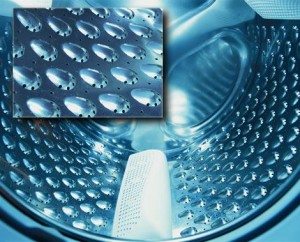 If there's a nasty burr on the drum, it will give itself away. How do you remove burrs from the drum? If the machine is new (under warranty), it is better to exchange it for another one or get your money back. After all, where there's one manufacturing defect, there could be another, and that doesn't speak well of the brand of washing machine you've chosen. If your machine is older, you can remove the burr by sanding the inside of the drum with fine sandpaper.
Important! Remove the burr very carefully to avoid leaving unnecessary scratches on the drum's interior. Also, consider the origin of the burr; it may indicate a more serious problem.
In top-loading washing machines, the door is located on the top wall of the machine. On the inside of the door is a mechanical locking device, which can break if the lid is slammed shut. The plastic parts of the locking device can break, exposing the spring and leaving sharp chips. Both the spring and the chips are very dangerous for the laundry, so it is necessary to immediately replace the broken door locking device. You can't wash clothes before the renovation is done - it's risky.
Inappropriate washing mode
It's worth reminding you once again to carefully read your washing machine's instructions and strictly follow them. Specifically, they state that each type of fabric requires its own washing cycle. If your machine is tearing your clothes, it's possible that you're trying to wash delicate items on a heavy cycle, which is only suitable for coarse fabrics.
It's clear that all this sounds rather silly, yet this mistake is very common, despite the manufacturer's insistent warnings printed in the instructions for every washing machine. There's a simple and wise rule: If you doubt that your item can withstand washing in a washing machine, do not put it in there, wash it by hand.
Linen is torn due to broken bearings
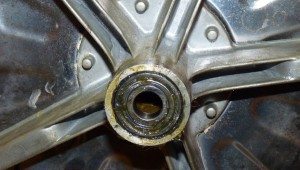 It happens that laundry gets stuck between the edges of the drum and the tank during washing and tears. The drum rotates at a fairly high speed, and if an item gets between it and the tank, you will end up with a torn and chewed rag instead of your favorite shirt. Why does this happen, given that the machine's design means that laundry cannot escape from the drum? The answer lies in the design features of front-loading automatic washing machines.
The problem is that the machine's moving parts, or more precisely, the drum, rotate thanks to bearings. These bearings ensure the drum remains perfectly horizontal. If the bearings fail, the drum begins to rotate out of alignment. What are the consequences of this? This can lead to a widening gap between the edges of the drum and the tub, making it impossible for the seal to cover this gap. This ultimately results in laundry getting caught in the gap and being damaged, much to the owner's dismay.
Important! A broken bearing is a major problem for a washing machine. If it's not replaced promptly, it will result in more than just torn clothes. It will also send your "home helper" to the landfill.
To repair the bearing, you need to do the following:
- remove the top cover of the washing machine;
- disconnect the counterweight;
- remove the back wall;
- disconnect the engine and pump;
- unscrew the shock absorbers;
- remove the front wall together with the hatch cuff;
- remove the washing machine tank;
- disassemble the tank;
- remove the old bearing and install a new one.
As you can see, the process is too complex to do yourself, so if you're not very technical, it's best to hire a professional. But definitely, putting off such a problem is a no-no!
To summarize, there are many reasons why your washing machine tears, but you need to know them to quickly find a solution. And definitely, if you suspect the problem is serious and you can't fix it yourself, call a professional without hesitation. Don't waste time—it could create even more problems.
Interesting:


Readers' comments
Headings
Washing machine repair




For buyers




For users


Dishwasher




Add a comment