
The washing machine gets stuck on the spin cycle.
 It's clear that a washing machine is stuck in the spin cycle for a reason—something's wrong with it, but it can be difficult to figure out exactly what's wrong. Usually, even the self-diagnostic system isn't very helpful in this situation. An error message like "spin cycle problem" pops up, but the washing machine's electronics often don't tell you what the problem is or what caused it. You'll have to figure it out yourself, and we'll do our best to help.
What could have happened?
As you know, many different processes occur in a washing machine from the moment the wash cycle starts. First, the washing machine fills the drum with water, rinses out the detergent from the pre-wash compartment, and then slowly spins the drum, completing the pre-wash cycle. Next, the washing machine drains the used water and takes in fresh water, rinsing out the second batch of detergent from the main wash compartment. When the main wash cycle is complete, the machine drains the dirty water again, then draws in clean water for the rinse cycle.
Modern washing machines can have a double rinse feature built into certain programs. This means the machine will rinse the laundry, then drain the water, refill, and rinse again.
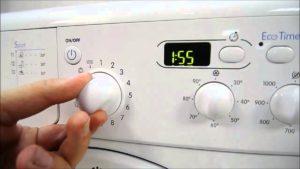 After completing the rinse cycle, the washing machine drains the water again and begins the final step of the program, the spin cycle. This is where problems arise. For some reason, the machine begins to behave erratically; instead of spinning the drum, it freezes after a short period of time. Fortunately, it displays a system error, prompting the owners to guess the cause of the problem, but sometimes the washing machine displays no errors at all. In this case, logical thinking and knowledge of how a modern washing machine works can help.
First, we need to rule out the most basic causes that aren't related to a technical malfunction. Rather, these causes are more likely to be related to user error, namely:
- overloading the washing machine drum with laundry;
- the item loaded is too heavy or too bulky;
- insufficient drum loading;
- mistakenly selected the wrong washing program;
- A foreign object has entered the tank and is jamming the drum, preventing it from rotating at high speed.
 When we overload the washing machine with laundry, the clumped mass of laundry creates an imbalance in the drum. When this drum starts spinning at high speed, laundry that has managed to clump together can easily damage the drive mechanism. To prevent this, the washing machine immediately stops the program, and the spin cycle is not performed until the drum is properly loaded.
A washing machine can freeze due to an insufficient load in the drum or an oversized load. Modern systems detect this and stop the spin cycle. Worst of all, the spin cycle stops due to a foreign object lodged in the drum. Such an object can not only jam the drum but also damage the drum, causing the washing machine to leak. Solution: immediate action. remove a foreign object.
Once the above-mentioned causes have been ruled out, you can consider a technical malfunction. We'd like to warn you that troubleshooting a technical issue that could be causing spin cycle problems often involves disassembling the washing machine. If this process intimidates you and you feel unsure of your abilities, it's best to delegate this task to a professional. You might not save money, but you'll definitely save time and stress. If you're determined to see this through to its logical conclusion, continue reading this article carefully.
Drive mechanism
 Bearing problems often occur in very old and heavily worn washing machines. Damaged bearings cause the drum to emit a loud, metallic grinding sound as it spins. Because the drum is unable to spin properly, it can't reach the required speed, causing the washing machine to stall during the spin cycle. There are two solutions: throwing out the old washing machine and buying a new one, or change the bearingThe second method will require a lot of patience, effort, and work from you.
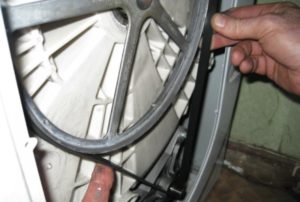
If the bearings are intact and there is no rattling noise, but the spin cycle still does not start, you need to listen carefully to how the washing machine is working just before it freezes. If you hear a slight whistling sound and the drum speed clearly drops suddenly, it might be a good idea to check the drive belt. When the drive belt stretches, it begins to slip on the pulley when the drum speed increases rapidly, causing the speed to drop. In this case, the belt needs to be replaced immediately. How do you do this?
- We remove the back wall of the washing machine, having first turned it off and pulled it out to a free place.
- We remove the old drive belt by grabbing it with our hand and turning the drum pulley.
- We put a new drive belt on the engine pulley, and then, gradually rotating the drum pulley, pull the belt onto it.
- We check how well the belt fits on the pulleys, and then assemble the washing machine in reverse order.
Please note! Since you've removed the back panel of the washing machine, it's a good idea to also inspect the pulleys themselves for any deformations or manufacturing defects. Pay particular attention to the drum pulley; the slightest burr or bend will negatively affect the drive belt, damaging it.
Motor and tachometer
If you've checked the drive mechanism and confirmed that everything is in order, it's worth checking the motor and Hall sensor as well. It's not uncommon for the commutator motor to simply lose power over time due to worn carbon brushes. A weakened motor, naturally, isn't able to spin the washing machine drum to the required speed for spinning, which then triggers the same problem we described above. So, let's check and replace the carbon brushes.
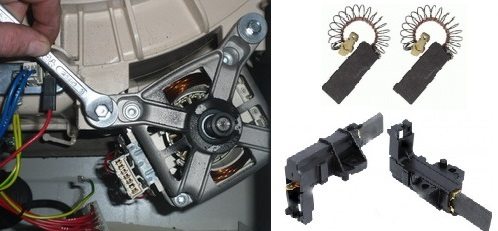
- As in the case of replacing the drive belt, we remove the back cover of the washing machine.
- We pull off the drive belt that is in our way.
- We pull off the wires going to the motor contacts, just don’t forget to remember their location.
- We unscrew the screws with which the engine is attached to the paw-like mounts.
- We push the engine forward a little.
- Next, we pull the pressed engine down a little and remove it.
- There are small screws on the sides of the motor housing that need to be removed as they hold the carbon brushes in place.
- We take out the brushes and check how worn they are.
Even if only one brush is badly worn and the other is intact, both brushes must be replaced.
What's next? Next, we'll check the Hall sensor. These sensors don't fail often, but they do happen. The tachometer in a washing machine monitors the motor speed; if it's broken, problems with the spin cycle will definitely occur. This article explains how to check this sensor and how to find it. Tachometer in a washing machine.
Control module
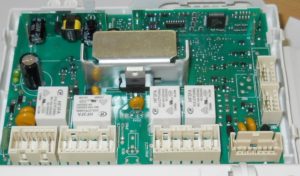 One of the most unpleasant breakdowns of a washing machine is rightfully considered to be a breakdown of the electronic module. An electronic module is a rather complex component; to understand what exactly is broken, you will need a lot of knowledge and practical experience working with electronics. If you don't have these skills and knowledge, it's better to focus your energy on finding a good technician who can figure out why the program has suddenly started to malfunction and the machine refuses to spin the laundry.
Doing repairs yourself in this case will do more harm than good and will likely result in additional effort, time, and money, with the result likely being disastrous. Be prudent and always "take your own responsibilities."
Finally, if your washing machine freezes during the spin cycle, don't be too quick to sound the alarm. Restart the program a couple of times, check how the laundry is stacked in the drum and how much is loaded. Check for blockages before worrying about what might be wrong with your "home helper." Good luck!
Interesting:



4 reader comments
Add a comment
Headings
Washing machine repair




For buyers




For users


Dishwasher




The washing machine isn't washing well, and in spin mode it starts spinning faster and then immediately drops. It's like it's debating whether to spin or not. I think I need to check the brushes. Thanks for the article. By the way, I have a Crystal machine, it's 13 years old.
Hello, the lights are flashing and the drum is spinning slowly. It stopped during the spin cycle and keeps flashing. There's still water inside. What should I do?
Good evening, I have a Skyworth washing machine. On the rinse and spin cycle, it takes up to 14 minutes to wash. The timer freezes, it rinses, but the timer doesn't change. What could be the problem?
Hello! I finished the wash cycle and got to the spin cycle, but the machine froze. It seemed to want to spin, but couldn't. After rebooting, I turned on the spin cycle, spun the drum a couple of times, and froze again. There was a slight hum and it froze.