Is it possible to install a washing machine in the hallway?
A washing machine is a piece of equipment that modern people can barely live without; some can't even imagine their lives without one. However, there are apartments where you don't know where to put this impressively sized appliance; there's simply no room in the kitchen or bathroom. That's when the idea comes up: installing the machine in the hallway. But is it even possible to place it that way? Let's discuss it together.
What to look for?
Sometimes the hallway really is the last option to put a car. Otherwise, you will have to do without it altogether or constantly take your clothes to the laundry and dry cleaners. Weekly laundry will become expensive, so you'll have to put the machine in the hallway.
It is quite possible to install a machine in a hallway, but to do this you need to consider the following:
the area of the corridor, whether there is any space in it at all, whether the car will interfere when entering the apartment or when opening the door to the room;
how far will the machine be located from the sewer and water supply;
Important! A drain hose that is too long will put strain on the pump, which can quickly cause it to fail.
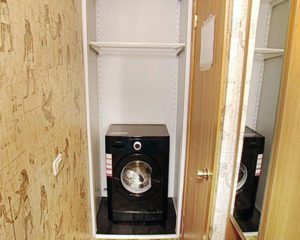
Is there a niche in the hallway that could be used to install a washing machine, thereby hiding it?
The dimensions of the washing machine, the size of the machine is no less important than the size of the hallway, when the space is so limited, try to choose narrow models of machines;
Don't forget about aesthetics; a washing machine in the hallway isn't exactly appropriate. Anyone entering the apartment will feel like they've entered a mini-laundry room, so the appliance needs to be hidden somehow.
Connecting a washing machine
The nuances of connecting a washing machine in the hallway mainly lie in how to hide the hoses running from the machine to the drain and water supply. If the machine is located next to the bathroom wall, it will be easier to connect it and hide the utilities. You can run the hoses through a hole in the wall.
It's a completely different matter if the machine is located on the opposite side of the bathroom. In this case, hoses running across the hallway will clearly be in the way, and you don't want to trip over them every day. The only possible solution is to hide the pipes in the floor.
To connect a washing machine, you need to purchase long drain and inlet hoses. Avoid connecting short hoses, as this can lead to leaks. As we've already noted, a long hose affects the operation of the drain pump. However, this will largely depend on the brand of washing machine. For most models, it is not recommended to exceed the hose length by 3 m, whereas in Zanussi washing machines this figure is higher, since these machines have a more powerful drain motor.
Please note! In a pinch, you can extend the drain hose on any washing machine, but don't count on warranty repairs if the appliance breaks down.
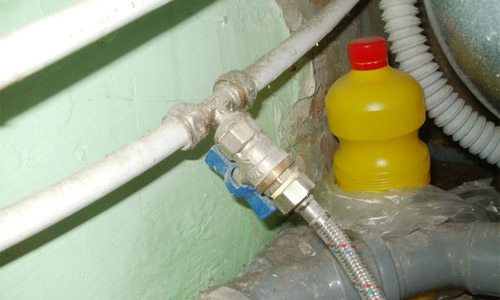
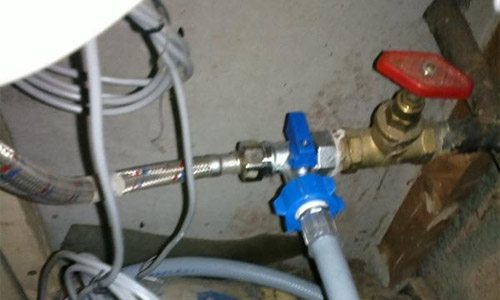
Connect the washing machine drainA toilet installed in the hallway can only be drained through a siphon or directly into the sewer. We've described these methods in detail many times. As for connecting the water to the machine, there are three ways to do so:
Using a squeeze coupling if you're connecting to a metal pipe. To do this, place the coupling on the pipe and make a hole in the pipe to allow water flow. Connect a ball valve with a ¾-inch threaded outlet to the coupling for the washing machine's inlet hose.
Using a fitting if you're connecting to a metal-plastic pipe. A cut is made in the water pipe and the fitting is attached. The connection points of the fitting must be carefully sealed and rubber must be laid. Next, we screw the tap onto the fitting, and the inlet hose from the washing machine to the tap.
Using a tee, this connection is possible to a bathroom sink faucet. The tee with a tap is connected between the faucet hose and the water supply. The washing machine is connected to the branch of the tee.
Another connection method is possible if there's a separate water supply outlet in the wall. The faucet and washing machine are connected directly to it.
In addition to the water supply and drainage, you also need to consider an electrical outlet. Ideally, it should be located close to the appliance. Otherwise, you'll have to install one, which is described in detail in the article. How to connect a washing machine to the power supply.
How to hide equipment
It remains to talk about how to hide the equipment, how to install it so that no one sees the unit, and so that it does not bother anyone. Even in such a small room as a corridor or hallway, there are different ideas for placing the washing machine.
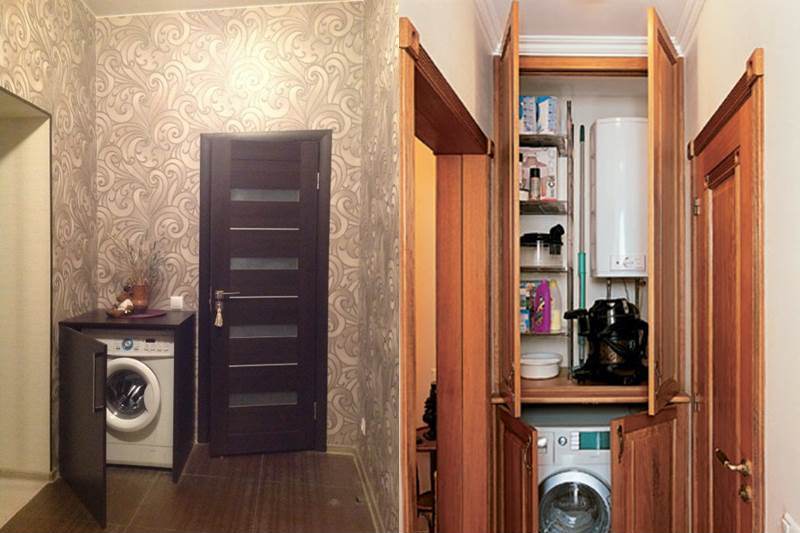
In the photo below, the washing machine is hidden in a cabinet; this could be a cabinet under the washing machine, or a large tall cabinet with additional shelves on top for household chemicals.
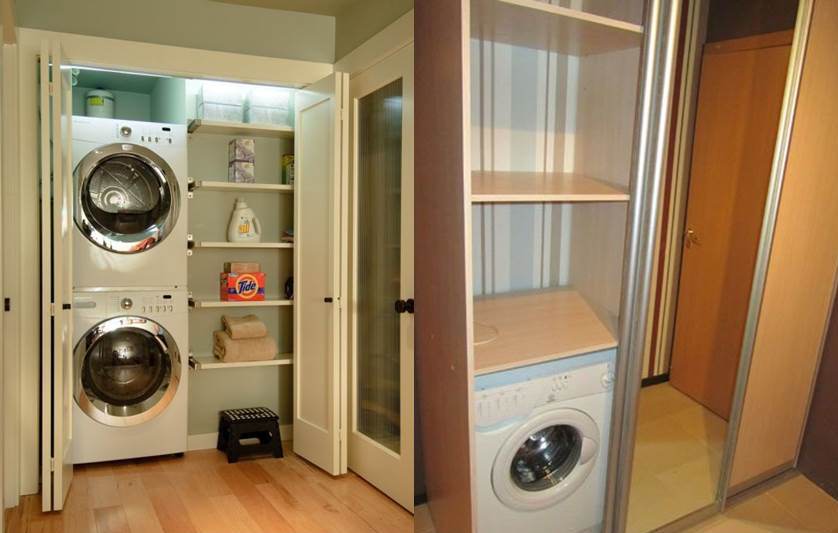
Here's another option for storing the washing machine: behind sliding doors or in a closet. This is very convenient, as you can add clothes hangers or shelves for household chemicals and other items nearby.
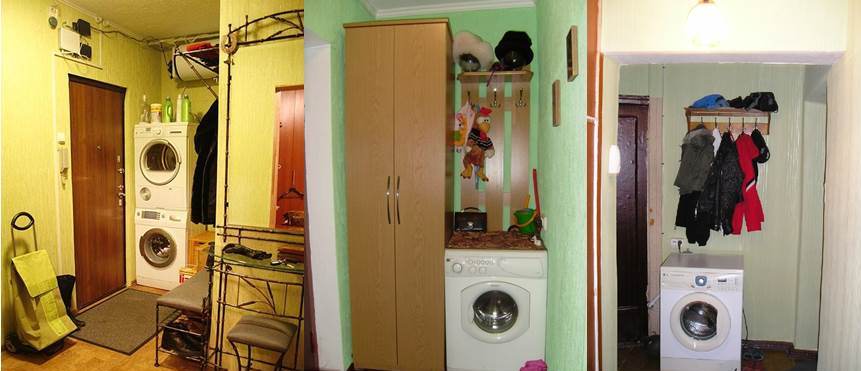
If you still don't want to hide your machine, it might look like the photo below. While it's unsightly, you can open the drum and drawer slightly to allow air to circulate and prevent odors from developing.
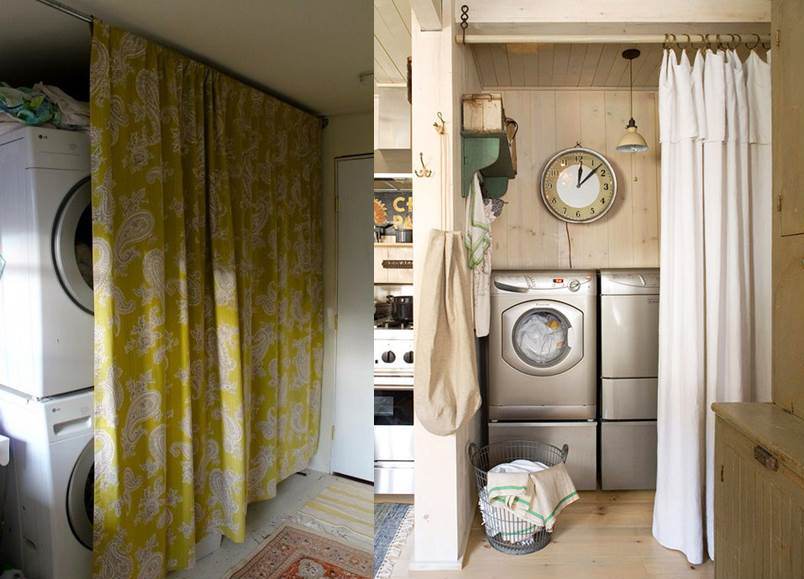
Some people hide the washing machine behind a curtain, like the one shown in the photo below. Curtains are chosen to match the style of the room. They can be hung on a rod attached between the walls or on a ceiling cornice.
So, placing a washing machine in the hallway is rare. This option is chosen only when space is limited in the kitchen or bathroom, or when utility lines are located close to the hallway. Therefore, think carefully before installing a washing machine this way.

 A washing machine is a piece of equipment that modern people can barely live without; some can't even imagine their lives without one. However, there are apartments where you don't know where to put this impressively sized appliance; there's simply no room in the kitchen or bathroom. That's when the idea comes up: installing the machine in the hallway. But is it even possible to place it that way? Let's discuss it together.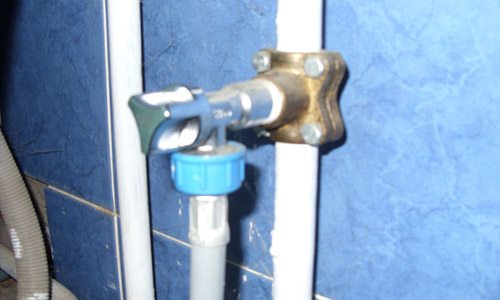















Add a comment