
What is better for a washing machine: gel or powder?
 Manufacturers now offer a huge variety of different cleaning products for clothing. Along with the familiar laundry detergent, specialized gels are emerging, available either in capsule form or in bottles with caps. Is it really better to buy a liquid detergent, or is it nothing more than good advertising and a 21st-century fad? Which should you choose: time-tested laundry detergent or laundry gel? Let's find out.
Why do housewives choose gel?
The gel is a special solution containing surface-active particles. The main difference between gel and powder is that the former is more gentle on fabrics, making it suitable for daily cleaning.
According to the detergent's instructions, it can be used in water heated to 30–40°C. Most automatic washing machine cycles operate at this temperature, making the gel ideal for cleaning synthetics, wool, delicate fabrics, and outerwear. Powders are suitable for a wider range of temperatures, up to 90°C, making them ideal for washing linen and cotton fabrics.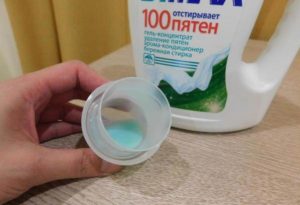
Another difference is the gel's lower percentage of anionic surfactants and a higher percentage of cationic and nonionic surfactants. The liquid form is recommended for refreshing frequently worn clothing; it's gentle on items.
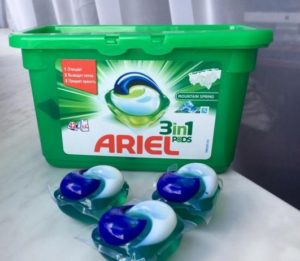
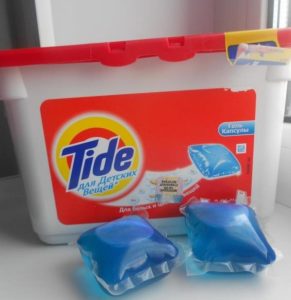
However, when the housewife has to deal with ingrained, difficult-to-remove stains, it is better to buy powder and set the washing machine to high temperature. To enhance the gel's effect on fabrics, special capsules have been developed. These capsules are placed directly into the machine's drum on a pile of laundry and prevent the gel-like product from being washed out of the washing machine's dispenser. The gel loaded into the machine in this way combines with the liquid faster and acts immediately.
Hand washing with gel isn't as effective as machine washing. The rotation of the drum causes mechanical activation, which provides a sufficient cleaning effect. Hand washing doesn't involve this action, so only surfactants and enzymes are able to remove dirt.
Let's compare two products
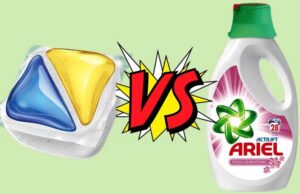
Objectively speaking, comparing these two laundry detergents isn't entirely accurate. Powders can be used in one situation, gels in another, and the choice is based on the type of fabric loaded into the washing machine, the degree of soiling on the garment, and the water temperature. Nevertheless, let's try to draw a simple analogy.
A definite plus of the gel is the manufacturer's clear and convenient dosing system. It's very easy to pour out the required amount of solution using a measuring cap or cup or to drop a couple of capsules into the dispenser. As for the powder, it's usually loaded into the dispenser approximately; a special measuring spoon is rarely included with the package. And since the detergent must fit into the unit in the volume recommended by the manufacturer, then according to this criterion, gel is undoubtedly better for the washing machine..
Another downside of the powder is its tendency to accumulate dust. Airborne particles can irritate mucous membranes, cause sneezing, and watery eyes. Of course, there are regulations governing the dust content of the product, but it's an undeniable fact that it will occur.
Liquid detergent does not have this problem; when pouring it into the machine, you don’t have to worry about dust appearing.
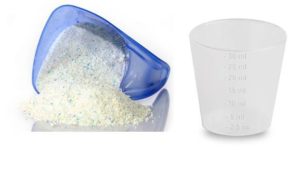 Let's now look at these two substances from the perspective of subsequent storage of the opened package. Here, too, the gel wins, as it has a convenient form and the container is easy to reseal. As for the powder, once the package or cardboard box is opened, you'll need to figure out how to store the pack yourself. In most cases, the product will remain in the open package, which can lead to dampness and accidental spillage.
Powder granules dissolve slowly in water, especially when the detergent has clumps or is even slightly damp. This undoubtedly reduces washing results. Gel is a ready-to-use solution; it doesn't contain particles that could become lodged in fabric. Therefore, it's preferred for washing laundry in water temperatures up to 40°C.
Which remedy is more harmful?
The basis of every cleaning product is surfactants. Sodium lauryl sulfate is considered the simplest and most effective, but also very harsh, substance, classified as anionic surfactant. It is present in much lower amounts in gels than in dry powders. Surface-active particles, which belong to the group of non-ionic and cationic, on the contrary, are contained in the gel-like substance in greater quantities, due to which a more delicate and gentle effect of the product on the tissue is achieved..
Non-ionic and cationic surfactants perform much worse in hard and very hot water than sodium lauryl sulfate, as they waste their effect not only on washing, but also on softening the liquid and precipitating magnesium and calcium salts.
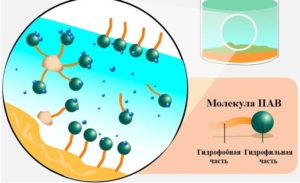 In addition to active ions, detergents contain enzymes—special ferments that effectively remove all types of stains. The vast majority of detergents designed for washing at the lowest temperatures include enzymes. However, these enzymes are completely destroyed in water heated to 60-90°C, making them unsuitable for high-temperature cycles.
Phosphates are rightfully considered the most controversial component of household chemicals. They are needed to soften liquids. However, phosphates lead to severe pollution of water bodies, so their use in laundry detergents is strictly prohibited in many countries. The percentage of phosphates in cleaning products is regulated by regulatory authorities; their amount cannot exceed 8%. Most manufacturers of household chemicals announce that their content in their products does not exceed five percent.
As difficult as it may be to say, completely eliminating phosphates from cleaning products is unrealistic; this will inevitably impact the cleaning performance of clothes. This would require either increasing the amount of surfactants in the detergent, which would mean a long time before the particles were rinsed out of the fabric, or installing powerful water filters, which is also impossible. Therefore, phosphate-free household chemicals will be less effective in removing stains.
Liquid solutions for light-colored items contain optical brighteners. The most common is titanium dioxide. Very small amounts of bleach particles remain on items after rinsing, reflecting light rays and imparting a blue tint to the fabric. This component is completely safe for humans and poses no harmful effects.
It's easy to add all sorts of natural extracts, infusions, essential oils, fabric softeners, mineral salts, and additives to combat unpleasant odors and maintain the original appearance of items to liquid laundry gels. This adds another bonus to the gels' appeal.
The most popular laundry detergents
Let's take the liberty of providing a brief overview of the most effective and proven detergents used in automatic washing machines. The top eight are:
- Persil Gel has received numerous positive customer reviews and has gained immense popularity due to its ability to release oxygen and remove even the most stubborn and ingrained stains. On the shelves, you can find not only the gel form, but also small granules and special capsules, grouped separately for colored clothes, baby items, white fabrics, and delicate items. The average price for a 2.19 liter package is $5.84.
- Liquid Frosh is a German product containing only plant-based ingredients. It is phosphate-free and considered extremely safe for both humans and the environment. A two-liter bottle costs $7.
- Ariel Gel from P&G easily tackles stubborn stains, leaving clothes feeling exceptionally soft and delicately scented after washing. A 1.95-liter bottle is available for $5.19.
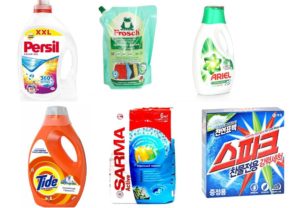
- Tide gel detergent is suitable for cleaning a variety of fabrics and on all washing cycles. According to research, a three-liter bottle of the product can replace 9 kg of detergent. A 1.82-liter bottle costs $3.46.
- Sarma Active Lily of the Valley is one of the most effective and affordable dry laundry detergents. The price per pack is around $0.50, which is lower than the price of popular brands. It's suitable for various fabric types, effectively removes stains, has an antibacterial effect, and whitens light-colored items. However, the detergent contains a large amount of anionic substances, phosphates, sulfates, and optical brightening particles. Therefore, it's best not to use it when washing baby clothes, underwear, and bed linen.
- Korean SparkDrumLaundryDetergent delivers excellent cleaning results even at low temperatures and provides antibacterial treatment. It contains surfactants, enzymes, zeolites, natural tea and lemon extracts, baking soda, and sea salt. A large container costs $7.
- Udalix Oxi Ultra stain remover will round out the rating. It's inexpensive, yet offers excellent cleaning properties. It easily removes stains from resin, grass, oil, and brilliant green. Available in plastic jars or bags, it costs just $2 for 0.5 kg.
- Rounding out the list of products is a balm designed for cleaning membrane items—DOMAL SportFelinFashion. It helps preserve all the properties of the coating without degrading the quality of the garments.
We hope this information will help you decide whether to choose a gel or powder. And a detailed review of the products will help you find the perfect one.
Interesting:
Readers' comments
Headings
Washing machine repair




For buyers




For users


Dishwasher




Add a comment