
AEG washing machines
 Those who prefer reliable and proven appliances first turn to well-known brands such as Miele, Bosch, Electrolux, and AEG. We've chosen to dedicate this article to one of these manufacturers, the German company AEG, which has been in business for over a century and produces more than just washing machines. While the undisputed German quality is evident in the advantages of this brand's automatic machines, they also have their drawbacks, which we'll discuss below.
Advantages and disadvantages of cars of this brand
AEG washing machines fall into the mid- to high-end price range. Prices for these machines start at 40,000 rubles. Premium models cost 100,000 rubles or more. All units of this brand differ in loading type, dimensions and other technical characteristics. But they have the following advantages in common:
- quality of manufacturing materials and high strength of moving parts;
- high technology and stylish design;
- high quality washing;
- the most silent operation possible;
- minimal vibration during spinning;
- functionality of washing, spinning, and in some models, drying modes;
- Practical user details: tank illumination, a cable for emergency opening of the drum, complete protection against leaks, etc.
- ease of maintenance.
It is worth saying a few words separately about the AEG washing machine tank. The company's developers AEG has patented a polymer alloy tank that outperforms a stainless steel tank. This type of tank is lighter, does not emit chemicals, is not subject to corrosion, is resistant to mechanical and temperature influences, and has noise-absorbing properties.
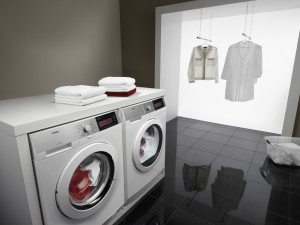 As for the disadvantages, there are some, too. While they're not as significant compared to the advantages, we'll list them nonetheless:
- expensive spare parts (they rarely break, but force majeure can happen with any equipment);
- high price and inaccessibility for consumers;
- glued tank in the latest models of cars, which complicates access to bearings and seals in case of replacement;
- In some models, the polymer tank was replaced with a plastic one.
Please note! The average service life of German AEG equipment, as stated by the manufacturer, is 10 years.
Anything assembled by human hands eventually breaks, and AEG washing machines cannot avoid this fate. The most susceptible parts are:
- temperature sensor;
- bearings;
- drain pump;
- control module (programmer).
Such breakdowns are detected in the following cases:
- when the machine does not heat water to the set temperature;
- when you hear a grinding and knocking sound in the drum of the machine when you rotate it by hand;
- when water is not collected;
- when waste water does not drain, the washing machine freezes.
Model overview
We'll give you examples of the best AEG washing machines, according to user reviews, so you can get a complete picture of what this class of equipment is all about.
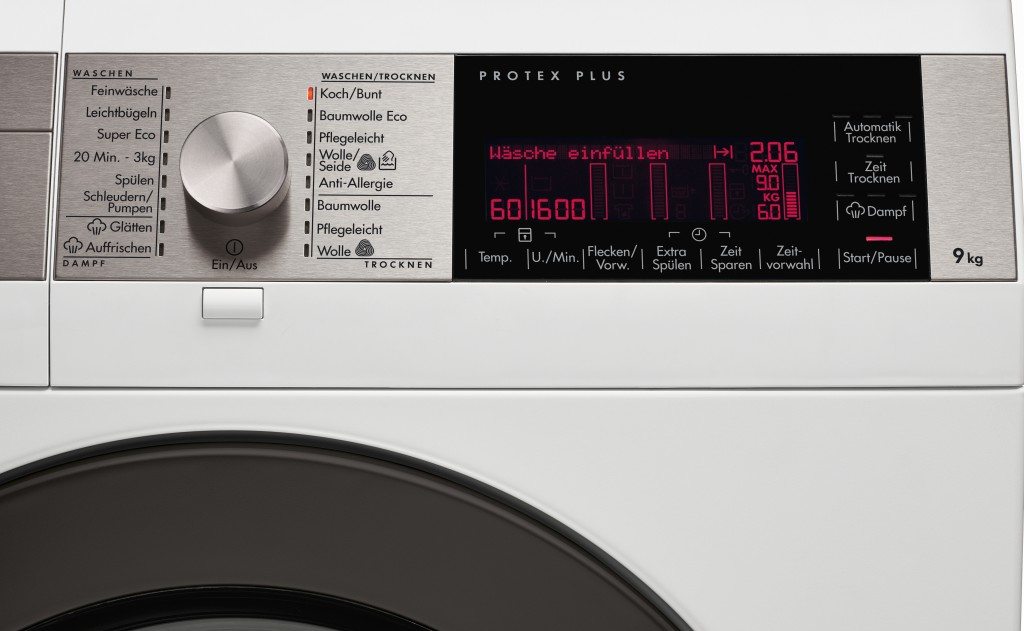
The AEG L 87695 WD is a full-size automatic washing machine capable of washing up to 9 kg of dry laundry and drying up to 6 kg. Energy consumption, spinning, and washing are all rated A, and the machine can reach speeds of up to 1600 rpm. Of the 14 washing programs, noteworthy ones include an anti-crease program, direct injection, and steam injection. It also features intelligent controls. fuzzy logic.As well as multi-stage leak protection, including a float switch, an Aqua-Control hose and an audible signal (Aqua-Alarm).
The advantage of this machine is its virtually silent operation and ability to remove difficult stains.
Among the drawbacks, users note complex, unintuitive controls. Prices start at $700.
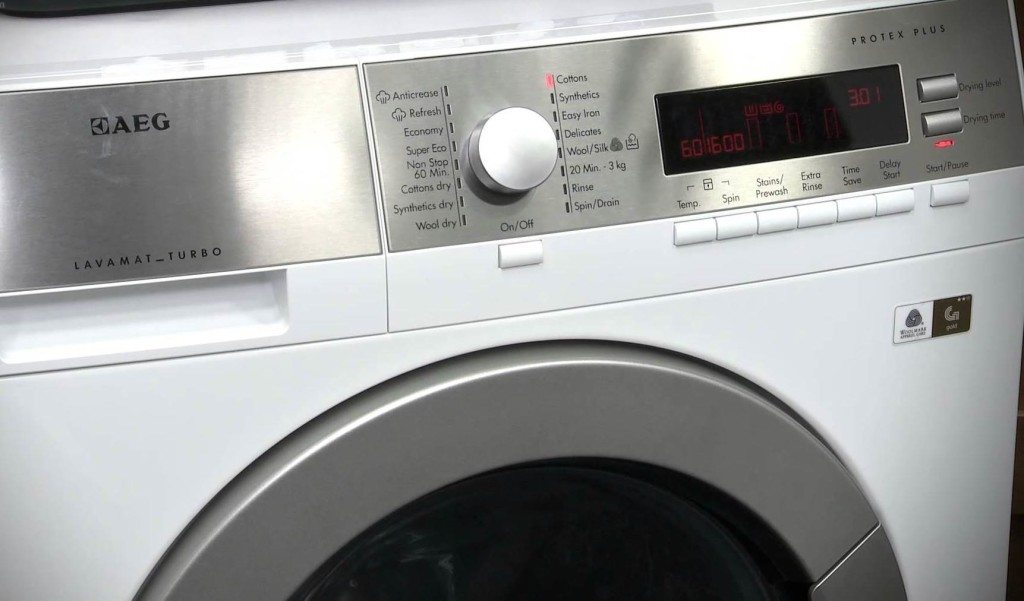
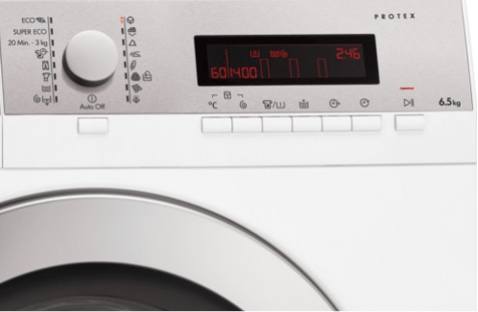
The AEG L 85470 SL is a slim washing machine with a load capacity of up to 6.5 kg and a spin speed of 1400 rpm. This machine offers excellent features and a low price compared to other AEG machines, which range from $445 to $500 in different stores. The manufacturer has built in everything you need: 16 programs, in addition to the standard programs, include jeans, down, and a stain removal program. It also features leak protection. Some drawbacks include the small detergent drawer and the lack of wash cycles lasting between 45 and 60 minutes, with only a quick cycle (20 minutes) or a 1.5-hour cycle available.
The AEG L 56106 TL is a vertical automatic washing machine with electronic controls. It has an energy efficiency rating of A++ and a maximum load capacity of 6 kg. It also features a jeans cycle, wrinkle prevention, and an economy cycle. It also features built-in leak protection. An excellent washing machine, equipped with everything you need at a very reasonable price. from $420.
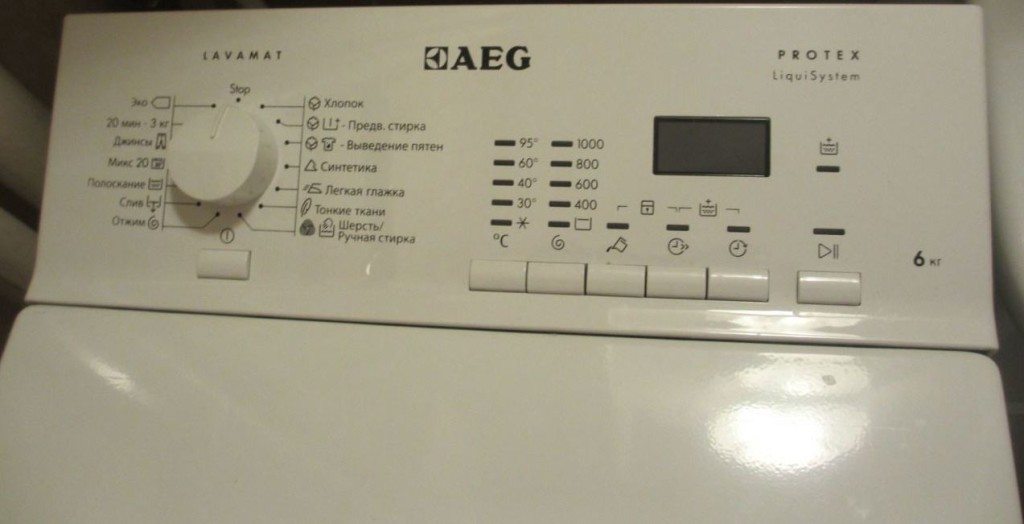
The AEG L 61470 WDBI is a built-in washing machine with a load capacity of up to 7 kg. In addition to standard washing modes for various fabric types, it also features a drying mode for up to 4 kg of laundry. Notable features include an energy-saving program and the high wash quality typical of all AEG models. This feature starts at $800.
The AEG L 99695HWD is one of the most expensive AEG machines. This full-size washing machine has a wash capacity of up to 9 kg and a dry capacity of up to 6 kg. The manufacturer has integrated all safety features, 16 washing programs, and electronic controls with a fuzzy logic function. This model starts at $1,250.
A bit of history…
In conclusion, we'll tell you a little about the history of the AEG brand, and dispel any doubts you may have about the manufacturer and the country where this brand's equipment is assembled.
AEG's origins date back to 1883 in Berlin, when it began as a company manufacturing electrical equipment. Since 1887, the company has been officially known as AEG—Allgemeine Elektricitats-Gesellschaft. In 1889, the AEG brand logo appearedThe first electrical appliances released under this brand before 1930 were: an iron, a refrigerator, a vacuum cleaner, and a hair dryer.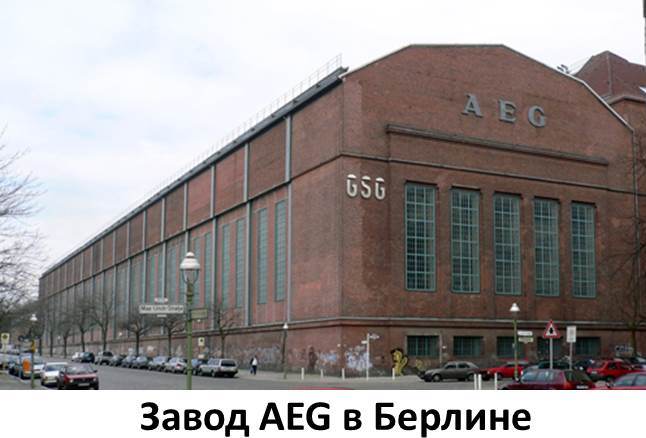
In 1935, the first model of built-in household appliances was released, and it was a refrigerator from AEG.
In addition to household appliances, the company manufactured diesel engines, steam turbines, electric motors, and lamps, and during World War II, it became involved in military equipment production. In 1958, the company introduced its first automatic washing machine, the Lavamat. In 1964, a clothes dryer was introduced. In 1986, the first machine with reduced water and detergent consumption was introduced.
Beginning in 1970, AEG experienced a decline, undergoing reorganization and mergers with other companies. For example, in 1983, part of its production was sold to the French concern Brandt, and In 1994, the washing machine production was sold to Electrolux while retaining the AEG brand.
Please note! AEG finally ceased operations in 1996. The last AEG washing machine in Germany was assembled on March 9, 2007, and the factory closed on March 16. Machine production was moved to Poland, Hungary, and Italy.
From the above, one can only conclude that modern AEG washing machines are not made in Germany. However, despite this, the quality of the machines remains German, and the new owner of this world-renowned brand has managed to maintain a key advantage: reliability. AEG's long history has left its country of origin largely unnoticed.
So, if you have the option of choosing a washing machine from the expensive ones, AEG automatic machines are worth considering. The manufacturer exercises due control over the production of these machines in accordance with European standards. Of course, they have their drawbacks, but there's no such thing as a perpetual motion machine. Good luck!
Interesting:
Readers' comments
Headings
Washing machine repair




For buyers




For users


Dishwasher




Add a comment